Lake Powell Rises 20 Feet as Floods Ease US Drought
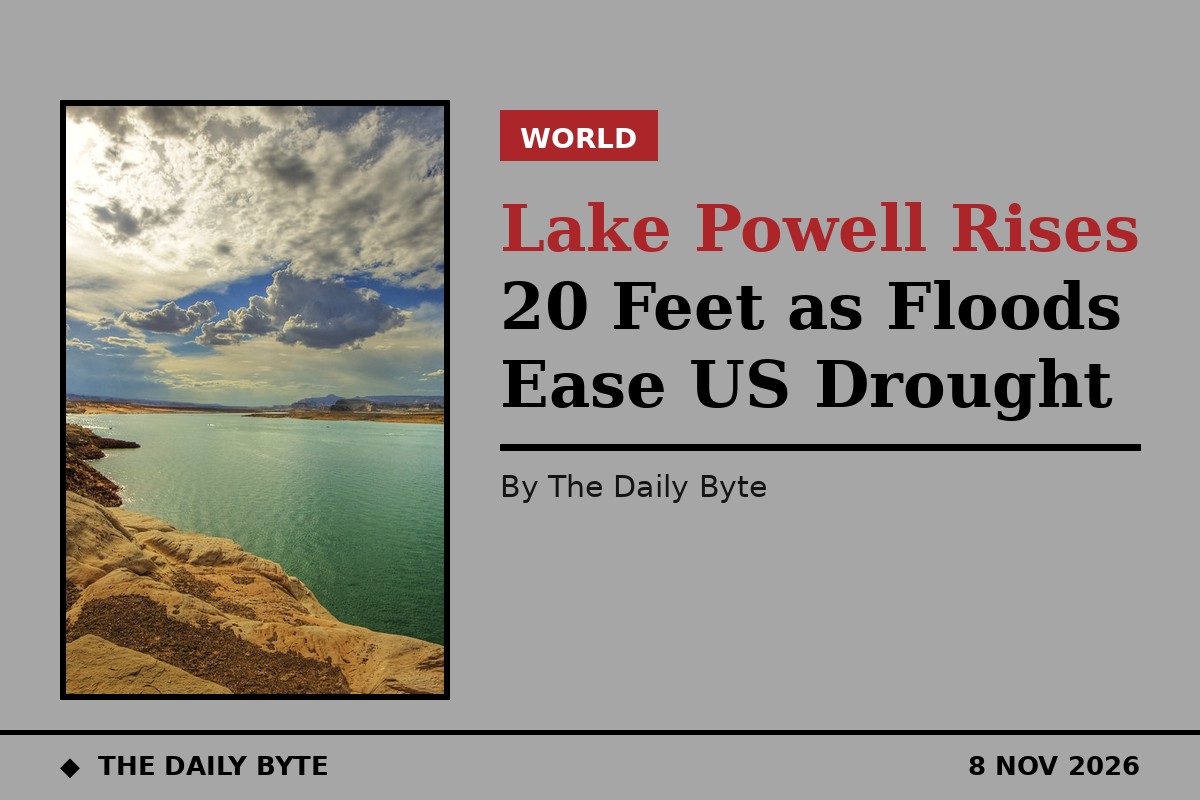
Record rainfall across the United States Southwest is bringing rare relief to reservoirs that had fallen to record lows during a years-long megadrought, with Lake Powell climbing more than 20 feet from its mid-September low.
Storms in late October and early November sent torrents of water through creeks that are normally small or dry, overflowing their banks and flooding local communities. Hundreds of people were told to leave their homes, and access to some areas was cut off. Yet most of that water will end up feeding depleted lakes and underground aquifers, according to Martin Hoerling, a climate scientist and hydrologist at the University of Colorado, Boulder.
Hoerling described the influx as an unexpected boost from nature. Last winter brought only lacklustre snowfall, which did little to recharge water bodies when it melted in spring and summer, the season when reservoirs usually receive their biggest annual rise. Then came El Nino, the climate pattern that has intensified heavy rain and flooding across the region. Experts say its effects will last several more months and could further improve water supplies across the West, where water is stored mainly in lakes, aquifers and snowpack.
Still only a quarter full
Lake Powell, the second-largest reservoir in the United States, rose more than 20 feet, or 6.1 metres, from its mid-September low, a gain far larger than the rise produced by this year's snowmelt, Hoerling said. Even so, the lake on the Arizona-Utah border remained just over a quarter full, and 15 of its 17 boat launches were still unusable as of Friday.
Further rain could lift the lake higher still. The floodwaters and additional rainfall could add more than 1.2 million acre-feet of water in total, enough to support around four million average families for a year, Hoerling estimated.
Towns report their wettest weather in decades
Cities across the region reported some of their wettest weather in decades. Before the storms dumped about seven inches of rain around Pagosa Springs in Colorado in October, more than 10,000 people in the town and surrounding communities were under water restrictions, with restaurants encouraged to serve water only on request. Those restrictions have now been lifted. Town manager David Harris said that while the storm was destructive, there was a silver lining, with a good start to the winter snowpack in the higher elevations.
Upper Lake Mary, which captures spring snowmelt in northern Arizona and supplies up to 40 percent of Flagstaff's water, has received more than three billion gallons of water since early October, according to Flagstaff water production manager Brian Huntzinger. Storms last weekend delivered the equivalent of more than two years of water into the town's surface water supply, providing a buffer for an operation that depends heavily on underground aquifers.
In central Arizona, heavy floodwaters that trapped people in their homes flowed into streams feeding the Verde River. That prompted water officials to release water from two nearly full dams into the river's normally dry stretch in metropolitan Phoenix, said Bo Svoma, principal meteorologist at the Salt River Project, which manages reservoirs on the Salt and Verde rivers.
Drought remains despite the deluge
The region remains in drought despite the intense rain, and the wet weather is unlikely to change decisions already made about sharing out water in the Colorado River basin. The US Bureau of Reclamation, which manages reservoirs in the West, is unlikely to change its water releases from Lake Powell or other areas until it knows when the snowpack has peaked, typically around April, said Jack Schmidt, a Utah State University professor who studies the Colorado River. A Reclamation spokesperson, Mary Carlson, acknowledged that conditions had improved but added that considerable uncertainty remains.
Under the federal plan for managing the Colorado River's Lower Basin, California, Nevada and Arizona will collectively reduce water use by 1.25 million acre-feet a year over the next two years, enough to fill more than 600,000 Olympic-sized swimming pools, with the possibility of larger cuts depending on conditions. Nevada and Arizona are challenging the plan in court. Some Arizona cities have agreed to fund preliminary work to reduce reliance on the Colorado River by expanding an existing dam on the Verde River to capture runoff from storms, Svoma said. As Hoerling put it, the region needs to work out how to be resilient in a drier future, and it is not there yet.


