Lidl Takes £50m Spend from Big Four Rivals
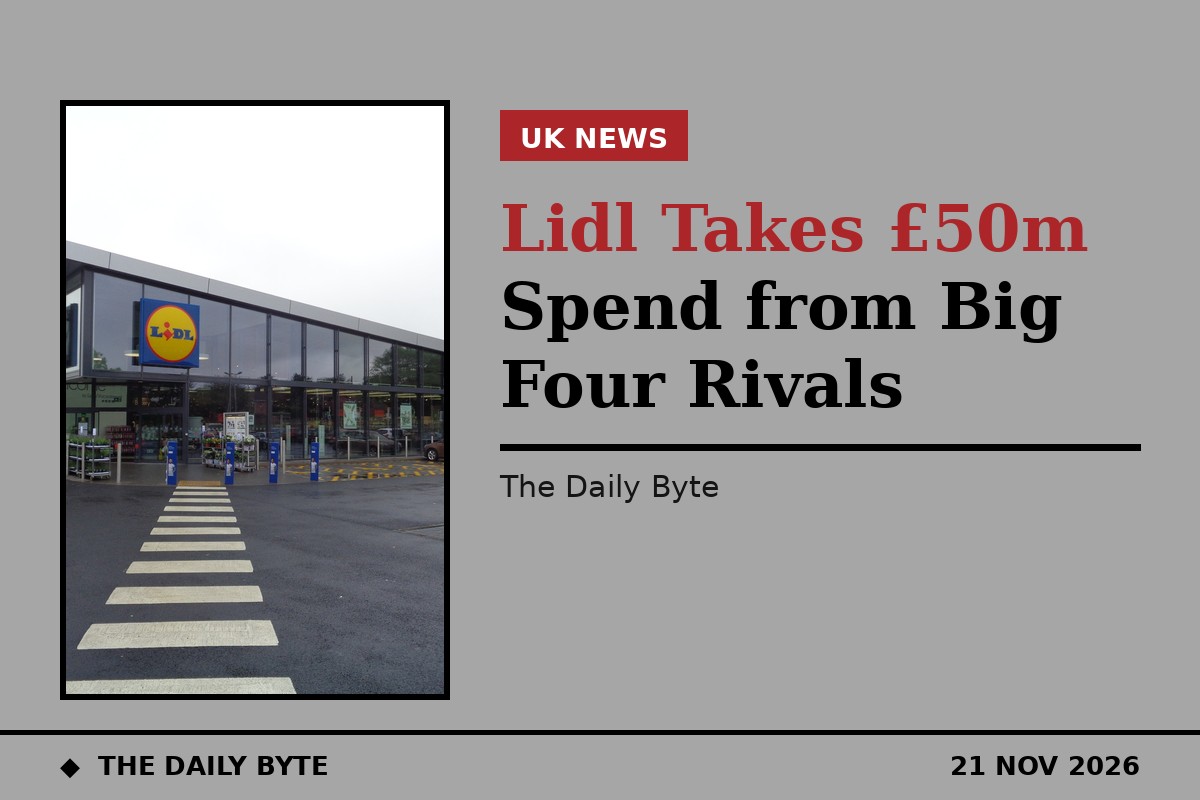
Lidl took more than £50 million in grocery spending from the UK’s four biggest supermarkets over 12 weeks, new figures show, as shoppers continued to switch to the discounter in search of lower prices.
Worldpanel by Numerator switching data shows Lidl took £23.6 million net from Aldi, £13.3 million from Asda, £11.8 million from Tesco and £7.7 million from Sainsbury’s in the 12 weeks to 1 November 2026, covering take-home spending across grocery and other fast-moving consumer goods.
The figures underline how the balance of power in British grocery shopping keeps shifting. Lidl’s sales rose 6.6% over the same period, the strongest growth of any major grocer, and its market share climbed from 8.2% to 8.6%, the biggest gain of any supermarket. It has now been named the UK’s fastest-growing bricks-and-mortar supermarket in Worldpanel’s regular market updates for more than three years, and it overtook Morrisons to become Britain’s fifth-biggest grocer in May.
Asda alone in reverse
Asda was the only major supermarket to see its sales fall, down 0.5% to £4 billion over the 12 weeks, with its share of the grocery market slipping from 11.6% to 11.3%. Every other large grocer grew, including Morrisons, whose sales rose 2%, while Iceland was the only other chain to stand still.
An Asda spokesperson said the switching figures were based on “limited and selective data” and did not give a full picture of its performance. Asda is the only one of the traditional big four not to promise to match Aldi or Lidl prices on hundreds of products, having scrapped its scheme in January last year.
What the figures mean
The shift comes as Asda’s new chief executive, David Potts, takes charge of a turnaround at a business owned by private equity firm TDR Capital and carrying a debt pile of around £3 billion. The chain has been the sector’s weakest performer on sales for more than a year, and the latest figures show the gap to its rivals is still widening.
For Lidl, the switching gains add to a strong year. Its turnover rose 10.8% to £13 billion in the year to February 2026, helped by 43 million extra customer visits, as cost-of-living pressures continued to push shoppers towards cheaper groceries.