Liverpool traders priced out of Christmas market
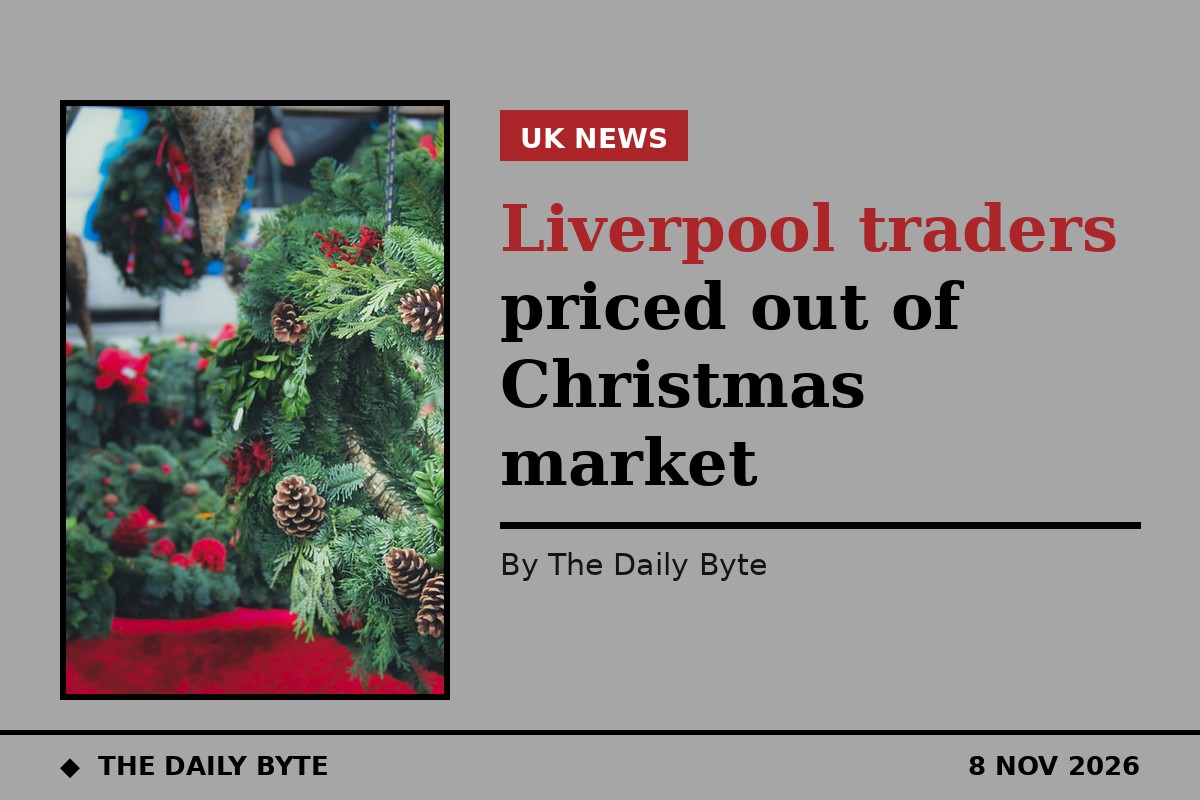
Small traders in Liverpool say they have been priced out of this year's Christmas market, with some facing bills of more than £12,000 for a single stall. The row has put Liverpool City Council under pressure over an event that has long been a showcase for the city's local makers and food sellers.
Anthony Grice had hoped to sell hot chocolate and cakes at the market on St George's Plateau, but said he was quoted £12,000 for a pitch. He told the council the figure was simply beyond what a small trader could justify for a seasonal stall, and he decided not to take it.
Grice said local traders had raised their concerns with the council's leader, Liam Robinson, and felt they had not been taken seriously. He said their worries had been swept under the carpet during a meeting to discuss the plans for this year's event, and that when he asked how many local traders had signed up, the council did not know.
He is not the only trader staying away. Jeweller Alex Healy, from Gateacre, has sold at the market since 2021, but she told a BBC Radio Merseyside phone-in that she would not be returning this year. She said the cost for her pitch, the smallest hut available, would be in the region of £14,000 to £15,000. She said she physically could not afford it, and did not want to put her own prices up to cover the stall.
At the heart of the dispute is a change of operator. A new company, Underbelly, has taken over running the market, and it is Underbelly that set the prices traders are now being asked to pay. The council said it had known about the price structure when the company won the contract, and that the authority would receive a share of some of the income the market generates.
Robinson said he had met business owners to understand the challenges they might have had this year, so the authority could look at different options in future. He defended the decision to hand the market to Underbelly, saying the company had won the tender on quality and price and had a record of running similar markets successfully in many other places across the country. He also said he wanted entrepreneurs like Healy to succeed, and invited her to meet him so the council could look at ways of supporting her business.
That reassurance has not satisfied the council's opposition. Carl Cashman, leader of the Liberal Democrat group on the council, described the £14,000 figure as a rip-off. He said small businesses were already under strain from rising business rates, inflation and payroll costs, while shoppers were spending less, and that a fee of that size was simply too big a gamble for most traders to take. He warned that with fewer local traders able to afford a pitch, visitors would get a poorer event and the city would lose some of the independent character that has made the market a draw in previous years.
A council spokesperson said local traders would still have chances to sell in the run-up to Christmas, pointing to a street market on Basnett Street running on each Saturday in November, as well as regular and pop-up markets in Lark Lane and Woolton Village where artisan goods could be sold. Underbelly has been contacted for comment. Whether the prices change before the stalls open will decide how much of Liverpool's own trading community is actually there when the market begins.