Living Wage Week marks 25 years of fair pay
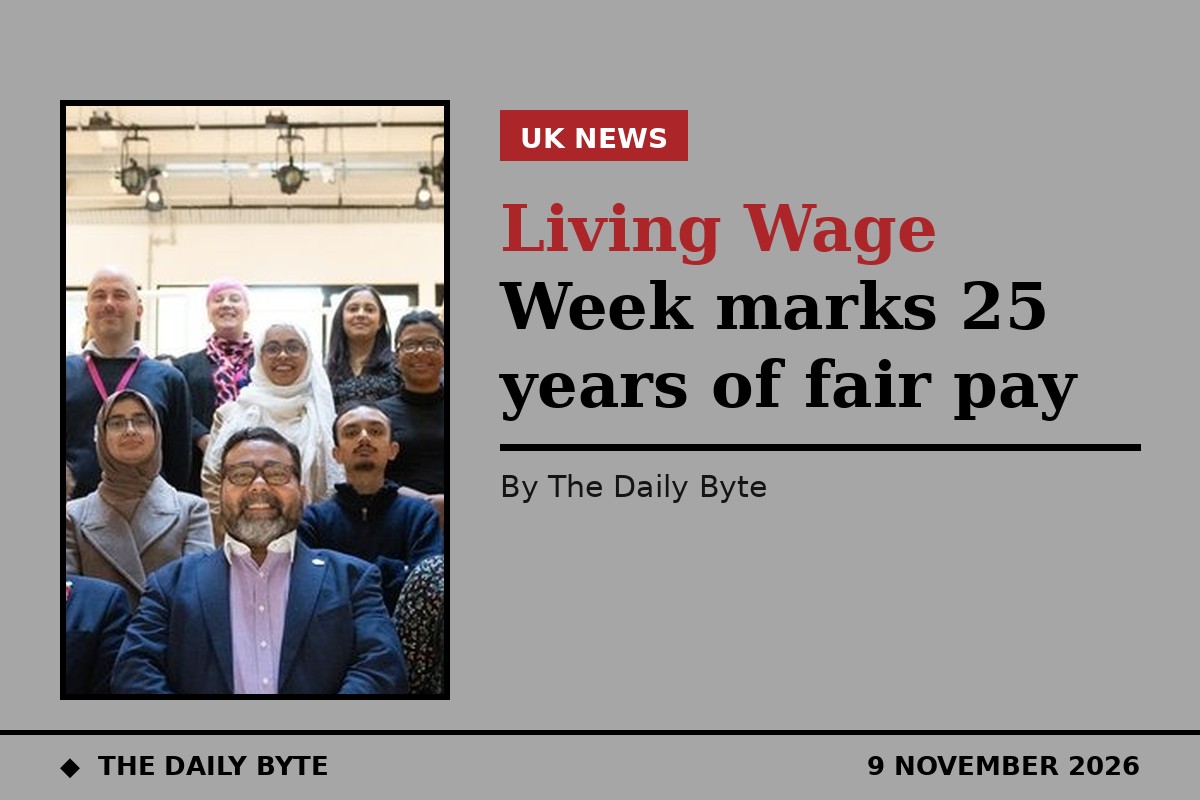
Living Wage Week 2026 begins on Monday 9 November, running until Sunday 15 November as the annual celebration of the Living Wage movement. This year’s theme marks 25 years of the Living Wage, a campaign that began in London in 2001 and became a UK-wide movement in 2011.
The new rates
On 15 October, the Living Wage Foundation announced the new 2026-27 real Living Wage rates: £14.10 an hour across the UK and £15.45 an hour in London, each up by 65p. The rates are independently calculated by the Resolution Foundation, based on what people need to earn to afford a decent standard of living. Unlike the Government’s National Living Wage, which is the legal minimum and is based on a percentage of median earnings, the real Living Wage is voluntary and is paid by employers who choose to be accredited. Accredited employers have until 1 May 2027 to put the new rates in place, although they are encouraged to introduce them as soon as possible. The Foundation says almost half a million people working for nearly 17,000 accredited employers are set for a pay rise from the new rates, and one in seven UK employees works for an accredited Living Wage Employer. The Government’s National Living Wage, for workers aged 21 and over, has been £12.71 an hour since April 2026, so the real Living Wage now stands £1.39 an hour above the legal minimum.
Events across the country
Events are taking place across the country during the week, including a Living Wage Wales event in Cardiff on Monday 9 November, where employers, workers and campaigners will hear about the difference the Living Wage, Living Hours and Living Pensions make. Councils are also marking the week: East Ayrshire Council, an accredited Living Wage Employer since 2020, said it was reaffirming its commitment to fair pay, and noted it is one of more than 4,000 accredited Living Wage Employers across Scotland. North Ayrshire Council, which has paid the real Living Wage for 15 years, said it would pay the increased rate from the day it was announced. The Foundation says the real Living Wage applies to workers aged 18 and over employed by accredited organisations, and that half of the FTSE 100 are among the accredited employers.
A voluntary standard
The Living Wage movement argues that pay should reflect the real cost of living, not just the legal minimum, and that accreditation gives workers and the public a clear signal about an employer. Because the rate is voluntary, an employer that is not accredited does not have to pay it, and the Foundation says the campaign’s growth over 25 years shows that thousands of employers have chosen to go further than the law requires. The week is also a moment for employers that have not yet signed up to consider accreditation, and for workers to check whether their employer pays the real Living Wage. Sources: Living Wage Foundation and East Ayrshire Council.