LNG tanker hit by mine blast in Strait of Hormuz, Iran says
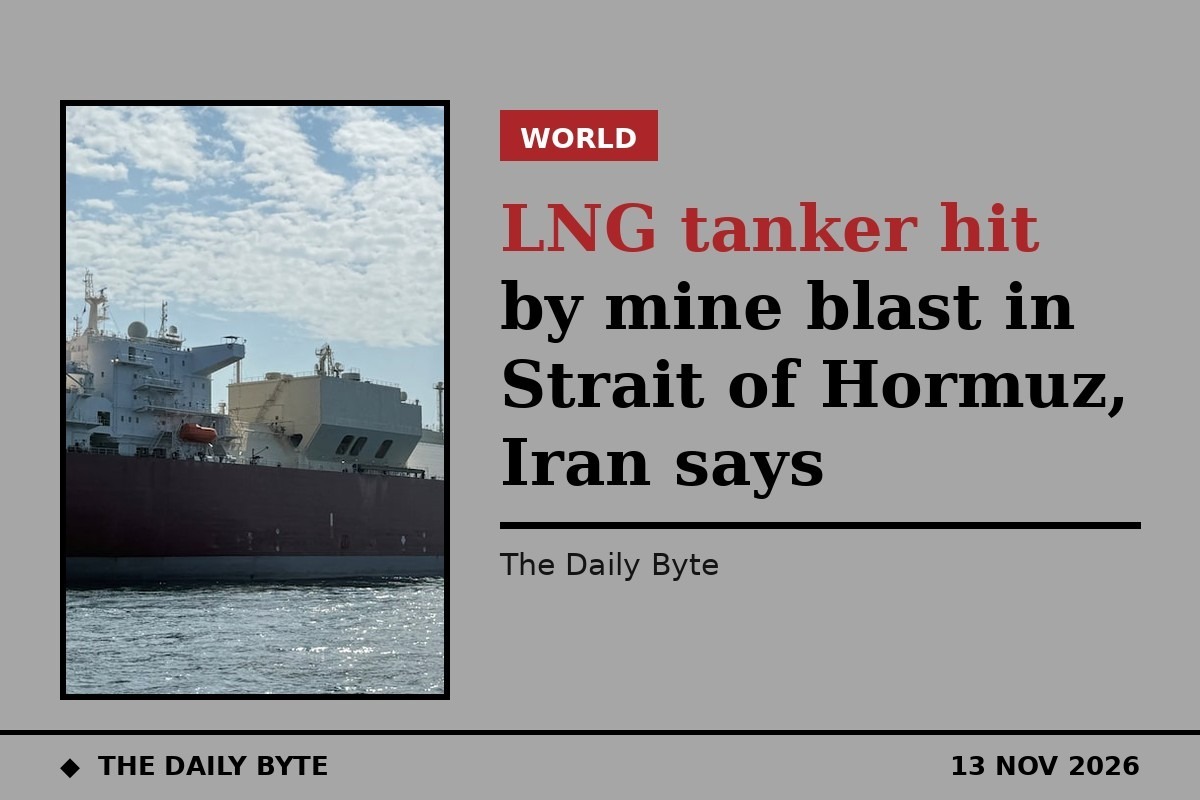
Iran's Revolutionary Guards navy says a tanker carrying liquefied natural gas struck a naval mine and suffered an explosion in the Strait of Hormuz on Friday, in the latest incident to hit commercial shipping in the vital waterway.
Iranian state media reported the Guards' account on Friday, saying the vessel had been using what Tehran described as an "unauthorised and dangerous route" through the strait. No details about the tanker were immediately available, including its name, flag or owner, and there was no immediate word on the condition of its crew.
The report did not say whether the vessel was still able to sail or whether any cargo had been lost. Reuters, which first reported the Iranian account, noted that the type of gas the tanker was carrying had not been specified.
Fourth incident in two days
The reported explosion came a day after Iranian media said four oil tankers had been hit by explosions in the strait on Thursday after ignoring warnings and entering areas Iran considers restricted. The Guards' navy had earlier said two supertankers were disabled by explosions on Wednesday night after using what it called an unauthorised southern route.
Shipping in the strait has faced repeated attacks since the United States and Israel went to war with Iran in late February. At least 10 ships were hit in the first 10 days of November, after 37 attacks in October, which was the highest monthly tally since the conflict began, according to data from the Washington Institute for Near East Policy cited by Reuters.
Iran has repeatedly warned vessels against using routes it has not approved, and has said safe passage requires coordination with its armed forces. The United States, which has imposed a naval blockade on Iranian ports, has said its forces are keeping recognised transit routes open, and US Central Command has previously said the main shipping lanes remain clear.
Claims remain unverified
None of the vessels named in Iran's recent mine claims has been publicly identified by an owner, a flag state or a maritime monitoring body, and Reuters said it could not immediately verify the Iranian accounts. The United Kingdom Maritime Trade Operations agency has reported separate tanker incidents in the strait in recent days, including a vessel hit by an unidentified projectile off the United Arab Emirates, but it has not attributed those incidents to mines.
The gap between what Tehran claims and what independent monitors can confirm has made the strait one of the most contested parts of the war at sea. Satellite heat data reviewed by maritime analysts showed no new fires at sea after the incidents reported on 11 and 12 November, although analysts cautioned that a blast that did not ignite cargo, or a fire put out quickly, would leave no such trace.
Oil prices steady despite the incident
Oil prices were little changed on Friday despite the latest report, and were set for a second weekly decline. Brent crude was down one cent at $95.41 a barrel, while US West Texas Intermediate crude fell 20 cents to $88.52, as traders judged that the US blockade of Iran would continue and reduce the chance of renewed large-scale fighting that could disrupt Middle East supplies.
President Donald Trump said on Truth Social that a deal with Iran was "not necessary" to end the war, indicating that he would stick with the blockade on oil shipments and with trade and economic sanctions. Iran has demanded the removal of sanctions, the unfreezing of assets and war reparations before it will reopen the strait fully and restart nuclear negotiations.
The Strait of Hormuz connects the Gulf with the Gulf of Oman and is one of the world's most important routes for oil and gas shipments. Traffic through the waterway has partly recovered in recent weeks, but shipowners remain wary, and tanker rates and insurance costs have stayed high while attacks continue.
Sources: Reuters, Devdiscourse, Reuters.