Lula Pledges Budget Discipline to Cut Brazil Rates
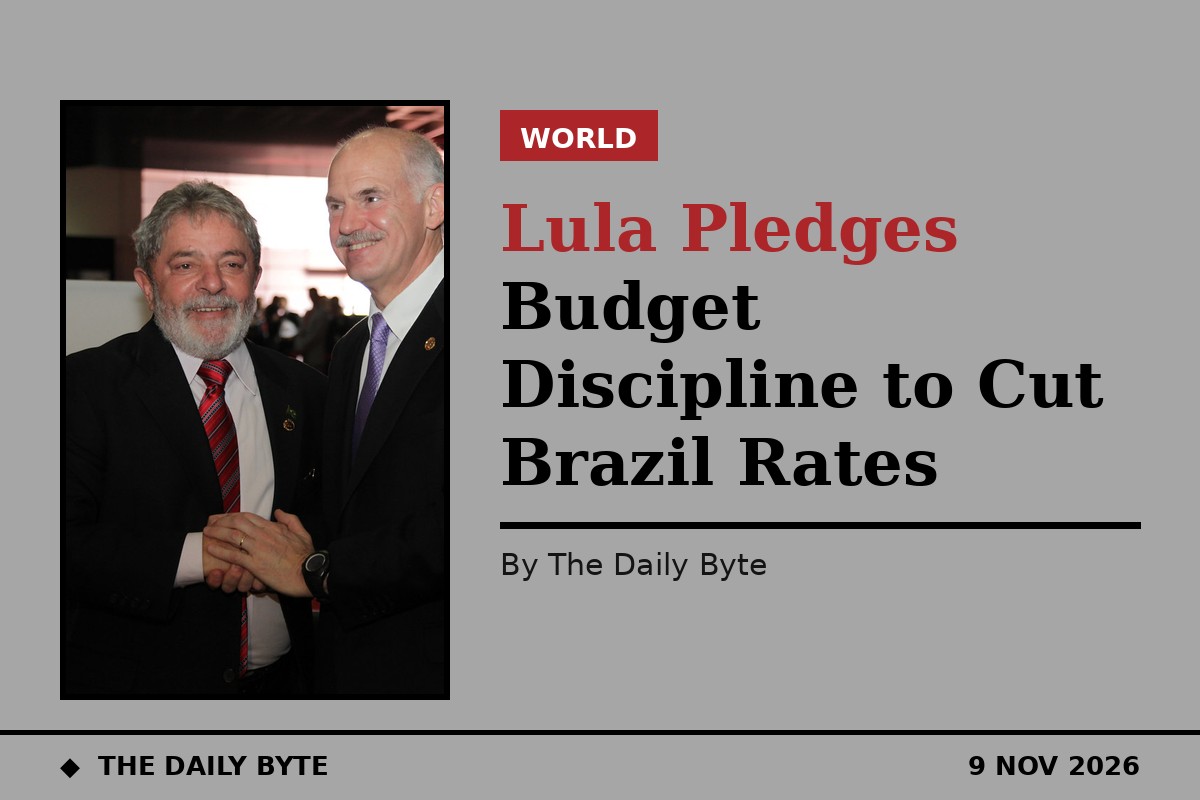
Brazil's re-elected President Luiz Inacio Lula da Silva has reaffirmed his commitment to fiscal responsibility in a televised address, saying he wants to help bring down the country's high interest rates but stopping short of announcing any new measures to address investor concerns.
In the address on Sunday, setting out the priorities for his upcoming fourth term, Lula pledged to respect Brazil's budget rules and said his government would work to create the economic conditions for borrowing costs to fall.
"The trajectory of public debt and high interest rates concern me which is why I reaffirm my commitment to fiscal responsibility, enabling sustainable social policies and the much-needed expansion of investment," the leftist leader said. "All of these efforts will be made while preserving fiscal rules," he added.
Lula said boosting investment would be a central goal of his next administration. "One of the main objectives of our government is to raise investment to more than 20% of gross domestic product, in partnership with the private sector. To that end, we will create the conditions to reduce interest rates," he said.
The comments echoed commitments Lula has made since his election victory two weeks ago, which weakened Brazil's currency, pushed up long-dated interest rates and hit the country's benchmark stock index as investors worried that he would not do enough to fix the public finances and stop rising debt.
Those concerns have been amplified by campaign pledges that would require additional government spending, raising questions about how the administration can reconcile those promises with its commitment to rising primary surplus targets. Markets have also been unsettled by Lula's decision so far not to name a finance minister or announce other key appointments.
Brazil's current fiscal framework commits the government to hitting targets for the primary budget while limiting real spending growth to 70% of any rise in revenues. The framework also caps annual expenditure growth at 2.5% above inflation, with a floor of 0.6%.
Lula won a fourth non-consecutive term on October 25, defeating right-wing Senator Flavio Bolsonaro in a surprise runoff turnaround. Gross public debt has risen by more than 10 percentage points during Lula's current term, reaching 82.9% of GDP.
Amid a deteriorating inflation backdrop, Brazil's central bank last week halted its rate-cutting cycle and kept borrowing costs at 13.75%, prolonging pressure on households already burdened by record indebtedness equivalent to 50.1% of income. Economists now see interest rates staying elevated for longer and have also cut their economic growth forecasts for next year.
Lula's new term begins in January, and investors will be watching closely for the naming of his finance minister and the first concrete steps on spending, with the televised address offering reassurance in words but no new policy detail.


