Lula and Trump Hold Three-Hour White House Talks on Trade
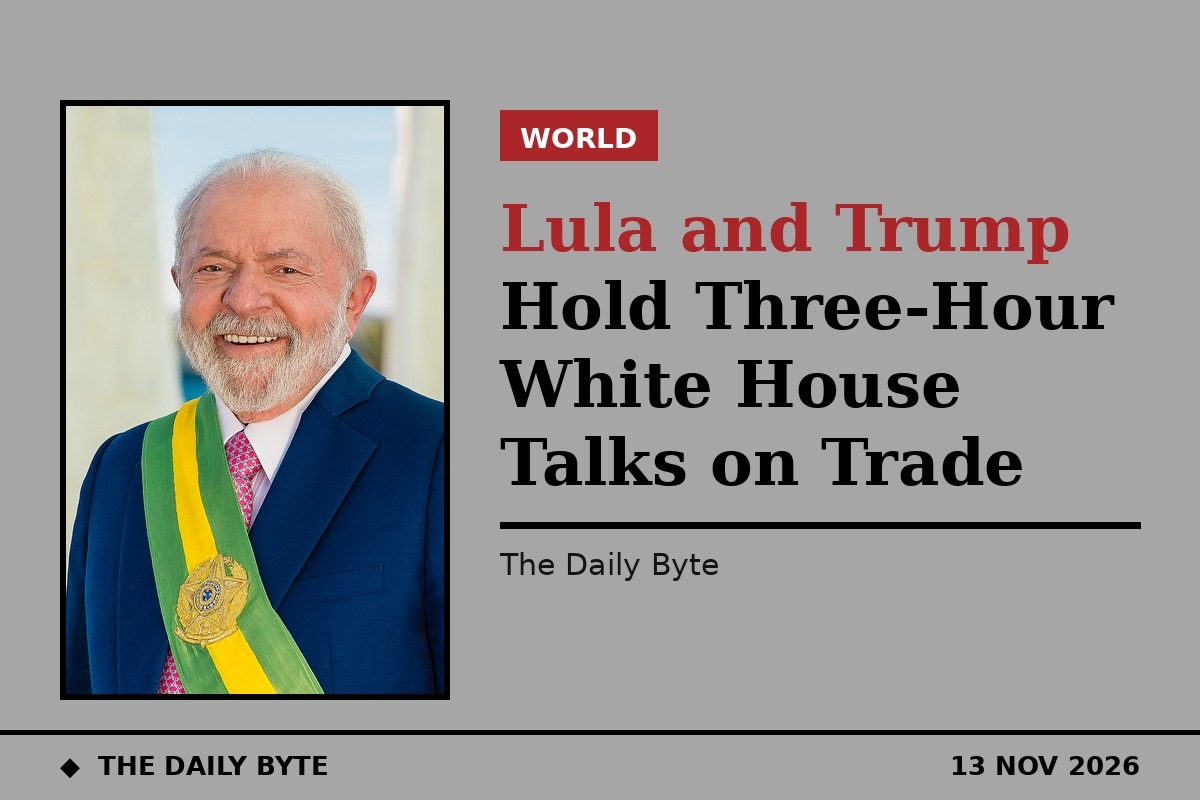
Brazilian President Luiz Inácio Lula da Silva met United States President Donald Trump at the White House on Thursday, 12 November, for about three hours of talks centred on trade, tariffs, security and critical minerals, as Lula sought to steady a relationship strained by a year of tariff disputes.
The two leaders had been scheduled to take questions from reporters together in the Oval Office, but they did not appear, prompting speculation that the talks had broken down. Both men later described the meeting in positive terms. Trump wrote on Truth Social that they had discussed many topics, including trade and specifically tariffs, and that the meeting went very well, adding that further meetings would be scheduled over the coming months.
Lula told reporters at the Brazilian Embassy in Washington that he had left the meeting very, very satisfied. “I believe it was an important meeting for Brazil, and an important meeting for the United States,” he said. “We took an important step in consolidating the Brazil-United States relationship.”
No press appearance after the talks
Lula arrived at the White House at 11am for what was meant to be a photograph opportunity with Trump, a closed-door meeting and a working lunch. Shortly after his arrival, the Oval Office photograph opportunity and press availability were pushed back until after the meeting and then cancelled altogether, without explanation from the White House.
Lula and his delegation left after about three hours with no in-person account of how the talks had gone. At the embassy afterwards, Lula said he had decided before the meeting that he would not address reporters, and Brazilian ministers who spoke at the briefing described the talks as having gone very well. They said American and Brazilian delegations would meet in the coming weeks to discuss an end to US tariffs on Brazilian imports.
Tariffs, critical minerals and organised crime
Trade dominated the agenda. Last year Trump imposed tariffs of 50 percent on Brazilian products, among the highest on any US imports, accusing Brazil of promoting a case against former president Jair Bolsonaro, who was later convicted of attempting to overturn democracy. Trump later withdrew most of the levies, including on Brazilian beef and coffee, in part to help calm rising US grocery prices.
In February, the US Supreme Court struck down the global tariffs Trump had imposed under a national emergencies law, removing many of the remaining levies. Brazilian products still face an extra 10 percent tariff due to expire in July, and Brazil has seen signs in recent weeks that its exports could face new tariffs linked to a US Section 301 investigation into unfair trade practices.
Critical minerals were also on the table. Lula told reporters that Brazil, which he said holds about 23 percent of the world’s rare earth reserves, wants to share its mineral potential with investors from any country. He proposed a bilateral working group of Brazilian and American trade representatives to meet within 30 days. Lula also said the United States had run a trade surplus of more than $400 billion with Brazil over the past 15 years, and rejected claims that Brazil imposes high tariffs on American goods, putting the average Brazilian tariff at 2.7 percent.
Tensions remain over digital trade, after Brazil blocked the US-backed renewal of a World Trade Organization e-commerce tariff moratorium, and over high Brazilian tariffs on some goods, including ethanol. The Office of the US Trade Representative last month also alleged that nearly half of Brazil’s timber exports come from illegal sources, a claim the Lula administration denies, arguing that it has brought deforestation rates to historically low levels.
A difficult week at home for Lula
The trip came in a difficult domestic week for the 80-year-old leader, who is seeking a fourth, non-consecutive term in next year’s presidential election, with polls currently showing him neck and neck with Flavio Bolsonaro, the son of his jailed predecessor.
Last week Congress dealt Lula two blows: the lower house overrode his veto on a law seeking to reduce Bolsonaro’s time in prison, while the Senate rejected his nomination to the Supreme Court, a first in more than 100 years. The White House visit was Lula’s sixth overall, and his first during Trump’s second term. It had initially been planned for March but was postponed.