Makkah Pact Allies to Discuss Yemen War in Islamabad
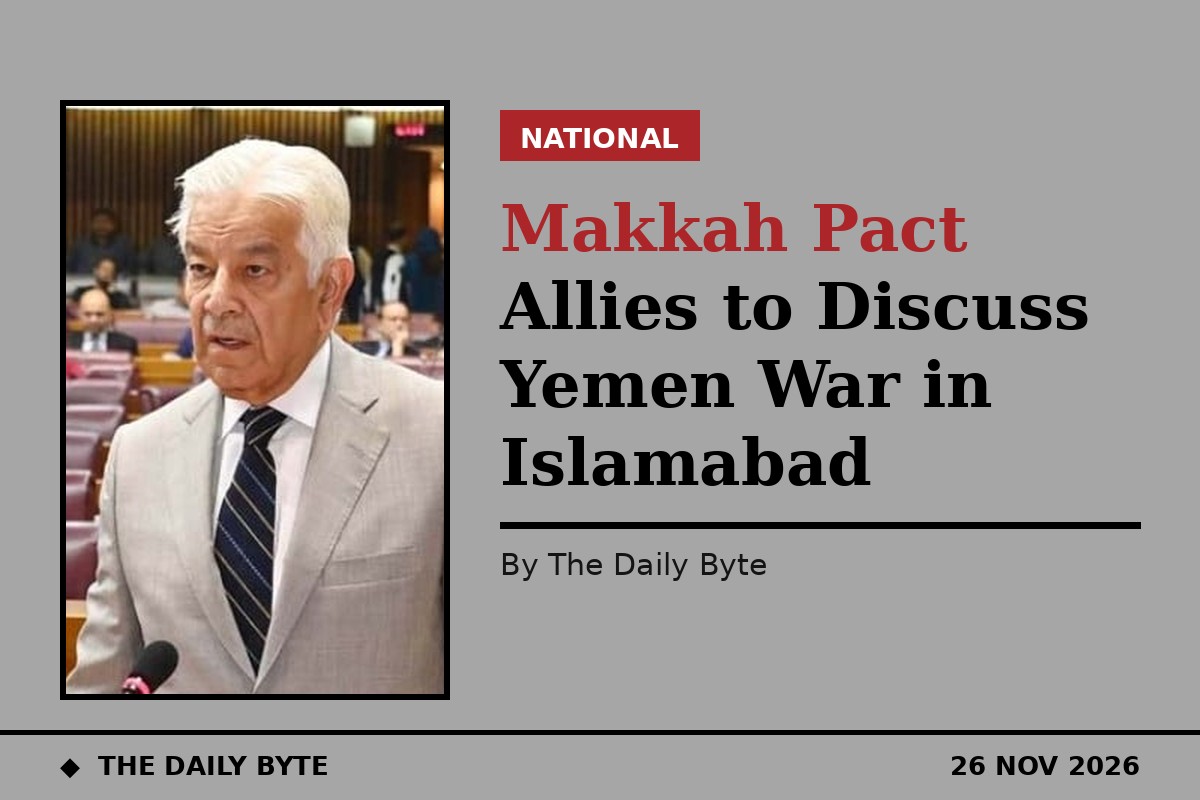
ISLAMABAD: Pakistan, Saudi Arabia and Turkiye will discuss Riyadh's conflict with Yemen's Houthis when the foreign and defence ministers of the three countries meet in Islamabad this week, Defence Minister Khawaja Asif has said.
Asif told the AFP news agency that the continuing turmoil south of Saudi Arabia would be on the agenda of the Makkah pact meeting, describing it as very important. He confirmed that defence and foreign ministers from Saudi Arabia, Turkiye and Pakistan would attend, and the Saudi and Turkish foreign ministers arrived in Islamabad on Wednesday ahead of the talks.
A threat to all three, Asif says
“Any threat to Saudi Arabia is a threat to Pakistan and Turkiye according to the pact, which is absolutely clear,” Asif said on Wednesday, praising Riyadh's handling of the conflict with the Houthis, who hold swathes of territory in Yemen, including the capital Sanaa.
Saudi Arabia has faced repeated barrages by the Houthis, with the group targeting cities, oil facilities and shipping since fighting in Yemen's civil war intensified in July. The attacks have included strikes on Saudi refineries and Red Sea ports in recent days, underlining why the conflict has forced its way onto the Islamabad agenda.
A pact still taking shape
Pakistan, Saudi Arabia and Turkiye signed the Makkah Joint Defence Agreement in August, pledging to come to each other's aid in the event of an attack. Asif said the pact, which was formed during the expansion of the war in the Middle East following US-Israeli strikes on Iran in February, was still at a “nascent stage”.
“Initially we need to have frequent meetings to steer what is being formulated, in a way that in the next couple of months we have everything in place so that we can move forward,” he said. The Islamabad session is the first high-level operational meeting of the alliance since Turkiye's ratification brought all three signatories fully under the pact's collective defence framework earlier this month.
Israel and Iran
Asif declined to comment on how the pact would react to a direct attack by Iran on Saudi Arabia, and identified Israel as a possible threat to other countries in the region. “The possibility of some conflict, or aggression from the Israeli side exists, so we need to close our ranks, the countries of this region,” he said.
Pakistan's mediation role
Asif also spoke about Pakistan's role between Washington and Tehran, saying Pakistan had played “a very, very constructive role”. Pakistan brokered a June accord that led to a brief halt in fighting between the United States and Iran and set a roadmap for further agreement on reopening the Strait of Hormuz and negotiations on Tehran's nuclear programme. But the truce collapsed, with Washington and Tehran accusing each other of violating the agreement, prompting months of shuttle diplomacy to resuscitate the ceasefire, led principally by mediators Qatar and Pakistan.
Asif said the outcome of the ongoing mediation was “still fragile” and that peace was “not yet embedded in a way people were expecting”. The Islamabad meeting will test whether the three Makkah pact partners can turn their mutual defence pledge into a working framework while the war on Saudi Arabia's southern border continues.
Sources: The News (AFP); Turkish Minute (AFP).