Malta stands firm on non-EU worker curbs to slow growth
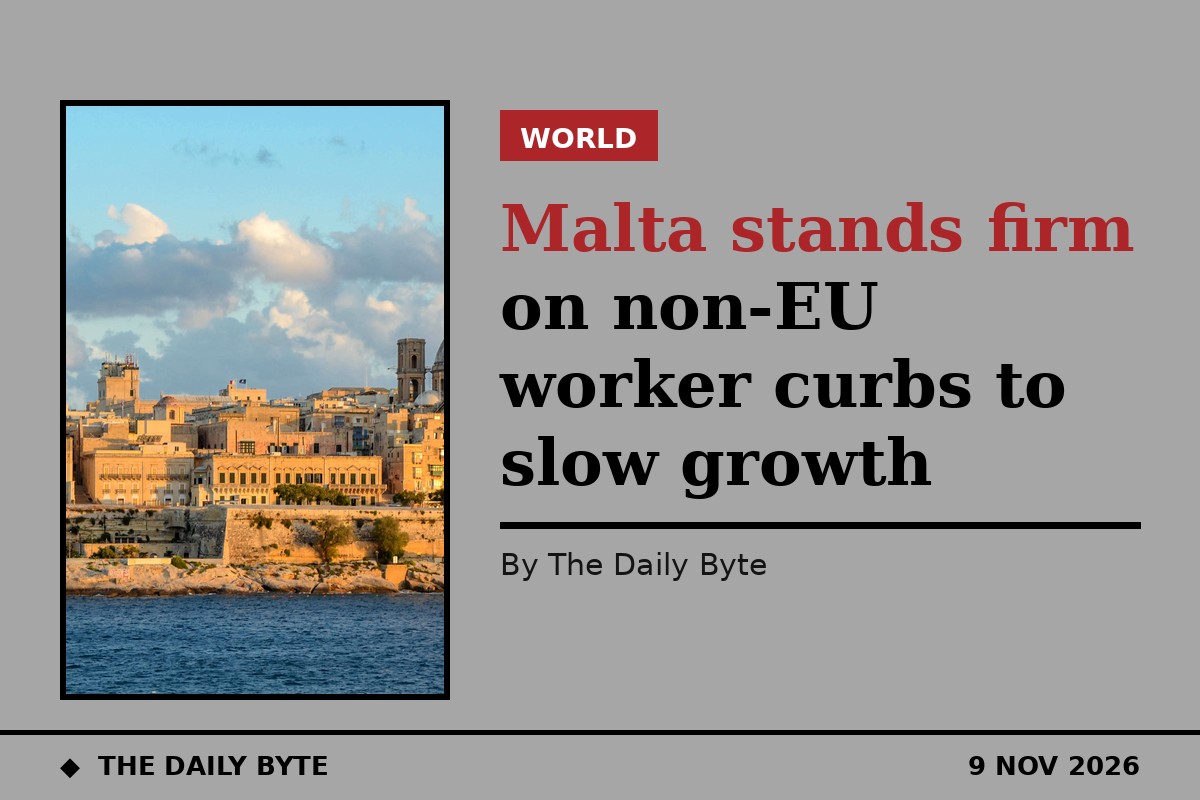
Malta's government will not retreat from its new restrictions on workers from outside the European Union, Finance Minister Clyde Caruana has confirmed, saying the measures are designed to slow the island's rapid population growth.
Caruana insisted on Sunday that the government would not alter or withdraw the recently introduced regulations affecting third-country nationals, the term for people without an EU, European Economic Area or Swiss passport. He said moderating demographic growth had become an essential priority for long-term national planning and resource management.
The stance follows mounting national debate over immigration and labour rules, which intensified after Archbishop Charles Scicluna rebuked state policy on third-country nationals. Business bodies including the Malta Chamber, the hoteliers, the SME chamber and the employers' association have issued a joint statement asking the government to think again, warning of potential labour shortages.
What the new rules change
The measures were announced in the 2027 Budget, presented by Caruana on 26 October, and most are scheduled to take effect on 1 January 2027. The fee for bringing a new third-country national worker to Malta rises from 600 euros to 800 euros, and a 400-euro infrastructure contribution is charged on every new permit and every renewal, with minors exempt.
From January, free public transport will be restricted to Maltese and Gozitan nationals, EU citizens living in Malta and people holding long-term resident status. Third-country nationals without that status will have to pay around 33 euros a month for buses. Free childcare for new registrations and the 150-euro payment for workers employed during atypical hours will also be reserved for Maltese and EU citizens and long-term residents.
Other changes include a monthly 83-euro administrative fee attached to Category B driving licences issued or renewed for third-country nationals, and a 12-month limit on driving with a foreign licence, which does not apply to a UK licence. The budget also doubled Gozo Channel fares for non-residents: an adult foot passenger will pay 11 euros instead of 4.65 euros, a child 7 euros instead of 1.15 euros, and a car with a non-resident driver 22 euros instead of 15.70 euros.
Why the government says it is acting
Caruana argued that the measures were needed to manage the pressures created by a decade of imported labour. In recent years Malta has seen a substantial influx of third-country nationals to meet private-sector demand in hospitality, construction, healthcare and transport, placing strain on physical infrastructure, healthcare services and traffic networks across the islands.
Malta reported economic growth of 4.4 percent in the first half of this year, but the government says growth must be managed on a more sustainable footing. According to the finance minister, the revised work-permit fees are expected to generate approximately 80 million euros, while the government has also referred to an estimated 46-million-euro fiscal impact associated with the measures affecting third-country nationals.
Prime Minister Robert Abela has defended the measures, rejecting claims that they discriminate against foreign workers, and has asked which country gives everything for free. The government has stressed that non-EU residents will keep healthcare and energy subsidies. Long-term resident status, which protects holders from the new restrictions, is not automatic: residents apply after five years of legal residence, subject to conditions on income, accommodation and integration.
Opposition offers a different plan
Opposition Leader Alex Borg presented an alternative economic plan at a business breakfast on Sunday, arguing that Malta's economic model should shift towards higher productivity rather than continued population growth. He noted that gross value added grew by 82 percent between 2015 and 2025, with around 70 percent of that growth coming from an increase in the labour force and only 3 percent from productivity improvements.
The budget also includes a tax-free super bonus of 1,000 euros, to be paid in the first quarter of 2027 to anyone who earned 12,000 euros or more in 2025, and a cost-of-living adjustment for 2027 of 6.41 euros a week, up from 4.66 euros this year. For now, Caruana has made clear that the government will not budge from its position on the foreign-labour rules, and the administration appears committed to enforcing the regulations as part of its wider economic policy.


