Matlala returns to Madlanga commission today
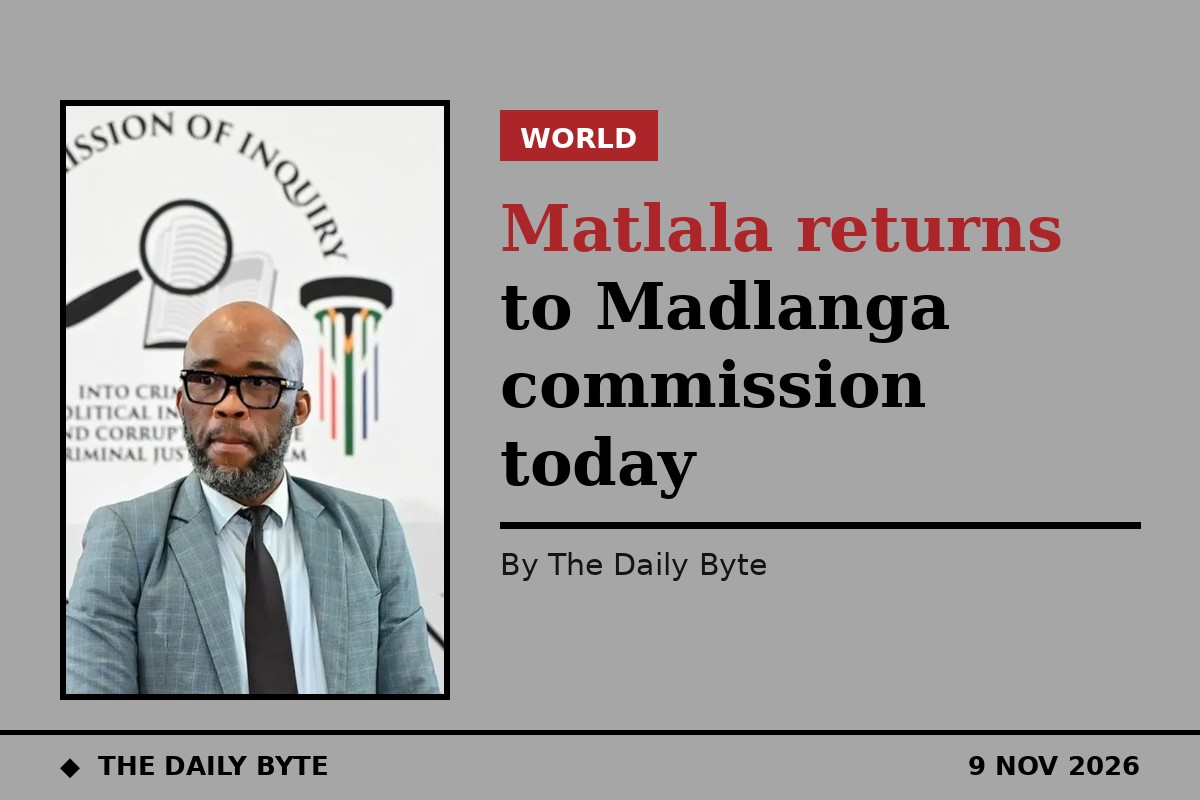
Businessman Vusimuzi “Cat” Matlala returns to the witness box of the Madlanga Commission of Inquiry on Monday, 9 November, as the inquiry resumes public hearings in South Africa after three weeks behind closed doors. He is scheduled to testify over two days, on 9 and 10 November, at the Brigitte Mabandla Justice College.
The hearings resume as the commission enters a critical phase of its investigation into alleged criminality, political interference and corruption within South Africa’s criminal justice system. Matlala is one of the most closely watched witnesses in the inquiry, and his return comes after the country’s local government elections, during which public hearings were paused.
The plea deal at the centre of the hearing
The central question hanging over Matlala’s appearance is the collapse of a plea-and-sentence agreement he had entered into with the National Prosecuting Authority, and what it means for the questions he can be asked. The agreement, made under section 105A of the Criminal Procedure Act, would have seen him sentenced to an effective eight-year term. It has since fallen away, and his legal team and the commission’s evidence leaders disagree on how the provision applies to the matters he may be questioned about.
In a ruling issued on 7 November, commission chairperson Justice Mbuyiseli Madlanga directed both sides to file written arguments on section 105A(10) of the Act by 5pm on Sunday, 8 November. Each side was limited to 15 pages and asked to address how the provision bears on the scope of Matlala’s testimony. The dispute will take centre stage as the hearings resume, according to reporting on the commission’s return.
Matlala previously appeared before the commission in August, when he repeatedly invoked his right against self-incrimination while being questioned about a South African Police Service healthcare tender and his alleged dealings with police officials. Whether he can be compelled to answer questions touching on the collapsed plea deal, and on matters that could incriminate him, is the issue the commission must now settle.
Why Matlala matters to the inquiry
Matlala is a crucial witness because the inquiry’s anchor allegations of criminal infiltration in the police service’s upper ranks were pinned on him by KwaZulu-Natal provincial commissioner Lieutenant-General Nhlanhla Mkhwanazi. The commission is examining claims that organised crime networks have penetrated law enforcement and that political figures interfered in criminal justice processes.
At the heart of the case against Matlala is a 228-million-rand tender awarded to his company, Medicare24, for police healthcare services in 2024. The police service cancelled the contract in May 2025 following an internal audit. Matlala faces criminal charges of fraud, corruption and money laundering in connection with the tender, and those charges remain before the courts.
A leaked draft affidavit compiled by Matlala last month contained wide-ranging allegations against senior police officials and political figures, including claims of cash bribes, extortion, tender manipulation and interference in parliamentary proceedings. Those claims have not been tested in evidence, and the commission has not made findings on them.
What happens next
Matlala’s two days of testimony form part of a wider push by the commission to complete the second phase of its work, in which people implicated in earlier evidence are given an opportunity to respond to the allegations against them. The commission also held a two-day seminar to prepare for drafting its final report, which is due to be delivered to President Cyril Ramaphosa by 25 January 2027 after the president extended the deadline.
Over the coming weeks the commission is scheduled to hear further high-profile witnesses under subpoena, including Police Minister Senzo Mchunu, Lieutenant-General Mkhwanazi and police crime intelligence head Lieutenant-General Dumisani Khumalo. Their evidence, along with Matlala’s, is expected to shape the remaining stages of an inquiry that has become one of the most consequential examinations of South Africa’s criminal justice system in years.


