Meningitis B Vaccine Deadline: Who Can Get the MenB Jab?
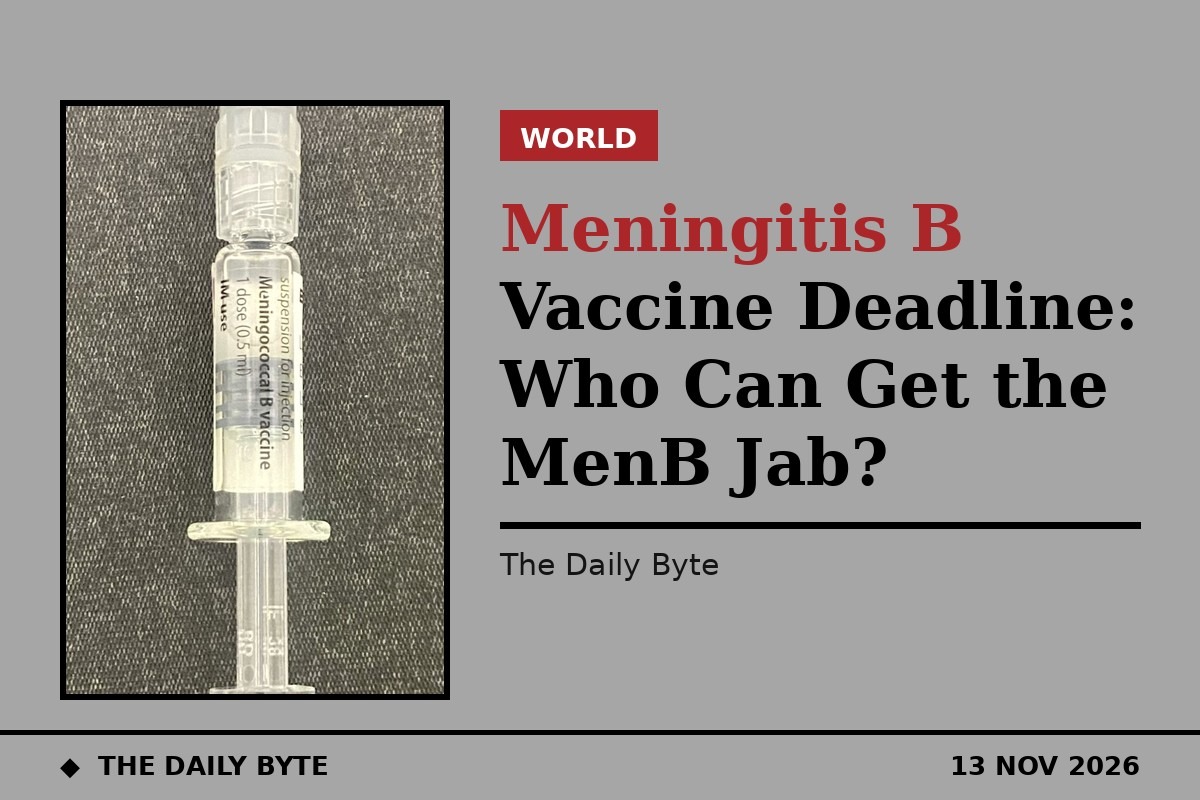
Eligible 18 and 19-year-olds in England have until 31 December 2026 to get their first dose of the free meningitis B vaccine, known as the MenB jab, as part of a one-off, time-limited programme. The deadline was restated by the UK Health Security Agency on 12 November 2026, which warned that time is running out, because only 28.2 percent of 18 and 19-year-olds have had a first dose so far, leaving more than 580,000 young people in that age group still to come forward.
The programme is free, and it is open to all 18 and 19-year-olds born between 1 September 2007 and 31 August 2008, as well as to people under 25 who started university, or residential further education, for the first time this autumn. Two doses are needed for protection, given at least 28 days apart, and while the first dose must be taken by the end of this year, a second dose will be available until 31 March 2027 for those who get their first dose in time.
Who can get the MenB vaccine?
The one-off programme covers three groups. The first is young people born between 1 September 2007 and 31 August 2008, which is the main 18 and 19-year-old cohort. The second is people under 25 who started university for the first time in autumn 2026, including eligible international students starting university in England for the first time. The third is people under 25 starting at an eligible further education college for the first time in autumn 2026 and living in further education accommodation.
Postgraduate students and people who have already started higher or further education are not eligible under the first-time entrant criteria. The programme began on 20 July 2026 and was announced by the government in June, following outbreaks and clusters of meningitis B disease during 2026. It is a one-off offer, not a permanent addition to the routine vaccination schedule, which is why the deadlines matter: once the first-dose offer ends on 31 December 2026, it will not be available again under this programme.
How many young people have had the MenB jab so far?
The latest UK Health Security Agency figures, covering uptake up to 31 October 2026, show that 228,297 out of 809,957 eligible 18 and 19-year-olds have had a first dose, which is 28.2 percent. That means more than 580,000 young people in this age group have not yet come forward for their first jab.
Of those who have had a first dose, 157,169 have also had a second dose, which is 68.8 percent. In other words, around seven in ten of those who have started their vaccine course have completed it, and 19.4 percent of the whole eligible age group have finished both doses. The UK Health Security Agency notes that the true number of young people vaccinated is likely to be a little higher than these figures suggest, because the vaccine has also been offered for the first time to older students aged up to 25 attending university or residential further education, and uptake data for that group will become available in the coming months.
Health officials are concerned about the low numbers. Dr Shamez Ladhani, a consultant epidemiologist at the UK Health Security Agency, said only just over a quarter of 18 and 19-year-olds have had their first dose and time is running out to get both doses and be protected from this devastating disease. He urged young people not to leave it until the end of term or forget it among the Christmas and other holiday festivities, warning that parties and gatherings inevitably lead to increased mixing with others, which raises the risk of meningococcal disease spreading among young people.
Why is the MenB vaccine urgent this year?
Meningitis B is a serious bacterial infection that can cause meningitis and septicaemia, and it can lead to life-changing illness or death. There have been several outbreaks of meningitis B in England this year, and three young people have tragically died. A recent bacterial genome sequencing study helped explain why the MenB outbreak in Kent in March was so severe, and it also highlighted how unpredictable the bacteria can be: as highly invasive strains can emerge suddenly and unexpectedly, similar outbreaks could occur again.
Young people starting university face a higher risk than their peers. Data show that young people starting at university are at increased risk of meningococcal disease because of social mixing patterns and other risk factors, with the risk for students in their first year of university around seven times higher than for young people of a similar age who do not go to university. The bacteria can spread through close or prolonged contact, including kissing, sharing drinks or vapes, and living in shared accommodation such as halls of residence.
Dame Diana Johnson, Minister of State for Public Health and Patient Safety, said it is great that so many young people have received their MenB jab and paid tribute to NHS staff and pharmacies across the country who have made the programme possible. She added that many eligible young people have still not taken it up and are currently missing out on the chance to protect themselves against this terrible disease, and encouraged everyone who has not yet had the jab to come forward, get both doses and ensure they are properly protected this Christmas.
How many doses do I need, and when?
Two doses are essential for protection. The second dose must be given at least 28 days after the first, followed by a further two weeks for the body to build a good level of immunity, which means the full vaccination course takes around six weeks from the first dose. That timetable is the reason health officials are pressing people to act now rather than waiting until the end of December: a first dose taken on 31 December would still qualify for a second dose by 31 March 2027, but the protection would not be complete until well into the new year.
The vaccine protects against most strains of MenB bacteria. The first dose is available until 31 December 2026, and the second dose is available until 31 March 2027. Young people are encouraged to have both doses as early as possible, ideally before starting university or further education, so that they are protected before the period of closest social mixing begins.
How do I book a MenB vaccination?
Students can get the vaccine from local pharmacies and can book through the NHS website, using the national booking service for MenB vaccination appointments. Eligible young people can book online, find a pharmacy offering walk-in vaccinations, or call 119 if they cannot book online. More than 37,000 jabs have been given in the east of England alone since the programme began, and nearly a quarter of a million doses have now been administered nationally.
Parents are also being urged to act. The UK Health Security Agency is calling on young people and their parents to book an appointment, and NHS vaccination leads have been urging students to book their second jab as well as their first, because a single dose does not give full protection.
What are the side effects of the MenB vaccine?
Common side effects can include swelling, redness or tenderness where the vaccine was given, as well as a mild fever, nausea, headache or muscle aches. Over-the-counter pain relief such as paracetamol can help manage these symptoms. Dr Ladhani said the vaccine can cause a sore arm for a few days, but compared with the potential devastating, life-changing consequences of infection, it is just not worth the risk of missing out.
Dr Manisha Kumar, chief clinical officer for NHS Greater Manchester, said some young people may have felt a sore arm or unwell after their first MenB vaccination and may be reluctant to have a second dose, but two doses are needed for protection. She said any side effects following vaccination are generally mild and short lived, while MenB disease can be extremely serious and can cause life-changing illness or death, and urged anyone who has already had a first dose not to stop there.
Frequently asked questions
What is the deadline for the MenB vaccine? The deadline for a first dose is 31 December 2026. A second dose will be available until 31 March 2027 for those who get their first dose in time.
Who is eligible for the free MenB jab? Young people born between 1 September 2007 and 31 August 2008, and people under 25 who started university or residential further education for the first time in autumn 2026. Postgraduates and continuing students are not eligible.
How many doses of the MenB vaccine do I need? Two doses, given at least 28 days apart, followed by a further two weeks for immunity to build. One dose alone does not give full protection.
Where can I get the MenB vaccine? From participating community pharmacies. Book through the NHS website, find a pharmacy offering walk-in vaccinations, or call 119 if you cannot book online.
Why are first-year students at higher risk? First-year university students have a risk of meningococcal disease around seven times higher than young people of a similar age who do not go to university, because of close social mixing, shared accommodation and contact such as kissing or sharing drinks.


