MEPs back €91.28bn EU infrastructure fund for 2028–2034
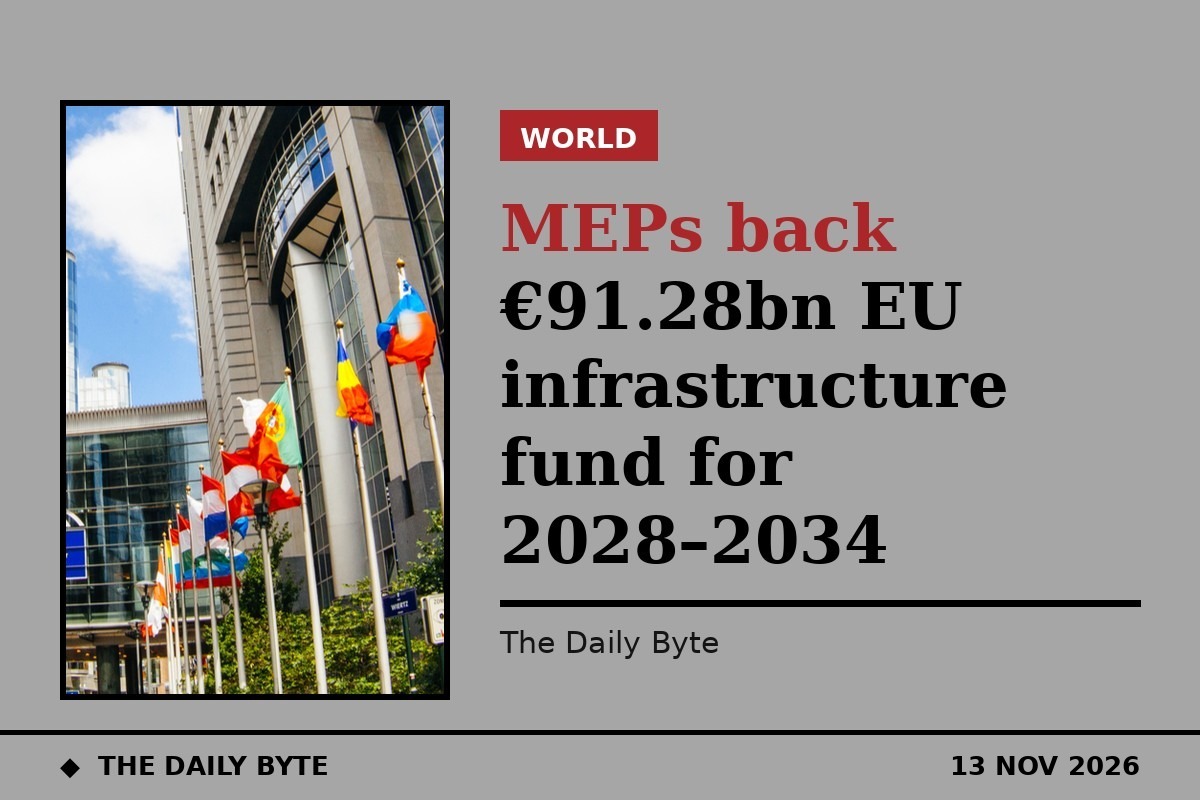
Members of the European Parliament want €91.28 billion for the European Union's main infrastructure fund in 2028–2034, nearly €10 billion more than the European Commission proposed, with the extra money split between transport, energy and military mobility.
The Parliament's Transport and Tourism and Industry, Research and Energy committees adopted their draft position on Tuesday 10 November, by 101 votes to one with 17 abstentions. The text sets the rules for the third generation of the Connecting Europe Facility (CEF), the EU's main funding tool for major cross-border infrastructure projects.
Under the committees' proposal, the fund would be divided into three separate pillars: €37.96 billion for transport, €19.78 billion for military mobility and €33.53 billion for energy, all in current prices. The Commission had proposed €81.42 billion in total. The MEPs put their figure at €81 billion in 2025 prices.
Almost three times the current programme
At €91.28 billion, the proposed budget would be almost three times the €33.7 billion allocated to the current CEF programme for 2021–2027, reflecting how far the EU's ambitions for cross-border infrastructure have grown since the fund was last agreed. The proposal also brings the budget closer to the €100 billion sought by 45 European transport organisations in a joint letter earlier this year.
In transport, MEPs want the funding to support the timely completion of cross-border sections of the trans-European transport network, known as TEN-T, the rail, road and waterway corridors that link the EU's member states. Maritime and inland waterway ports would remain eligible for transport funding, alongside passenger hubs and airport access infrastructure.
The energy pillar would support cross-border electricity interconnections, grid infrastructure and renewable and low-carbon energy projects, while the military mobility pillar would fund dual-use infrastructure that serves both civilian and military roles, including better access to ports. The committees also want stronger democratic oversight of how the money is spent and more incentives for small businesses to take part.
Negotiations with member states to follow
The committees separately endorsed a mandate for negotiations with the Council, the body representing member state governments, by 85 votes to 24 with nine abstentions. That mandate still requires approval by the full Parliament before talks can begin, and the final funding allocation and programme rules remain subject to the wider negotiations on the EU's 2028–2034 long-term budget.
The Council has already adopted a partial general approach on the regulatory provisions of the new fund, with budgetary matters left to the broader budget talks. The Commission proposed the new CEF regulation on 16 July 2025 as part of the EU's long-term budget package, and the legislation will need agreement between Parliament and the Council before it can take effect.
Transport groups welcomed the committees' position. The International Road Transport Union said the proposed €91.3 billion would be a major step up for cross-border connectivity, decarbonisation and military mobility, and urged negotiators to hold on to the funding ambition through the final budget talks.
Why the fund matters now
The push for a bigger infrastructure fund reflects two pressures on the EU. The first is economic: cross-border rail and energy links are still incomplete in many parts of the bloc, raising costs for businesses and travellers. The second is security: since Russia's full-scale invasion of Ukraine, the EU has treated the ability to move troops and equipment quickly across borders as a strategic need, which is why military mobility now has its own dedicated pillar.
For the Parliament, the vote is an opening bid rather than a final deal. The figure of €91.28 billion will now be tested against the Council's own position and the competing claims on the EU's next seven-year budget, where agriculture, regional development and defence are all seeking more money. But the near-unanimous committee vote gives the Parliament a strong hand as those negotiations begin.