US consumer sentiment rises to 51 as inflation fears ease
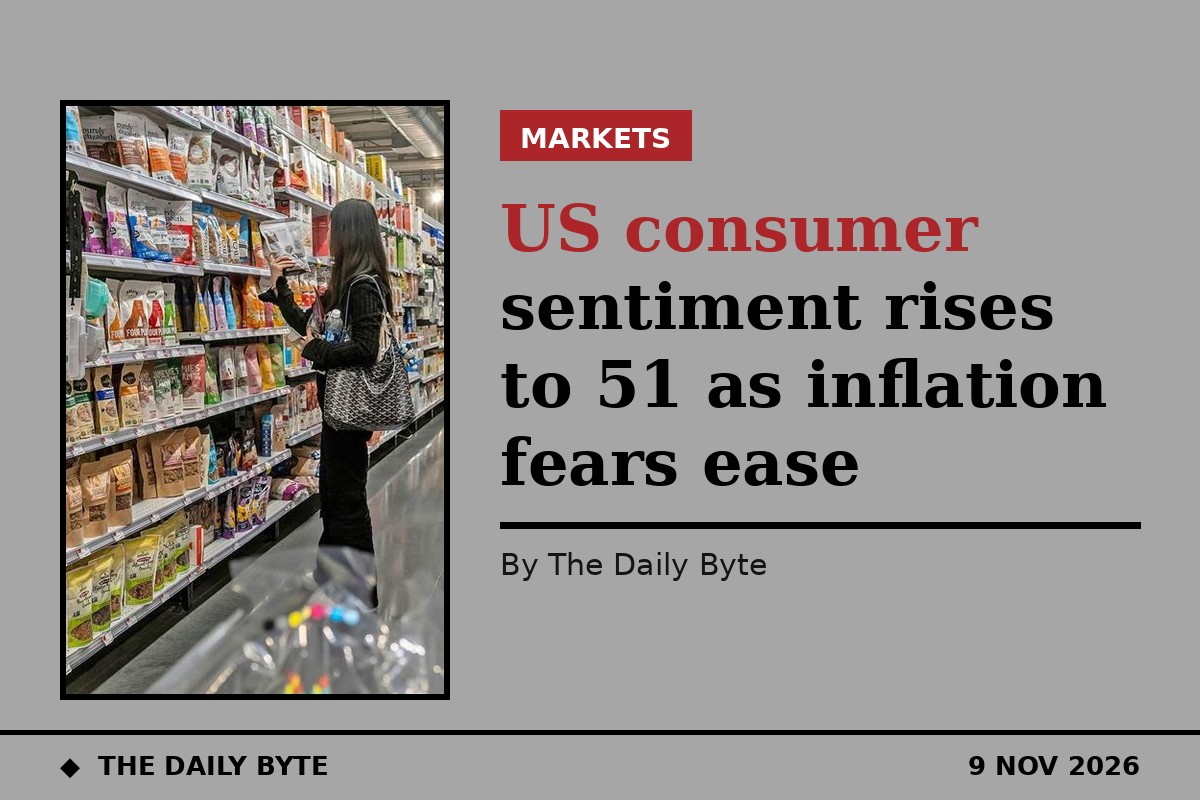
American consumer sentiment improved in early November, with the University of Michigan's preliminary index rising to 51.0 from a final reading of 48.0 in October, beating economists' expectations. The survey also showed inflation expectations easing, although households remain deeply unhappy about the cost of living.
Economists polled by Reuters had forecast the index would stay unchanged at 48.0. Instead it rose about 6% in the preliminary reading, its highest level since August, according to the university's Surveys of Consumers. The interviews ran from 20 October to 2 November, so the survey closed before the midterm elections, before the October jobs report and before the stock market turbulence that followed.
Inflation expectations ease
Consumers' expectations for inflation over the next year fell to 4.3% from 4.7% in October, the lowest since August. Expectations for inflation over the following five years slipped to 3.4% from 3.5%.
The survey's index of current economic conditions rose to 51.0 from 46.7, while its index of consumer expectations climbed to 50.9 from 48.8. Joanne Hsu, director of the Surveys of Consumers, said sentiment ticked up about 6% in the preliminary read and that the improvement was concentrated primarily among respondents identifying as political independents, with gains among lower- and middle-wealth households.
The softer inflation outlook will be noted by the Federal Reserve, which watches consumer expectations closely because they can feed into wage demands and price setting. Even so, the survey suggests households are far from confident about their finances.
A divided picture
The headline improvement hides a sharp divide. Sentiment fell 5% among consumers with the largest stock portfolios, while it rose among households with less wealth. About 57% of respondents volunteered, without being prompted, that high prices had eroded their standard of living, the highest share since May and up from 46% in February.
Overall sentiment was unchanged from November 2025 and stood about 10% below its February 2026 level, underlining how weak confidence remains despite the monthly rebound. Households also began to voice concern about a possible artificial intelligence investment bubble, a new worry appearing in the survey's responses, Reuters reported.
The divide matters for spending. Wealthier households, whose confidence slipped with the market, account for a large share of consumer spending, while lower-wealth households face the sharpest squeeze from prices even as their mood improved slightly.
What the reading misses
The preliminary figures capture none of the events that have moved markets and politics since the survey closed. The midterm elections, the October jobs report showing employers adding 165,000 jobs, and the sharp stock market sell-off that followed all came after the last interview on 2 November.
The final November reading, due on 20 November, will be the first to include interviews conducted after those events, and it may show a very different picture of consumer mood. Preliminary figures can also be revised when the final release arrives.
For now, the survey offers a snapshot of a consumer who feels slightly better about inflation but still believes prices are eating into living standards, and whose confidence remains well below where it stood at the start of the year.