Mojtaba Khamenei badly hurt in February strikes
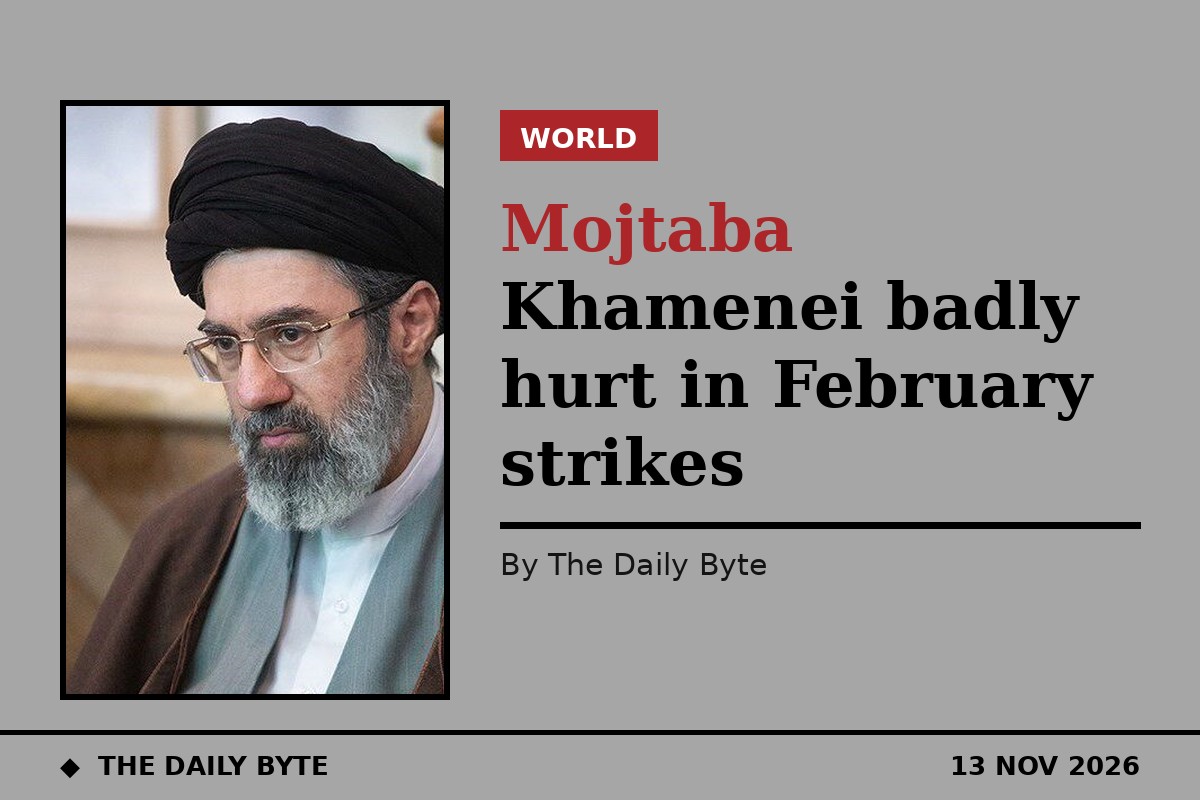
Iran's new Supreme Leader, Mojtaba Khamenei, was severely disfigured after suffering leg and face injuries in the joint US-Israeli airstrikes on Tehran in February, Reuters has reported.
Khamenei is recovering from the injuries sustained in the 28 February strikes that killed his father, former Supreme Leader Ayatollah Ali Khamenei. He has not been seen in public since being taken to hospital, according to the report, which cited three anonymous sources within his inner circle.
Despite the injuries, Khamenei remains mentally sharp, the sources told Reuters. He is in communication with the Iranian delegation in Pakistan for peace talks with a US delegation led by Vice President JD Vance.
No public appearance since February
The sources reportedly told Reuters that Khamenei could enter the public spotlight in a month or two, but only if his health and the security situation allowed. Iranian hardliners have stressed the importance of him keeping a low profile, with one militiaman asking Reuters in a text message why he should appear in public only to become a target.
Khamenei was appointed Supreme Leader on 9 March by the Assembly of Experts, after the killing of his father in the opening strikes of the US-Israeli war on Iran. The war began on 28 February and has since spread across the region, drawing in Lebanon, Yemen and the Gulf.
The Reuters report corroborates an earlier statement from US Secretary of War Pete Hegseth, who told reporters on 13 March that Khamenei was likely disfigured. Hegseth repeated the claim at a press conference on Thursday, listing the new supreme leader among the Iranian leadership wounded in the campaign.
At that briefing, Hegseth said Iran's top leadership had been systematically eliminated, including the previous supreme leader, and added that the new so-called supreme leader was wounded and disfigured. He said the new regime was out of options and out of time, so it cut a deal.
A written statement, not a broadcast
Despite his weakened condition, Khamenei vowed to put up resistance in a defiant written statement issued on Thursday. The statement said Iran was not seeking war but would not forfeit its rights, and considered all resistance fronts as a unified entity.
Hegseth dismissed the statement as weak, asking why it had been issued in writing when Iran had plenty of cameras and voice recorders. He said Khamenei's father was dead, that he was scared, injured and on the run, and that he lacked legitimacy.
The question of who is in charge in Tehran, and in what condition, matters well beyond Iran's borders. The supreme leader is the ultimate authority over Iran's armed forces and its nuclear programme, and his health has become a central uncertainty as Al Jazeera reported that the killing of Ali Khamenei had left Iran's network of regional allies in disarray.
Iran's foreign minister, Abbas Araghchi, has insisted in interviews that the Islamic Republic does not need its allies to fight its battles, saying Tehran can defend itself by itself. But with senior commanders of the Islamic Revolutionary Guard Corps also killed alongside the former supreme leader, analysts say the alliance that once linked Tehran to Hezbollah in Lebanon, the Houthis in Yemen and militias in Iraq is now fighting a series of separate survival wars.
For now, the man at the top of that system has not been seen or heard directly since February. Until he appears in public, reports of his condition rest on the accounts of those around him, and on the written statements issued in his name.