Moldova Stops Buying Russian Gas, Sandu Announces
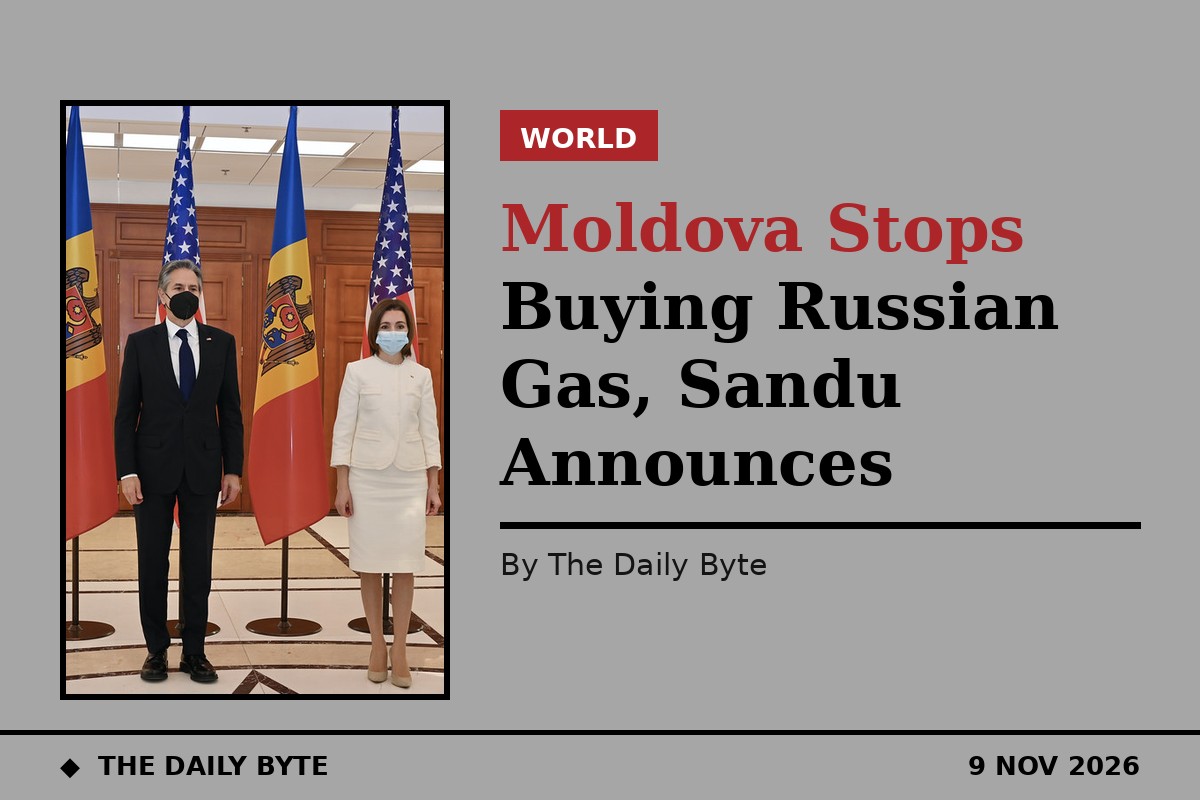
Moldova has stopped purchasing any gas from Russia, President Maia Sandu has announced, saying Moscow used energy supplies for decades to put pressure on her country and that this is now over.
Sandu made the announcement on X on Sunday, as Moldova inaugurated a new power line connecting the country to Romania and the European energy grid. She said two more power lines to Romania are being prepared and thanked those who contributed to the shift away from Russian energy.
"No one will be able to blackmail us, cut off our electricity, or shut off our heat anymore," Sandu said at the inauguration ceremony, recalling that Moldova's electricity had been switched off before, most recently in autumn 2021, whenever the country chose a path Moscow did not want. She said Moldova had invested too little in energy interconnection during its 30 years of independence, and that dependence on a limited number of suppliers had proved costly.
The announcement coincided with the launch of the Vulcanesti-Chisinau power line, a 158-kilometre link that allows electricity to be transmitted from Romania to central Moldova without passing through the Cuciurgan power plant in the separatist region of Transnistria. The project cost approximately 61 million euros, was financed by the World Bank, and its launch had been delayed by two years, which Sandu attributed to Russia's war against Ukraine.
European Commissioner for Enlargement Marta Kos, who attended the ceremony, said Moldova's dependence on Russian energy had genuinely come to an end. "Today, we can say that the Republic of Moldova's dependence on Russian energy has truly come to an end. No country has the right, or will be able, to use energy supplies to dictate anything to Moldova," Kos said.
Moldova's energy break with Russia has been years in the making. Ukraine halted the transit of Russian gas across its territory last year, which cut output at the gas-fired power plant in Transnistria that had supplied four-fifths of Moldova's electricity needs. Moldova subsequently turned to purchasing electricity from European suppliers, although the existing power line often could not handle the load.
The shift has come at a cost for households. Gas prices for Moldovan consumers have risen by an average of 80 percent since August, according to Russian newspaper Kommersant. Sandu has argued that the price of dependence was higher, pointing to repeated supply cuts used as political leverage.
The energy announcement also lands as Moldova advances its bid to join the European Union. The European Commission has said Moldova made the largest progress of any candidate country over the past year despite persistent hybrid threats and outside pressure, opening four of six negotiating clusters and recording good progress in 28 of 33 negotiating chapters. The Commission views concluding accession talks by 2028 as realistic if reforms continue.
The EU has pledged 1.9 billion euros in support to Moldova, disbursed in stages, of which the country has so far received 661 million euros. Kos is in Moldova from 8 to 10 November to discuss the country's progress on its EU accession path and to advance regional cooperation on digital connectivity.


