More Than 300 Children Contracted HIV Due to the Reuse of Syringes.
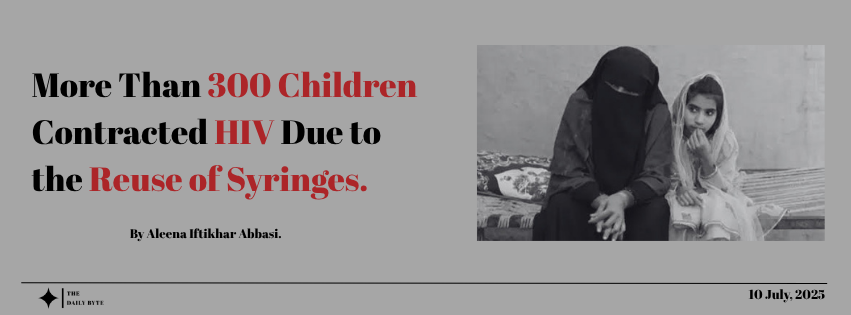
The HIV outbreak among children was later linked to a government hospital in Taunsa, Punjab, Pakistan. Investigations found that all of the affected children had previously received treatment at the same hospital. Evidence suggested that unsafe medical practices, particularly the reuse of syringe bodies in the pediatric ward, played a significant role in the spread of the virus. Using the same syringe on multiple patients is a serious violation of medical safety standards, as it can transmit blood-borne infections such as HIV, putting patients' lives at risk.
During the BBC's undercover investigation, the reuse of syringe bodies was not the only unsafe practice captured on camera. The footage also documented several serious breaches of infection control protocols. Nurses were seen searching through medical waste without wearing sterile gloves, while some patients were treated without healthcare workers using protective gloves. Although needles were sometimes replaced after use, the syringe barrel was reportedly reused for multiple patients. Medical experts warn that even if the needle is changed, reusing the same syringe body can still pose a risk of transmitting blood-borne viruses, including HIV, if it has been contaminated with infected blood.
Understanding HIV and the Risks of Reusing Syringes
Human Immunodeficiency Virus (HIV) is a virus that attacks the body's immune system, particularly the CD4 (T-helper) cells, which play a vital role in fighting infections. As these cells are destroyed, the immune system becomes weaker, making the body more vulnerable to various illnesses and infections. Although there is currently no cure for HIV, early diagnosis and treatment with antiretroviral therapy (ART) can effectively control the virus, allowing people to live long and healthy lives. If left untreated, HIV can progress to Acquired Immunodeficiency Syndrome (AIDS), the most advanced stage of HIV infection.
HIV is primarily transmitted through unprotected sexual contact, sharing contaminated needles or syringes, transfusion of infected blood, and from an HIV-positive mother to her child during pregnancy, childbirth, or breastfeeding.
For children, HIV can be particularly serious because their immune systems are still developing. Without timely diagnosis and treatment, the virus may progress more rapidly than it does in adults, increasing the risk of severe infections and other health complications.
The single-use principle is one of the most fundamental rules of safe injection practices. Every injection should be administered using a new, sterile syringe and needle, both of which must be discarded immediately after use. Even if only the needle is replaced, reusing the same syringe barrel can still transmit blood-borne viruses such as HIV if contaminated blood remains inside the syringe.
The Human Cost of Medical Negligence
Beyond the statistics lies the human cost of the outbreak. Hundreds of children and their families now face a lifetime of physical, emotional, and financial challenges. While antiretroviral therapy (ART) can effectively manage HIV, it requires lifelong treatment, regular medical check-ups, and continuous access to healthcare.
The outbreak also raises difficult questions about accountability. Who will answer for the trauma endured by these children and their families? Who bears responsibility when preventable medical practices leave patients with a lifelong infection?
Many families who rely on government hospitals in Pakistan come from low-income backgrounds, including daily wage earners, clerks, and other working-class households. For them, the cost of lifelong treatment, transportation to healthcare facilities, and regular medical monitoring can place an enormous financial burden on already limited incomes.
Perhaps the greatest loss is the breach of trust. Parents take their children to hospitals expecting safe and professional medical care. Instead, according to the investigation, the very healthcare practices meant to protect patients became the source of a life-altering infection. For many families, the consequences extend far beyond medical treatment they represent the loss of confidence in a healthcare system they depended on during their time of need.
Accountability and a Crisis of Trust
The hospital administration rejected allegations that the HIV outbreak originated from its facility, even after being presented with footage from the BBC's undercover investigation. Hospital officials reportedly dismissed the recordings as staged, fabricated, or outdated, denying any wrongdoing. Local authorities also stated that there was no conclusive evidence proving that the government hospital was the sole source of the outbreak.
These responses have intensified public concerns over medical negligence and accountability. For many families, the case has damaged trust in healthcare professionals and raised difficult questions about the responsibility of hospitals to ensure patient safety. When people seek medical treatment, they place their lives and the lives of their children in the hands of healthcare providers, expecting care that meets established medical standards.
The incident is also not an isolated one. Pakistan has experienced several HIV outbreaks in different parts of the country in recent years, including the widely reported outbreak in 2019.These recurring incidents have highlighted persistent weaknesses in infection-control practices, healthcare oversight, and regulatory enforcement.
Ultimately, this case raises serious concerns about Pakistan's healthcare system and patient safety. Hospitals and healthcare workers must strictly follow infection-control protocols, including the proper use and disposal of single-use medical equipment. Equally important is ensuring transparent investigations and accountability whenever patient safety is compromised. Strengthening these safeguards is essential to restoring public trust and preventing similar tragedies in the future.