Mozambique seeks $37.2bn for climate resilience at COP31
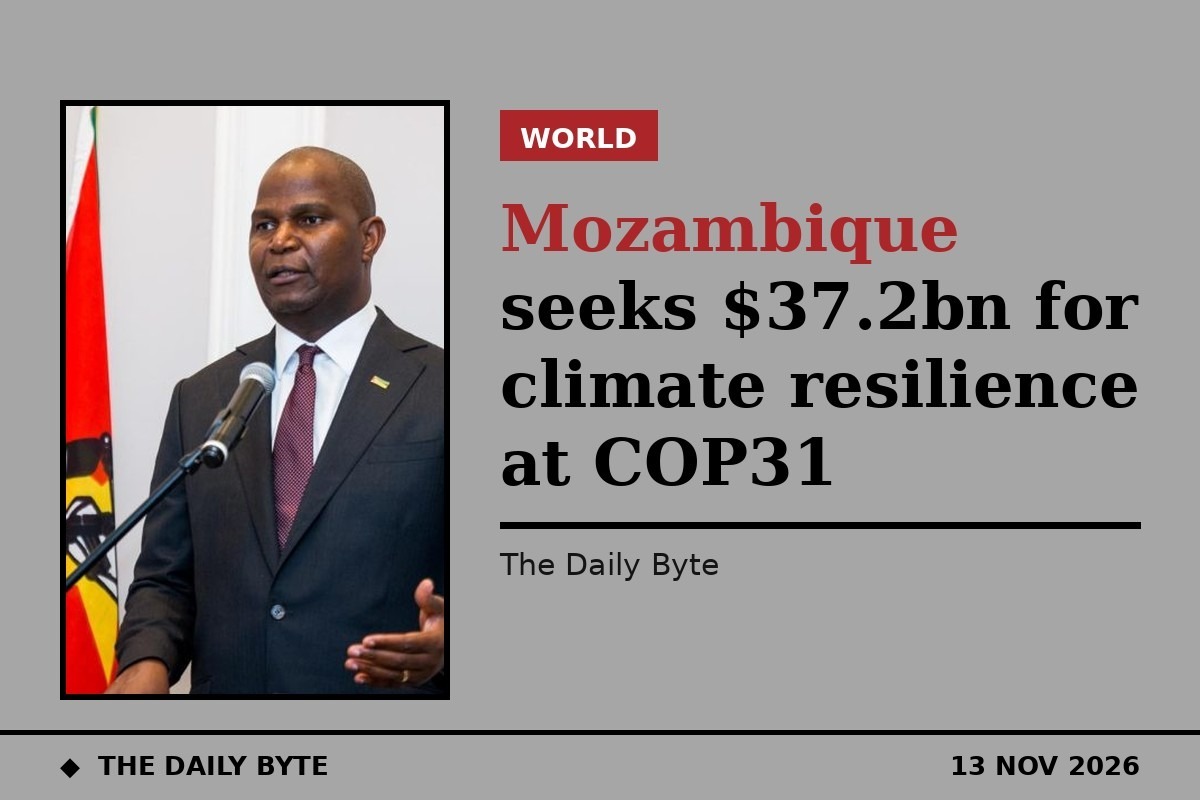
Mozambique needs about 37.2 billion US dollars over the next ten years to protect its people from cyclones, floods and droughts, President Daniel Chapo told world leaders at the COP31 climate summit.
Speaking at the Leaders' Summit in Antalya, Turkey, on 11 November, Chapo appealed to bilateral and multilateral partners to fund climate adaptation at scale, warning that repeated disasters are steadily eroding the country's development gains.
"To strengthen climate resilience and protect the population, Mozambique requires approximately US$37.2bn over the next 10 years," he said. The appeal covers adaptation, disaster-risk reduction and community protection.
A country battered by repeated disasters
Chapo set out the scale of the damage behind the figure. More than 76 climate-related disasters struck Mozambique between 2000 and 2025, causing economic losses of more than 4.5 billion dollars, he said. The disasters have damaged homes, transport links, public services and productive assets, leaving the state and affected businesses to carry the recovery costs.
The most recent rainy season underlined the argument. Between October 2025 and April 2026, flooding and storms caused 311 deaths and affected about 1.07 million people, according to Mozambique's National Institute for Disaster Risk Management and Reduction.
Chapo urged major economies to cut emissions and honour existing climate-finance commitments, and linked Mozambique's appeal to wider calls from vulnerable countries for funding that is easier to access.
Early warning before the next storm
Mozambique has not waited for finance to arrive before preparing. The government has drawn up 141 local adaptation plans and set up more than 1,500 local disaster-risk management committees, according to COP31 reporting. A National Adaptation Plan brings climate risks into local development planning and gives priority to early-warning systems.
The country's work on anticipating disasters has drawn international attention. Chapo serves as the African Union's Champion for Disaster Risk Management, and Mozambique hosted an international conference on disaster risk reduction in Maputo. At COP31, the country took part in a high-level Africa event on early-warning systems and multi-hazard resilience, alongside Ethiopia's Prime Minister Abiy Ahmed, African Union Commission chair Mahamoud Ali Youssouf and the head of the World Meteorological Organization, Andrea Celeste Saulo.
With support from Italian development cooperation, Mozambique has been strengthening its national early-warning system through tools such as myDewetra and Flood-PROOFS Mozambique, which combine monitoring with weather and flood forecasts and risk analysis. The work feeds into the African Union's continental early-warning system, known as AMHEWAS, which aims to help countries share risk information and act before disasters strike.
Preparing farms for El Nino
The government has also moved to shield agriculture from the El Nino weather pattern, which is expected to bring drought and water shortages to parts of the country in 2026 and 2027. About 95 million dollars has been mobilised with support from partners including the World Bank, the International Fund for Agricultural Development and the African Development Bank.
The funding is expected to pay for climate-adapted seeds, irrigation equipment, help for farmers and livestock producers, and stronger early-warning systems. At least 52 districts in the central and southern regions have been identified as vulnerable to El Nino, and a national action plan is being prepared to limit the effects of drought and water scarcity.
A test for climate finance
The 37.2 billion dollar request is one of the largest adaptation finance appeals heard at COP31, and it tests whether climate-finance providers can fund resilience at the scale vulnerable countries need. Unlike projects that cut emissions, resilience spending produces returns mainly through losses avoided, which can make it harder to finance through conventional investment.
Public guarantees, results-based funding and insurance-linked instruments can help make such spending bankable, and Chapo's government is presenting its adaptation plans and disaster committees as a ready pipeline for development finance, covering weather monitoring, evacuation systems, flood protection and climate-aware public investment.
There are signs of growing appetite for such spending: the Adaptation Fund recently committed 35 million dollars to African climate resilience. But no concrete financial commitments resulting from Mozambique's participation at COP31 had been announced by 12 November, and development financiers will now watch how the country's National Adaptation Plan is turned into costed projects.
Source: Further Africa; Africa News Currents, 12 November 2026.