MPs urge statutory school libraries as reading declines
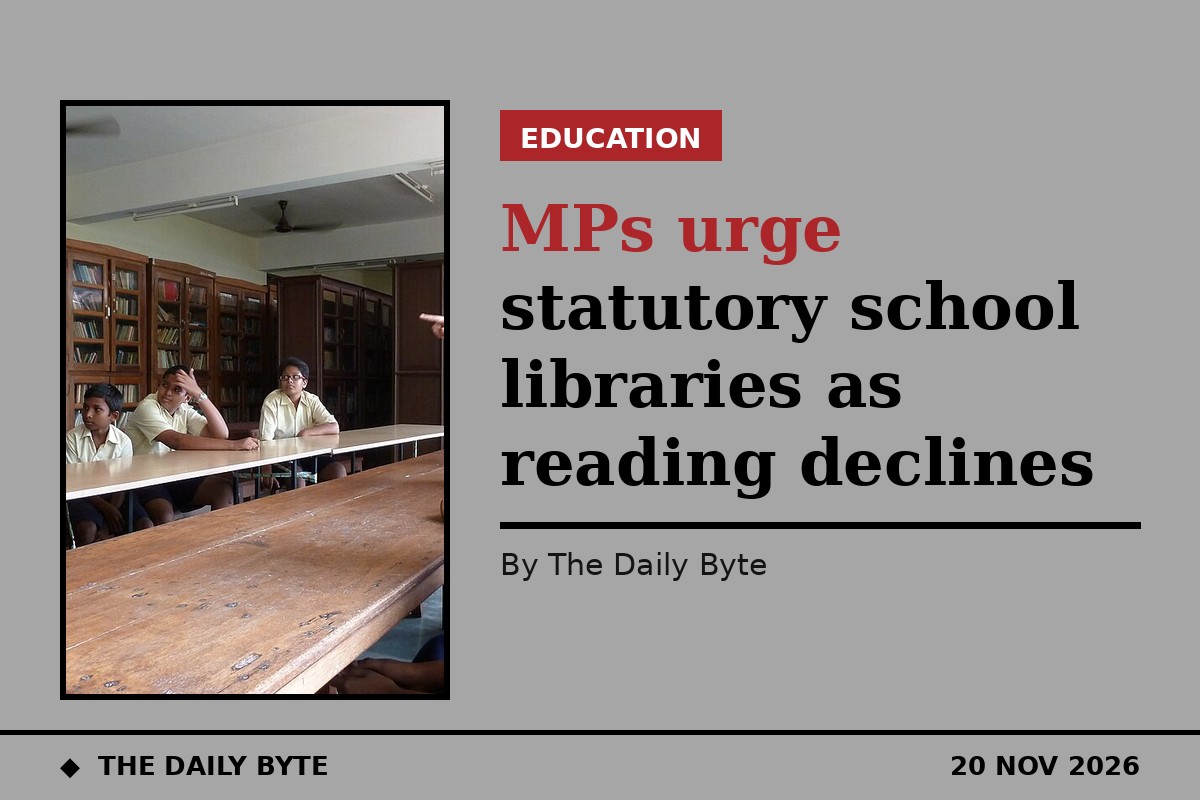
MPs have urged the government to make school libraries a legal requirement, warning that children are reading for pleasure less than ever — but ministers have rejected the call in their formal response to a parliamentary inquiry.
The House of Commons Education Committee said libraries were “powerful equalisers” that give every child, whatever their background, access to books. It pointed out that libraries are a statutory requirement in prisons, but not in schools.
The committee's report, Reading for Pleasure, was published in July 2026. The government's response, published as a special report on 19 November 2026, accepts much of the committee's case for reading but stops short of the statutory guarantee MPs wanted.
What the committee found
The committee launched its inquiry in November 2025 in response to what it called worrying reports of a long-term decline in reading for pleasure among children and young people.
It found that the Department for Education's focus was “overwhelmingly on reading proficiency over pleasure”, with an overloaded curriculum and a heavy emphasis on assessment crowding out opportunities for children to enjoy books. MPs were particularly concerned about the secondary English curriculum, and said GCSE English Literature risked turning children off reading.
Evidence to the inquiry showed that among secondary pupils, only 12 per cent read every day, compared with 32 per cent who read rarely and 13 per cent who never read.
The committee called on the government to commit to a National Reading Guarantee, ensuring every child has frequent, regular opportunities to enjoy books, stories and shared reading from birth to 18, and to turn the National Year of Reading into a National Decade of Reading.
It also urged ministers to extend the pledge to fund a library in every primary school to include every secondary school, and then to place school libraries on a statutory footing. It backed an auto-enrolment scheme under which every child would be issued with a library card when their birth is registered.
What the government offered instead
In its response, the government said it shared the committee's view that fostering a love of reading was vital, and pointed to the National Year of Reading 2026, launched in January as the biggest campaign in a generation to encourage reading.
Ministers confirmed £12.5 million to provide a library in every primary school in England by the end of this Parliament, and £5 million for secondary schools to buy books and reading material to support reading enjoyment.
The Autumn Budget also announced up to £5 million a year for three years from 2027-28 for organisations such as the Dolly Parton Imagination Library and BookTrust, to increase access to books for young children and help improve their readiness for school.
But the government said it did not intend to establish a national reading guarantee or a separate reading for pleasure strategy. It said it accepted the central objective of ensuring all children have access to books, stories and shared reading opportunities, and would pursue it through existing investment in school libraries, family hubs, the Reading Framework and the National Year of Reading.
What happens next
The committee had also called for the restoration of funding for public libraries lost since 2010 by the end of this Parliament. The government response notes up to £150,000 invested in public libraries through the Department for Culture, Media and Sport as part of the National Year of Reading.
With the government declining the statutory route, the debate now turns to whether the funding announced so far is enough to reverse the decline in reading for pleasure — and whether secondary schools, where daily reading is rarest, will see the books and library time MPs say they need.