Myanmar Workers in Thailand Reject Junta ID Plan
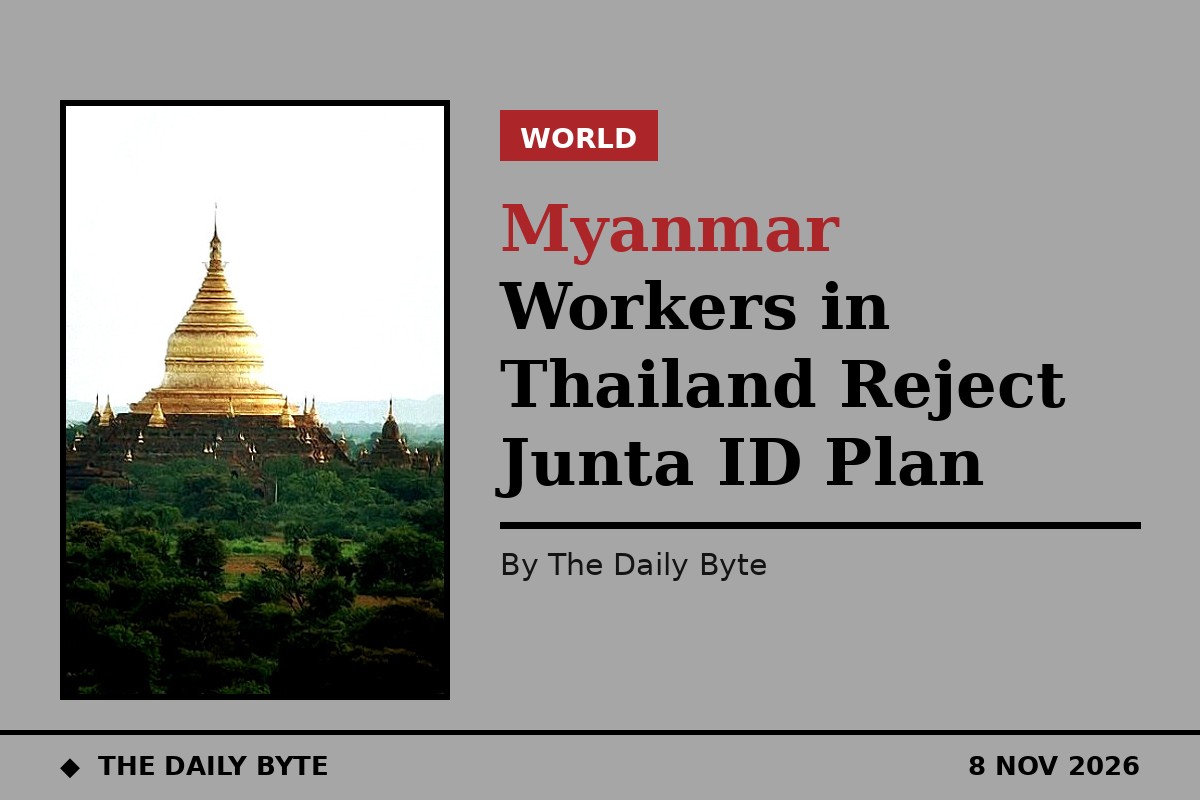
More than two million Myanmar migrant workers in Thailand have backed a campaign rejecting a new identity document issued by Myanmar's military regime, in a growing standoff that is now drawing attention from governments in both Bangkok and Naypyitaw.
The workers are opposing the junta's new Certificate of Identity (CI) process, which requires applicants to prove they have transferred 25 per cent of their wages through official channels and paid a 2 per cent income tax. Critics say the measures place a heavy financial burden on low-paid workers while helping to fund the military authorities at home.
A week-long online poll organised by migrant worker groups found overwhelming support for an alternative system run by Myanmar's opposition National Unity Government (NUG), which many participants regard as the country's legitimate authority. The poll was launched by the Myanmar Migrant Workers' Representative Coordinating Committee in Thailand, and organisers say the result also sends a message to the Thai government about who migrant workers believe should represent them.
Thailand is home to an estimated four million Myanmar nationals, making them a vital part of the country's workforce in construction, fisheries, food processing and domestic work. Activist groups estimate that at least 600,000 workers are expected to apply for the new documents during the current registration round, yet reports suggest turnout at the five recently opened CI centres has remained extremely low.
Many workers fear the registration process could hand the military regime both revenue and personal data. Khin Soe, of the migrant workers' coordinating committee, said workers viewed the CI process as a means of extracting foreign currency and personal information that could potentially be used for military conscription. The committee plans to submit the poll results to the NUG's Labour Department, while a separate petition will be presented to the Thai government.
The dispute has also sparked concern within Thailand. Opposition politicians and labour-rights organisations have questioned whether allowing the Myanmar authorities such a role in migrant registration is compatible with Thai sovereignty and national security. MP Anuson Tamajai has called for the government to review or cancel the CI centres, and some have called for a return to the existing Pink Card system used by migrant workers.
Thai Labour Minister Julapun Amornvivat has already voiced opposition to the mandatory remittance requirement and said his ministry would raise the issue formally with its counterpart in Myanmar. He has argued that the policy violates migrant workers' rights and falls short of international standards.
Myanmar's military government, meanwhile, has shown no sign of backing down. Labour Minister Maung Myint has warned workers that those who refuse to comply could face legal consequences and restrictions on returning home. For now, however, the boycott appears to be holding firm, highlighting both the economic importance of Myanmar workers in Thailand and their growing resistance to the military authorities they left behind.


