NESO Issues Rare Power Call as Wind Output Drops
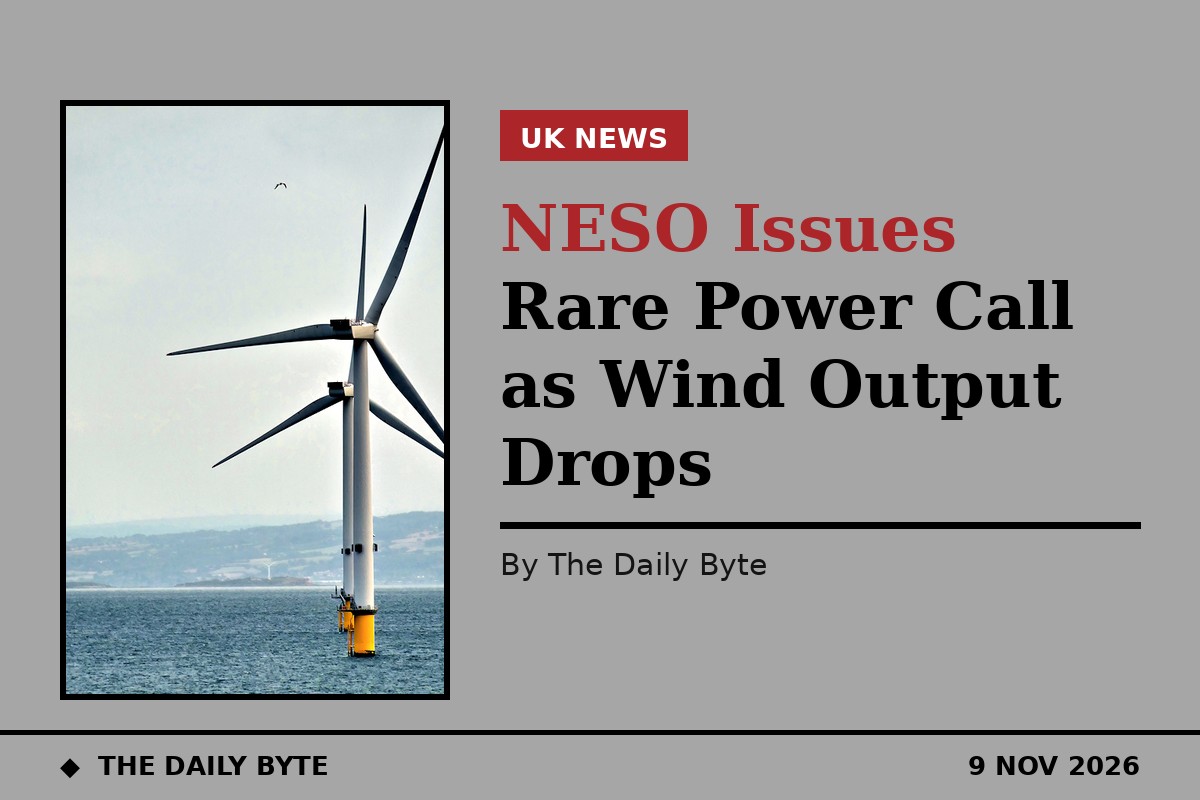
Britain's electricity system operator issued a rare call for extra power on Monday morning after forecasts showed wind generation falling across Europe. The National Energy System Operator (NESO) said there was no risk of power cuts and customers did not need to take any action.
The notice, issued on Sunday night, warned of a shortfall of almost 1,400 megawatts in supply margins between 6am and 11am on Monday, and said about 800 megawatts of extra generation — roughly the output of a medium-sized gas power plant — would be needed within eight hours, before a scheduled review at 4am.
Shortfall narrowed after pre-dawn review
A second notice after that review showed the shortfall had fallen to 500 megawatts and no further contingency power was required, although plants could still be asked to generate more than usual between 8am and 11am.
The call was unusual because such margin notices have typically been used during high-demand winter evenings rather than on a Monday morning. Low wind speeds across Europe curbed renewable output, and the notice was issued without any grid constraints while Britain was forecast to export electricity to Europe.
No risk to supplies, operator says
A NESO spokesperson said the notice was a routine and precautionary measure. “This is not a warning of power cuts, there is no risk to customer electricity supplies, and customers do not need to take action — Great Britain’s electricity system remains secure,” the spokesperson said.
NESO is the government-owned body responsible for balancing electricity supply and demand minute by minute across Great Britain. It can ask power stations to be ready to provide extra generation when forecasts show a possible gap between supply and demand.