Referendum on new provinces will happen, minister says
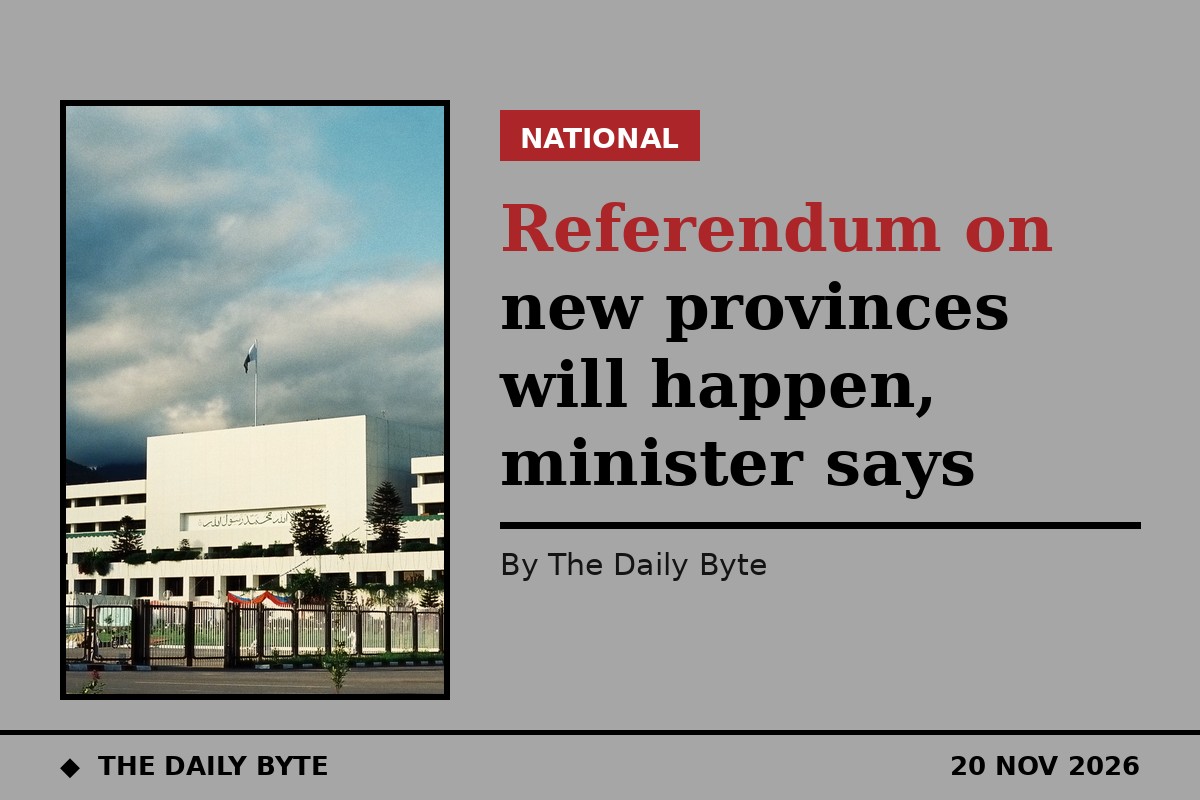
A nationwide referendum on creating new provinces in Pakistan will go ahead despite opposition from the Pakistan Peoples Party, Geo News reported on Friday, with the first outline of the proposed vote now emerging.
Television anchor Shahzad Iqbal, citing informed sources, reported that the state and the government had decided to hold the referendum "under all circumstances" and that it would take place soon. The report came as Parliamentary Affairs Minister Tariq Fazal Chaudhry insisted separately that a referendum on new provinces "will happen".
What the reported plan says
According to the report, the referendum would be held across the country, with results counted separately in each province and the decision taken by majority vote. The vote would show which districts and cities in each province support the creation of new administrative provinces.
The new provinces would be formed on administrative, rather than linguistic, grounds. They would be full-fledged provinces, not merely administrative units, each with its own provincial assembly, chief minister and cabinet, with the chief minister serving as the province's chief executive.
There is no proposal to transfer administrative powers from elected governments to an empowered mayor or administrator, the report said. The demand for new provinces is popular in all four provinces, it added, and if voters in any province endorse their creation, their mandate would carry political and moral weight.
Bilawal's opposition
PPP Chairman Bilawal Bhutto-Zardari has urged the government not to attempt a referendum and warned of serious consequences if one were held. The PPP, which governs Sindh, has categorically opposed dividing the province, and the proposal has become the sharpest point of tension between the PPP and its PML-N coalition partners.
President Asif Ali Zardari and Prime Minister Shehbaz Sharif met on November 19 and agreed to settle issues between them through dialogue and mutual consultation, after criticism by federal government representatives of Bilawal's remarks.
Bilawal has also said he wants Shehbaz to become the first prime minister to complete a five-year term, a reminder that the coalition's survival is bound up in the same dispute.
The minister's case
Chaudhry said new provinces should be created if they are necessary for Pakistan's national interest, better governance and improvement of the administrative system. He welcomed the start of what he called a positive, serious and meaningful debate, and said all political parties and citizens should take part.
Decisions on creating provinces should be made through national consensus and cannot be imposed on any particular group or region, he said. The matter concerns Parliament and requires detailed debate and consultation in the legislature, with parties rising above partisan interests.
He also expressed hope for positive progress after the meeting between the president and the prime minister, saying the government would complete its term and elections would be held as scheduled. A referendum is a constitutional and political option for asking the public directly what it wants on a contentious issue, he said, and elections are not a substitute for it, as the two serve different purposes.
What a referendum would and would not do
A referendum on its own would not create a province. Under Article 48(6) of the Constitution, a matter of national importance can be put to a referendum only after the prime minister refers it to a joint sitting of Parliament and the sitting approves it. Changing a province's boundaries then requires a constitutional amendment approved by a two-thirds majority of the provincial assembly concerned, under Article 239(4).
No date for a vote has been announced, no draft amendment has been published and no official confirmation of the reported decision has been issued. The underlying proposal, first reported on November 8, would redraw Pakistan's four provinces into twelve, with Punjab split into four, Khyber Pakhtunkhwa and Balochistan into three each, and Sindh into two.
Until the government confirms the plan, the referendum remains a reported decision rather than a settled one, and the PPP's opposition means the path to a vote, let alone to new provinces, is far from clear.