NHS Early Warning System Spots Sick Children Faster
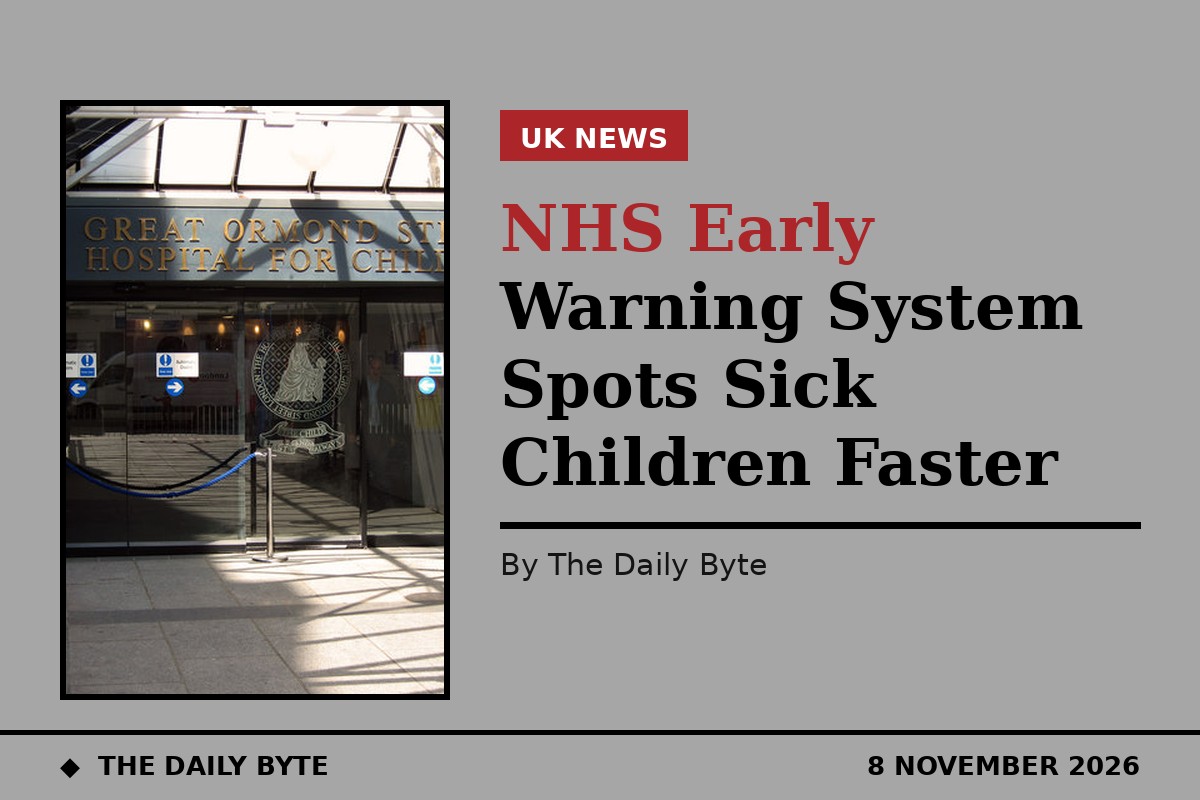
The NHS is rolling out a national early warning system across emergency departments in England this winter to help doctors and nurses spot children who are becoming seriously ill more quickly. Announced on 2 November, the National Paediatric Early Warning System — known as NPEWS — gives staff a consistent way to monitor young patients and spot deterioration before a child's condition becomes critical.
Staff will regularly check and record a child's vital signs, including blood pressure, heart rate, breathing rate and oxygen levels, and use them to calculate a score, with higher scores signalling that a child may need more urgent attention. Separate charts for different age groups reflect the different normal ranges for babies, children and young people.
A score is not the whole story. Parents, carers and children should speak up if they notice a change; any concern from a family or staff member triggers an immediate escalation of care, even when the child's score is low. The system is designed to support clinical judgement, not replace it.
The system is already used on paediatric inpatient wards in more than 90 hospitals across England, where cardiac arrest rates among patients have been consistently lower. Extending it to emergency departments should make England's rollout the world's largest standardised paediatric early warning scoring system. NHS England developed the programme with the Royal College of Paediatrics and Child Health and the Royal College of Nursing.
The rollout is part of wider work to improve children's care and prepare hospitals for winter. It follows the expansion of Martha's Rule to emergency departments, and the NHS is developing new A&E standards for children, including a priority to end corridor care for young patients. More than six million children attend A&E in England each year. Read more at Open Access Government.