NHS England Regional Staff Get New Health Authority
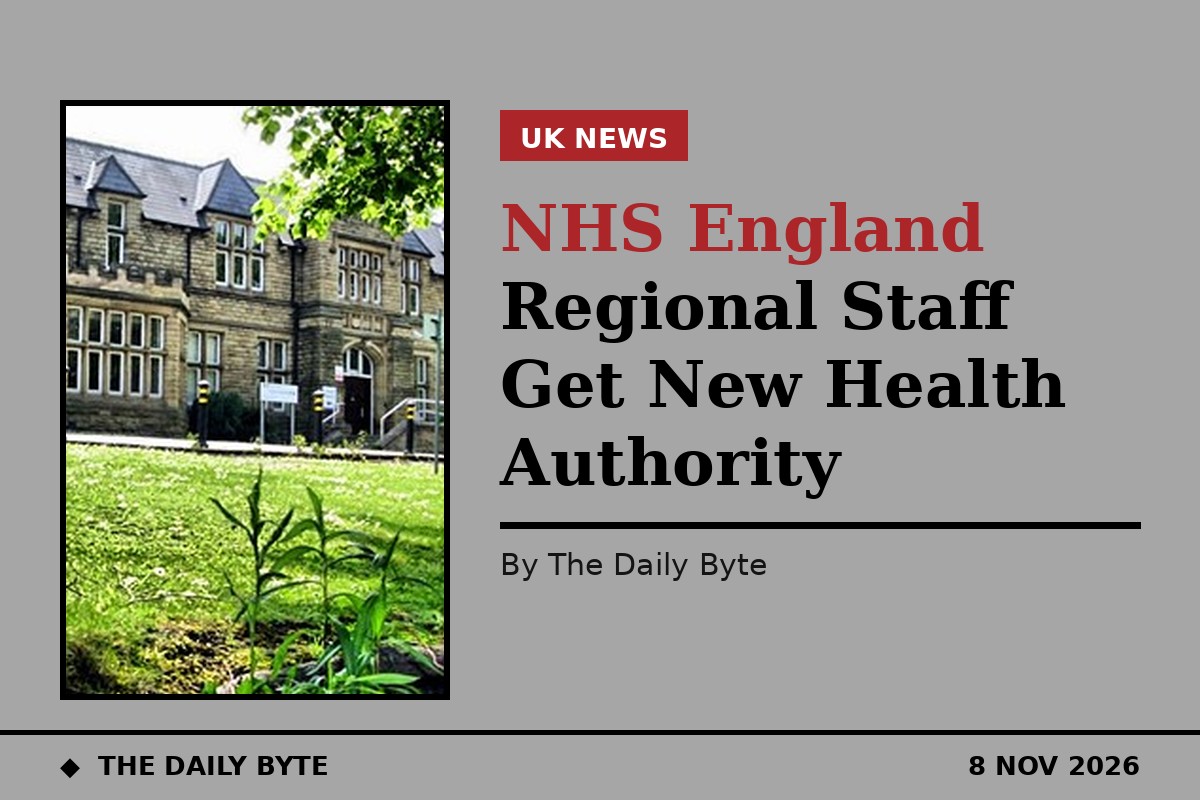
Health Secretary Yvette Cooper has confirmed that a new transitional special health authority will employ staff from NHS England's seven regional teams, in a significant adjustment to the Government's plan to abolish NHS England.
Cooper set out the change in a written statement to Parliament on Wednesday, 4 November. NHS England will still be brought back into the Department of Health and Social Care (DHSC) on 1 April 2027, subject to the passage of the Health Bill, but the regional teams will not transfer into the department on that date.
Instead, the transitional special health authority will support the continuing work of the seven existing regional teams. It will be accountable directly to the Health and Social Care Secretary, through the new NHS Group within DHSC. Cooper said the authority will not exercise national functions, and described it as a temporary arrangement supporting the transition towards a more devolved model of NHS management.
Most of NHS England's national delivery functions will transfer into the NHS Group, which will focus on NHS operational delivery alongside the department's other responsibilities, including policy, social care and public health. The role of NHS Chief Executive will be maintained. Cooper said the Government could no longer justify two parallel national organisations carrying out so many overlapping and uncoordinated functions, and argued that bringing policymakers and operational leaders closer together would improve services.
The decision marks a change from the original abolition plan. The policy was announced in March 2025, when then Health Secretary Wes Streeting told MPs the Government was abolishing what he described as the world's biggest quango. Prime Minister Andy Burnham had argued that separate organisations responsible for NHS oversight and delivery created unnecessary duplication and administrative costs, and the plan was intended to simplify management, strengthen accountability to ministers and release money for frontline services.
The restructuring has run into difficulty over employment arrangements, particularly the transfer of NHS England employees into the Civil Service. NHS England staff work under contracts and pay structures that differ from those used by DHSC, and analysis by the Health Service Journal found average NHS England pay packages were more than 15%, or approximately £9,500, higher than those at DHSC. The revised model allows national NHS England employees to retain their existing employment arrangements as they move into the NHS Group, while regional staff will be employed through the special health authority.
Cooper said the regional teams should stay close to the frontline organisations they support, rather than being centralised within the department, because of their knowledge of local circumstances, communities and patients. She said the arrangement could be achieved within the existing legislative framework and does not require amendments to the Health Bill, which already provides for the establishment of a special health authority.
Labour originally pledged to halve the combined administrative workforce of NHS England and DHSC. At the time the abolition was announced, the two organisations employed approximately 19,000 people. The latest figures indicate the combined workforce remains close to 17,000, despite the restructuring process having begun around 20 months earlier. The Government has said it intends to reduce administrative staffing substantially, with broader reforms expected to eliminate up to 18,000 posts across NHS England, DHSC and integrated care boards, although Health Minister Baroness Merron has told the House of Lords that the 50% reduction was an ambition rather than a confirmed final figure.
Ministers maintain that integrating NHS England into DHSC and restructuring integrated care boards could generate more than £1 billion in annual savings by the end of the Parliament, mainly by reducing administrative staffing and removing duplicated responsibilities. However, the restructuring is also expected to involve substantial upfront costs, with government estimates putting redundancy exits across DHSC, NHS England and integrated care boards at approximately £1 billion.
Cooper also announced that Healthwatch will be retained and strengthened, with a new Patient Experience Director to be appointed, and that a first Clinical Council of senior clinicians will be established to advise ministers on the NHS's major clinical priorities. She said the reforms must help the NHS get back to caring for people when they need it most, and that the purpose was not changing structures for their own sake, but ensuring patients receive timely care.