NHS workforce plan delayed as district nurses fall 49%
The delayed NHS 10-year workforce plan will now be published in the new year, a minister has assured Parliament, as fresh figures show the community nursing workforce has shrunk sharply. Nursing in Practice reported that Baroness Gillian Merron, the women's health and maternity minister, gave the updated timetable during a debate in the House of Lords on the Government's plans for neighbourhood health services.
The plan, which was previously meant to be published in the spring of this year, will set out how the NHS recruits, trains and keeps the staff it needs. Health Secretary Yvette Cooper had already told the Health and Social Care Committee on 4 November that it would be launched in 2027.
District nurses down by half
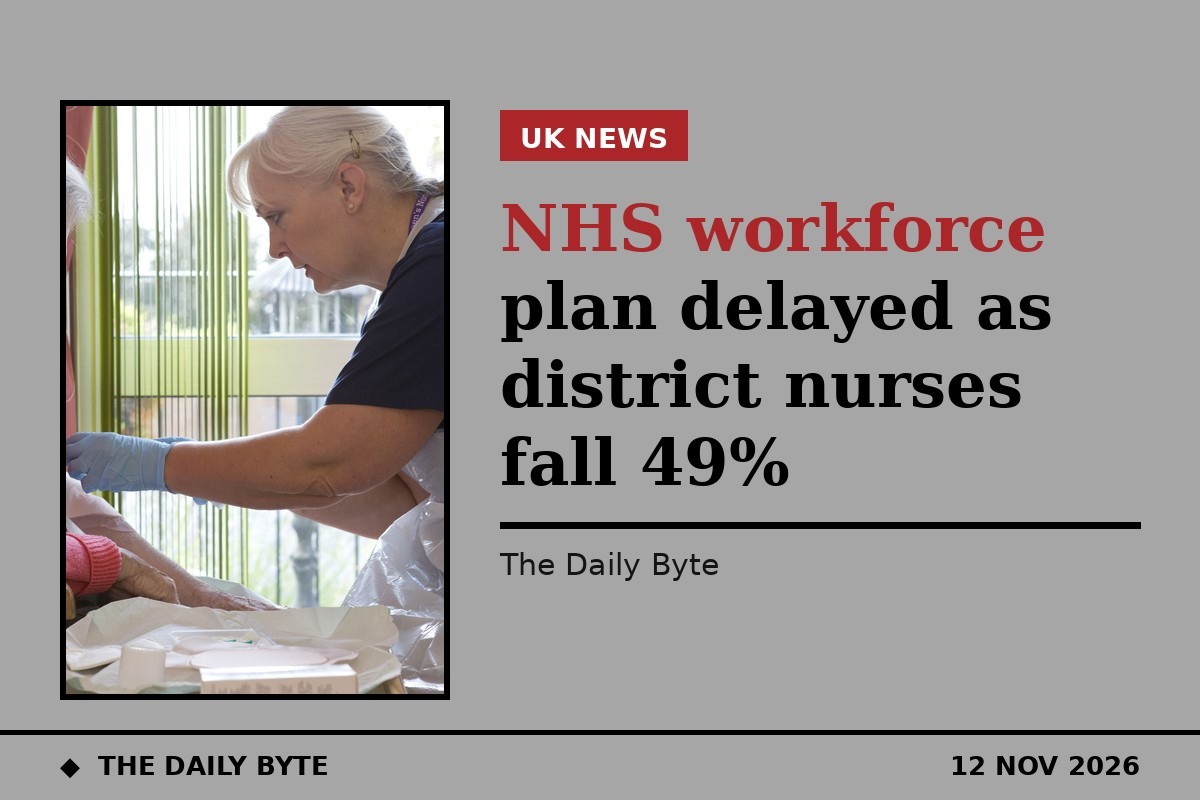
The assurance came as peers raised concerns about a sharp decline in nurses working in the community. District nurse numbers in England have fallen by 49% between 2009 and June 2026, according to an analysis by the Nuffield Trust and the Queen's Institute of Community Nursing (QICN) of NHS England Digital workforce statistics. The same analysis showed a 36% fall in school nurses and a 31% decline in health visitors over the same period.
Thea Stein, chief executive of the Nuffield Trust, warned last month that community nursing workforce constraints cannot be ignored if the Government is to succeed with neighbourhood health. Speaking at the QICN annual conference, she said: "You do not build neighbourhoods around a decimated and pressurised workforce like this."
Neighbourhood health needs community staff
During the Lords debate, Baroness Elizabeth Barker, the Liberal Democrat spokesperson for the voluntary sector, told the minister: "We cannot have neighbourhood health without having more community nurses, yet the majority of nurses are in the acute sector, so what are the government doing to increase the number of community nurses?"
Baroness Merron replied that the workforce plan would take account of that point and the new way of working, adding: "The point that she makes is quite right. The workforce plan will set out how we will do that." In a separate debate last week, Baroness Clare Gerada warned that the Government's plans to shift care towards the community would be extremely difficult without district nurses, describing them as "the linchpin" of the plans and "not an optional extra".
AI and the shape of the future workforce
Digital Health reported that Ms Cooper told MPs the delayed plan was being reshaped because advances in artificial intelligence were changing staffing needs substantially, and that AI could lead the NHS to want more staff in some areas and fewer in others, although she did not identify which roles could see reduced demand.
She also confirmed that GP training places are expected to increase by 750, reaching 5,000 by 2028-29, reflecting the ambition to shift care away from hospitals. But the QICN has warned that practice and community nurses risk being forgotten in that shift, arguing that care in people's homes relies on district and community nurses and cannot be delivered safely without enough of them.
The plan was first expected in the summer of 2025, then in spring 2026, and its repeated delay has frustrated health leaders who say the NHS cannot plan neighbourhood services, training places or recruitment without knowing how many staff it is meant to have. The Government now has until the new year to show that the wait was worth it.