NI Ambulance Target Missed More Than 2,000 Times
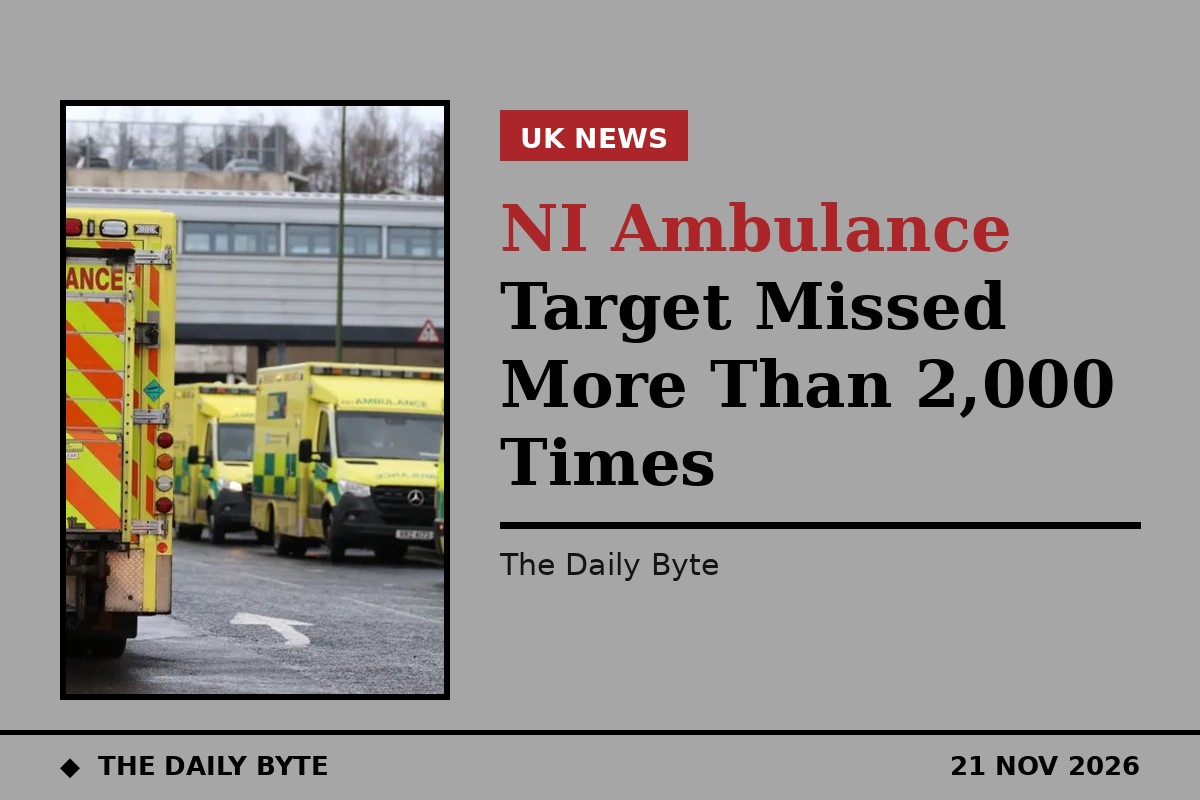
Ambulances in Northern Ireland waited more than two hours to hand patients over at hospital emergency departments more than 2,000 times in four months, breaching a limit introduced this year to end long waits outside hospitals.
The Release to Rescue initiative was introduced this year to ensure a maximum two-hour wait for patients stuck in ambulances outside busy emergency departments, so that paramedics can get back on the road to help other people waiting for an ambulance.
But more than 2,000 ambulance handovers exceeded the two-hour limit between May and August, the first four full months of the scheme. A senior doctor has warned that meeting the limit this winter will be “very challenging”.
The Department of Health said the scheme had still delivered improvements. In the same period last year there were more than 6,000 waits of two hours or more, so long delays have fallen sharply even though the new target is still missed regularly.
A 12-hour wait at home
When 85-year-old William Murphy became seriously ill at his home in County Down in September, his family expected help to arrive quickly. Instead, they waited more than 12 hours for an ambulance.
“Dad was deteriorating... he couldn't walk,” his son Ronnie recalled. By the time William reached hospital, he needed oxygen because his levels were severely low.
The family was told over the phone that the ambulance service was “under pressure” and that a crew would come as soon as possible. Ronnie said he was worried about how long it was taking, and asked what would have happened if his father had become more seriously ill while they waited.
The Northern Ireland Ambulance Service (NIAS) has apologised to William for the “delay experienced following his 999 call”. “The demand for our services exceeds our capacity to respond in as timely a manner as we would like,” it said.
Ronnie was also unhappy that his father spent almost two days in the Ulster Hospital's emergency department before he was admitted to a ward, although he added that he had no complaints about the care he received.
Winter pressure ahead
Health Minister Robbie Butler said he very much regretted the delay and apologised to Mr Murphy for any failure on the service's part. He said there had been “growing pressures over a number of years”, but added that “Release to Rescue in the greater part has been very successful”, while acknowledging that the programme “still faces challenges” as winter pressures build.
Dr Michael Perry, from the Royal College of Emergency Medicine, said a protocol limiting handovers to two hours should not be needed if hospitals were flowing well. He warned that colder winter months bring increased demand on emergency departments from normal seasonal illnesses. “To meet the requirement to offload ambulances in that timely fashion, it's going to be very challenging for us,” he said, adding that fixing the problem needs a long-term strategy rather than one-year budget cycles.
Norman Cunningham, a Unite union representative for NIAS, said demand for the ambulance service rises by 3% to 5% a year. “The problem for us is not so much the waiting outside hospital, which is disastrous for an ambulance service, but it's the people waiting at home who are seriously ill, who are relying on an ambulance getting to them, but it can't get to them.”
One pause, and a funding link
The South Eastern Health Trust said it “intermittently paused” the protocol at the Ulster Hospital on 1 September after an “exceptionally busy” bank holiday Monday on which 23 ambulances breached the two-hour limit. That was the only time so far that a health trust has paused the policy. The trust said it had made “significant progress” in improving handover times, with 90% of ambulances “turned around in under two hours” in August.
The other trusts said they had not paused the protocol. The Southern Health Trust said it may on occasion be breached due to day-to-day service pressures, while the Northern, Western and Belfast trusts said they had not stepped it down since its introduction.
According to a NIAS savings plan published in August, £5.2 million of cuts to its 2026-27 budget are “dependent on the successful continuation” of Release to Rescue. The document warns that if other trusts withdraw or reduce the measures supporting the scheme as part of their own savings plans, there will be “a direct impact on NIAS capacity, response performance and expenditure”.
The Department of Health has asked all six health trusts, including the ambulance service, to make savings of up to 12% over three years. It said the protocol had “shown significant success so far”, with a reduction in ambulance response and handover times across the health service, even as “severe pressures” on emergency departments created additional challenges in putting it into practice.