Nielsen v Watanabe: Supreme Court to hear Bivens case
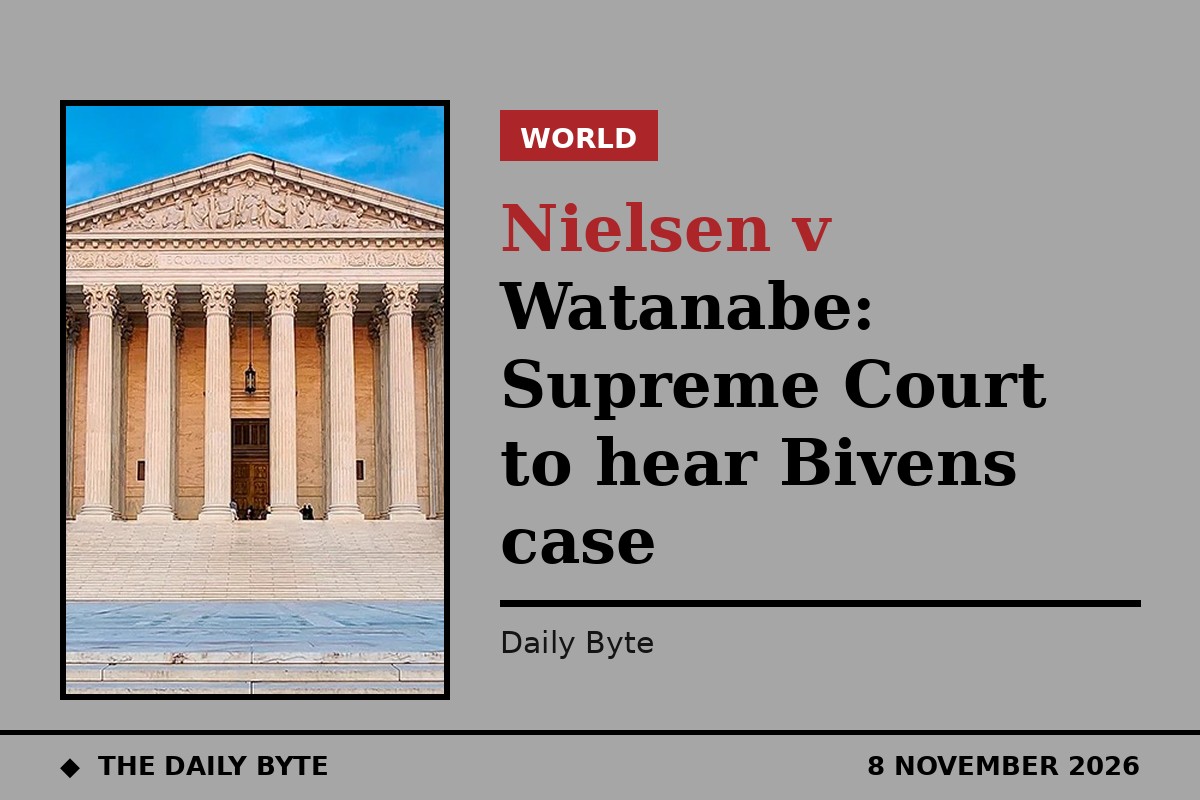
The United States Supreme Court will hear arguments on Monday, 9 November, in a case that could shut down the main way people sue federal officers for violating their constitutional rights. The case, Nielsen v. Watanabe, asks whether a federal prisoner who says he was denied medical care can claim damages from the prison worker who treated him.
The plaintiff, Kekai Watanabe, says he was attacked during a gang-related fight at a federal prison in Honolulu in 2021 and should have been taken to hospital. Instead, he says, he was given over-the-counter pain medication. A later X-ray showed a fractured coccyx, and he remains in severe pain, his lawyers say. He is seeking $3 million in damages, USA Today reports.
At the heart of the case is a 1971 decision, Bivens v. Six Unknown Named Agents, which let people sue federal officers for damages with no federal law creating that right. It was extended once, in the 1980 prison medical-care case Carlson v. Green, and never since. The 9th Circuit ruled that Watanabe's claim matches Carlson.
The Justice Department argues Carlson is now obsolete and the claim should be dismissed. The nurse's lawyers go further, urging the justices to scrap Bivens altogether, calling them relics from when courts created claims Congress never authorised. Watanabe's lawyers counter that Congress effectively approved the lawsuits in 1996 legislation that limited, but did not end, them.
The case matters beyond prisons, amid calls to hold immigration officers accountable. Erwin Chemerinsky, dean of the law school at the University of California, Berkeley, told USA Today that if Bivens is eliminated, there will be literally no way to sue in federal court when a federal agent like an ICE officer violates the Constitution. A ruling is not expected for months.