Nigeria Telecoms Spend N4trn Yet Calls Still Drop
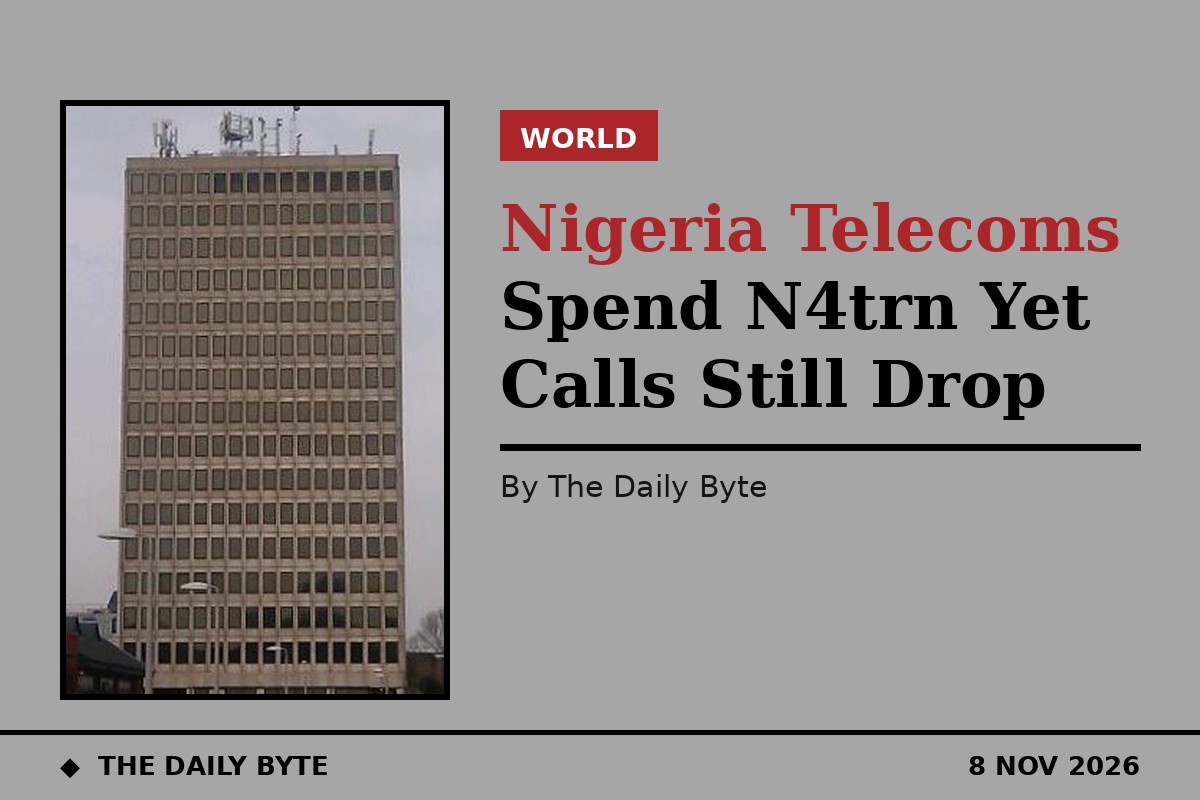
Nigeria's telecommunications operators have invested more than four trillion naira in network infrastructure, yet subscribers still contend with dropped calls, slow internet speeds and unreliable connectivity. That is the central finding of an interview published by BusinessDay with Gbenga Adebayo, chairman of the Association of Licensed Telecommunications Operators of Nigeria, who argues that the problem goes beyond how much money operators spend.
Mr Adebayo, who is also group chief executive of Communication Network Support Services Limited, told BusinessDay's Royal Ibeh that operators deployed approximately 2.13 trillion naira in capital expenditure in 2025 alone and have committed a further 1.86 trillion naira for 2026. He said the figures represent actual and committed infrastructure spending, not hypothetical sums, and that networks must keep expanding alongside population growth and the rapid rise in data consumption.
His argument is that investment does not automatically translate into uninterrupted service where the supporting infrastructure is unreliable. He named four challenges that sit largely outside operators' control. First, inadequate electricity supply: every base station and transmission facility needs continuous power, and the national grid remains unreliable, forcing operators to depend on diesel generators. Power-related problems account for approximately 40 percent of quality-of-service incidents, according to the industry's assessment.
Second, persistent fibre-optic cable disruption from road construction, excavation, vandalism and theft, which accounts for approximately 29 percent of quality-of-service degradation. Third, security challenges that affect operators' ability to reach sites, maintain infrastructure and respond to faults, accounting for approximately seven percent of incidents. Fourth, regulatory and infrastructure deployment problems, including inconsistent right-of-way charges across states and delays in obtaining permits.
"An operator may upgrade a base station and increase its bandwidth, but a power outage or fibre cut along the transmission route can still disrupt service," Mr Adebayo said. He added that the industry is not asking for sympathy or exemption from accountability, but for an environment in which investment can deliver its intended benefits.
Rising operating costs sharpen the problem. Between February and September 2026, the average cost of diesel increased from approximately 978 naira to 2,050 naira per litre, a rise of about 110 percent, while interest rates averaged approximately 28 percent in 2025. Diesel powers the generators that keep base stations running when the grid fails, so the price rise feeds directly into the cost of keeping the network lit.
The interview also covered the Nigerian Communications Commission's Consumer Compensation Framework, introduced in March 2026. By October, more than 75 million subscribers had been compensated under the scheme, and the regulator has begun independently verifying operators' compensation claims. Mr Adebayo welcomed the framework but said compensation is a remedial measure that does not resolve the underlying infrastructure problems, adding that the best compensation a subscriber can receive is a reliable network that makes compensation unnecessary.
Relations between the industry and lawmakers have also been strained. In October, a House of Representatives ad hoc committee summoned telecoms chief executives to appear in person, threatening arrest for non-compliance. Mr Adebayo appeared before the committee on behalf of his members, but lawmakers said he could not, as association chairman, represent the individual operators. The association set out its position in a letter on 20 October 2026, arguing that whether individual executives could be compelled to appear raised serious constitutional questions, and pointing to a 2018 court case on the Assembly's oversight powers that remains pending.
Mr Adebayo said hearings can be useful instruments of accountability, but that quality of service is a complex infrastructure issue that cannot be resolved by summoning chief executives or threatening sanctions. He called for stronger legislation protecting telecoms infrastructure as critical national assets, harmonised right-of-way charges, support for infrastructure sharing, streamlined permitting and action on electricity supply and site security.
"My message is simple: we all want better service, but better service requires investment, and investment requires an enabling environment," he said. "Sanctions alone cannot build fibre networks, provide electricity to base stations, prevent vandalism or facilitate access to infrastructure."


