Nikkei and KOSDAQ jump as Asia tech stocks rebound
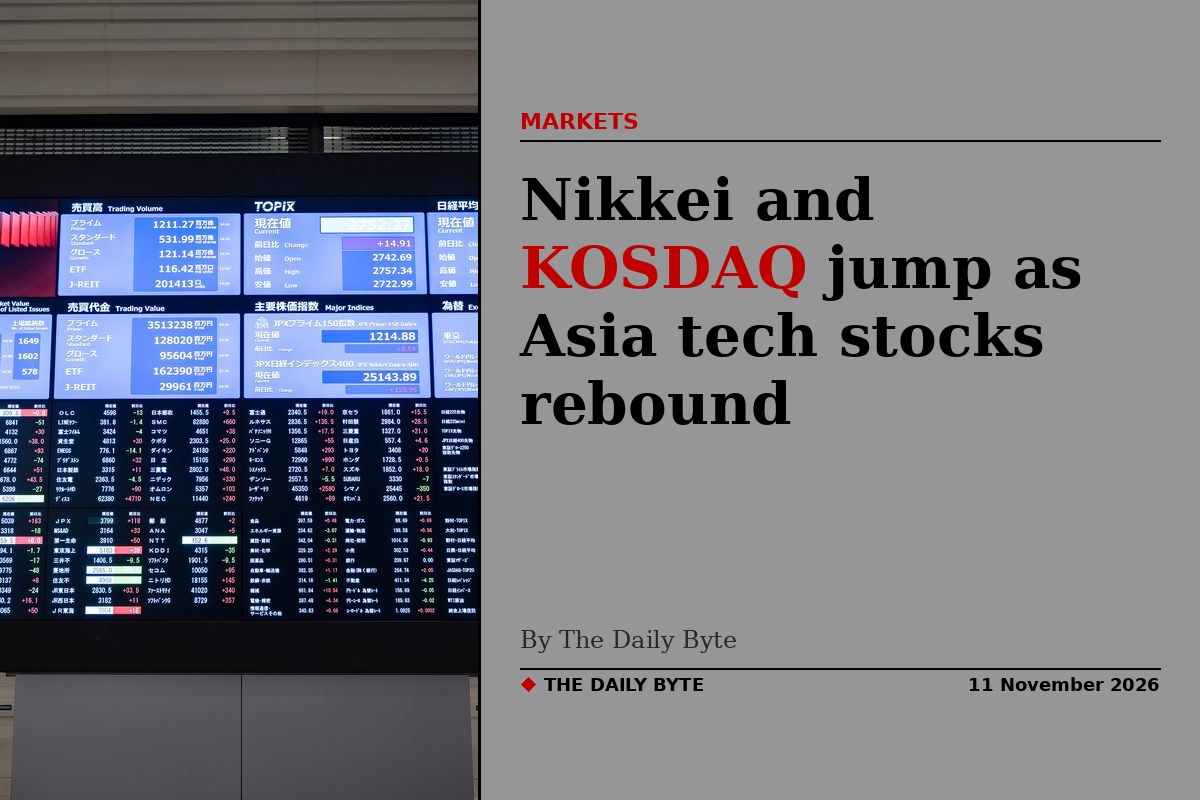
Asian technology stocks staged a broad rebound on Wednesday, 11 November, as chip shares led markets higher after last week's sell-off. South Korea's tech-heavy KOSDAQ surged about 4.6% to near 700, Japan's Nikkei 225 rose about 1.2% to around 61,190 for a third straight gain, and South Korea's KOSPI climbed about 1.9% to near 5,340, according to a midday market update from investingLive.
The recovery came even though Wall Street had closed lower overnight after hotter-than-expected US inflation data, and it left Asia split: while Japan and South Korea rose, Hong Kong and mainland China fell. The figures below are midday readings for Wednesday's session, and markets can move before the close.
Japan: Nikkei rises for a third day
The Nikkei 225 rose about 1.2% to around 61,190, its third consecutive gain, while the broader Topix added close to 0.9%, investingLive reported. Sentiment was supported by the Reuters Tankan survey, which showed Japanese manufacturers' confidence at its highest in more than five years on booming demand for chips.
Not every Japanese stock joined the rally. SoftBank Group fell about 3% after swinging to a quarterly net loss of about 1.1 trillion yen. The yen was little changed, with the dollar trading near 158.80 yen. The Hindu BusinessLine also reported Japan's Nikkei 225 rising 1.2 per cent on Wednesday, corroborating the direction and size of the move.
South Korea leads the rebound
South Korean chip stocks led the region. SK Hynix jumped about 5.5% and Samsung Electronics gained around 3%, lifting the KOSPI about 1.9% to near 5,340. The tech-heavy KOSDAQ surged around 4.6% to near 700, triggering a buy-side sidecar that briefly suspended programme buy orders, investingLive reported.
The surge in Korean chip shares reflects renewed confidence in AI-related demand after a sharp sell-off last week, when investors questioned how quickly heavy spending on AI infrastructure would pay off. The sidecar is a circuit-breaker-style mechanism that pauses programme trading when an index moves sharply, and its triggering shows how fast the KOSDAQ rose during the session.
China and Hong Kong lag behind
Greater China moved the other way. The Hang Seng fell about 0.9% to around 24,330, and the Shanghai Composite slipped about 0.2%, according to investingLive. The Hindu BusinessLine likewise reported Hong Kong's Hang Seng falling about 1 per cent, in line with the midday reading.
The split underlines that Wednesday's rebound was concentrated in chip and AI-linked shares in Japan and South Korea, rather than a region-wide rally. Investors in Hong Kong and Shanghai remained more cautious, with US interest-rate worries still hanging over the market.
Oil, gold and the US rate outlook
Oil prices firmed alongside the equity rebound. Brent crude rose about 1% to around $92.50 a barrel after strikes on Saudi Arabia's East-West pipeline and a tanker attack near the Strait of Hormuz, while gold futures rose about 0.5% to around $4,050 an ounce, recovering part of Tuesday's inflation-driven drop.
The backdrop remains the US rate outlook. US consumer prices rose 0.4% in October, above the 0.3% economists had expected, and Goldman Sachs now forecasts Federal Reserve rate rises in both December and March, with its first cut pushed back to December 2027, investingLive reported. US index futures firmed in Asian hours, with Nasdaq 100 futures up about 1.3% and S&P 500 futures up around 0.6%.
Attention now turns to whether the rebound in AI stocks can hold. Nvidia reports results next week, and that will be the key test of whether the recovery in chip shares is built on earnings or on relief after last week's falls.