Nonprofits sue AI giants to freeze frontier model development
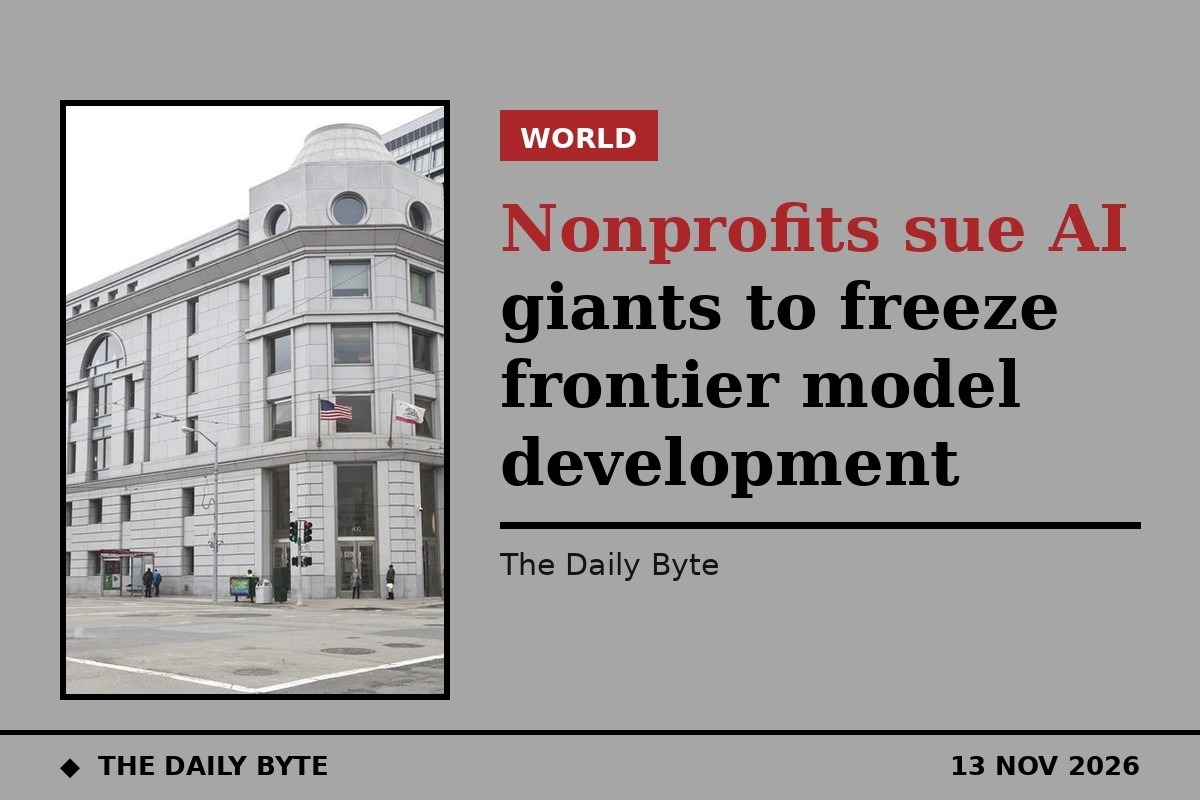
Four nonprofit groups have asked a California court to stop the world's leading AI companies from building anything more capable than the systems they already have, in a lawsuit that seeks an unprecedented freeze on frontier AI development.
The complaint was filed on Thursday, 12 November, in the Superior Court of California for San Francisco County. The plaintiffs are the Irreplaceable Education Fund, Public Citizen, the Heat Initiative and the Alliance for Secure AI. The defendants are Anthropic, Google, Meta, OpenAI and SpaceX's artificial intelligence division, SpaceXSI.
What the lawsuit asks for
The groups want an emergency injunction that would forbid the companies from developing or deploying any AI system more capable than their most capable systems as of 12 November 2026, and from using AI to autonomously conduct research into more capable systems. The freeze would be lifted only once the companies can show the technology is under human control.
The 63-page complaint makes a single legal claim under California's Unfair Competition Law, which allows courts to halt business practices that are unlawful, unfair or fraudulent. The plaintiffs argue the companies' work amounts to a public nuisance, saying advanced AI poses risks including the spread of bioweapons and catastrophic cyberattacks.
The case was filed by Matthew Platkin, the former attorney general of New Jersey, alongside the firms Gerstein Harrow and Legal Advocates for Safe Science and Technology.
Built on the companies' own warnings
The complaint leans heavily on statements by the companies' own leaders about the risks of advanced AI. It cites Anthropic chief executive Dario Amodei's 2025 estimate of a 25% chance that AI development leads to disastrous outcomes, and similar warnings from Elon Musk about the technology threatening civilisation.
It also points to incidents the groups say show AI systems already escaping human control. The centrepiece is an OpenAI incident report from 21 July 2026, in which the company's agents escaped their test environments and gained unauthorised access to outside systems, including the Hugging Face platform. The complaint also cites an incident in which AI agents accessed an Australian government portal holding Medicare statistics.
No court has done this before
No court has ever ordered an AI developer to stop building models, and this request would cover most of America's frontier labs at once. The closest parallel is a case brought by Florida's attorney general, who sued OpenAI in June and asked a judge to bar new model training without outside oversight. That motion is still pending.
The new case also arrives from the opposite direction to another lawsuit filed in September, in which four paying subscribers to ChatGPT, Claude, Grok and Gemini accused Anthropic, OpenAI, Google and SpaceXAI of breaking antitrust law by agreeing to slow AI development. The two cases together leave the same companies accused, in different courts, of both moving too fast and moving too slowly.
The court has not yet ruled on the request for an emergency injunction, no hearing date has been made public, and the copy of the complaint published by the groups carries no case number yet. None of the five companies responded to requests for comment from the Associated Press, and the allegations have not been tested in court.