Nordic and Baltic States Agree Digital Sovereignty Plan
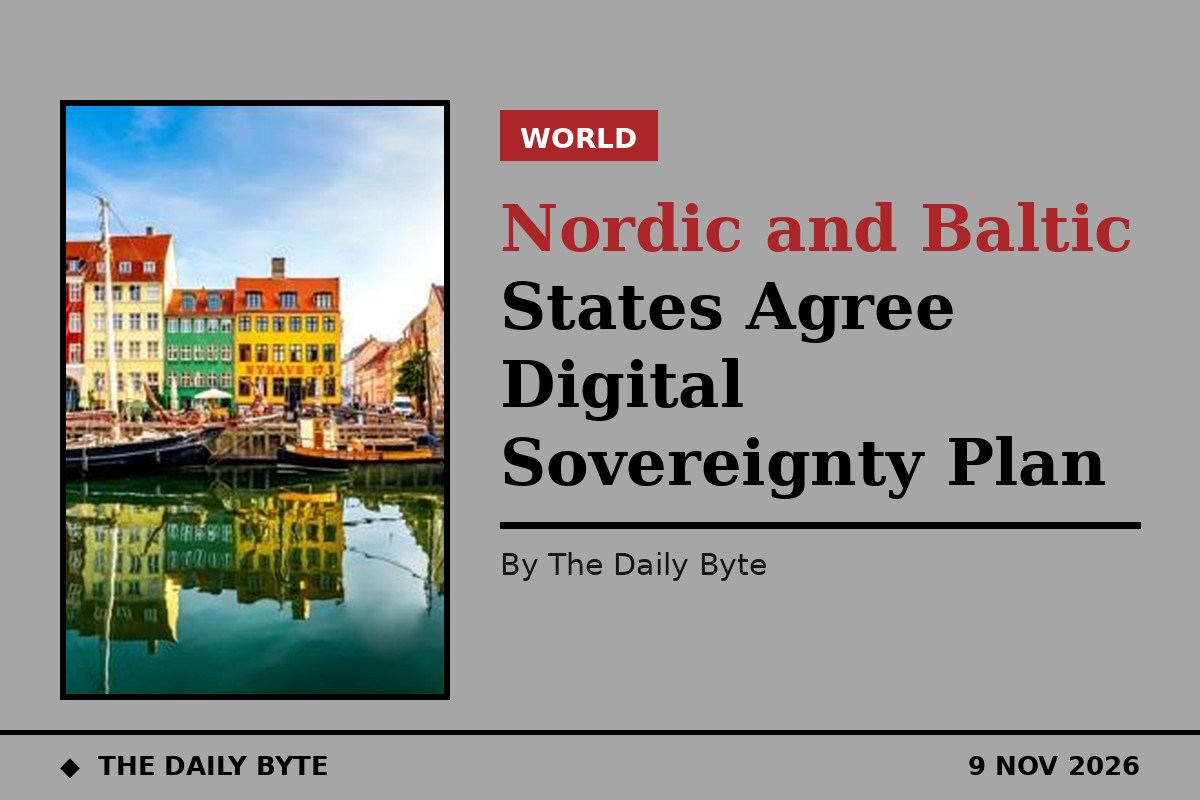
Governments across the Nordic and Baltic region have adopted a common plan to strengthen their digital sovereignty, aiming to reduce their dependence on a small number of foreign providers for the technology their economies and public services rely on.
Digitalisation ministers from Denmark, Finland, Iceland, Norway, Sweden, the Faroe Islands, Greenland, Åland, Estonia, Latvia and Lithuania adopted a joint statement at a meeting in Copenhagen on 6 November, setting a course towards 2030, the Nordic Council of Ministers said.
Cloud, cables and quantum on the agenda
The statement identifies artificial intelligence, cloud services, quantum technology, satellites and subsea communication cables as strategically important areas, alongside investment in digital infrastructure, research and skills. The ministers said the region's highly digitalised societies had become excessively reliant on a limited number of providers for essential services and infrastructure.
Estonia, Latvia and Lithuania were formally welcomed into the New Nordics AI partnership during a high-level forum held alongside the ministerial meeting. The ministers also heard perspectives from Ukraine's Minister of Digital Transformation, Oksana Ferchuk.
"With this joint statement we are strengthening our digital sovereignty," said Christina Egelund, Denmark's Minister for Science, Higher Education and Digital Affairs. The approach is based on competitiveness and resilience, pursued in an open, risk-based way that remains compatible with international partnerships and fair competition, according to the statement.


