Nordic states lead EU talks at COP31 climate summit
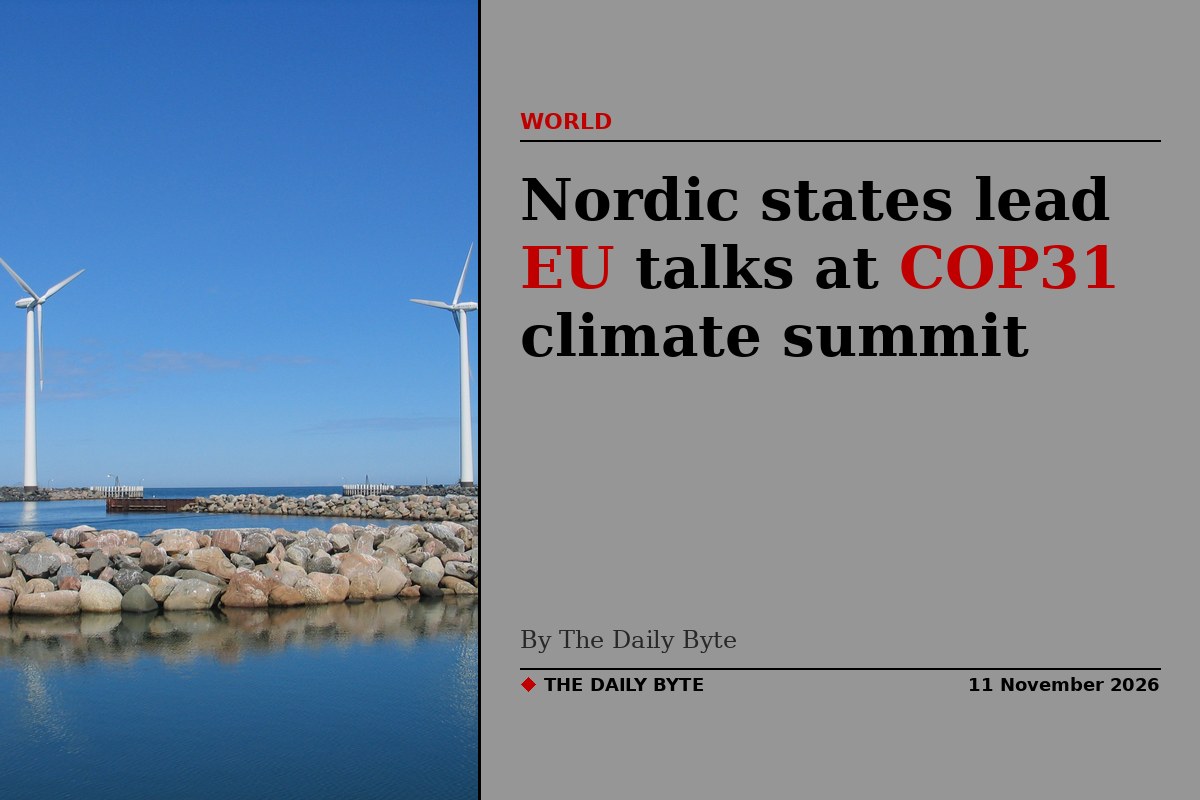
Denmark, Finland and Sweden have been given leading roles in the European Union's negotiating team at COP31, the United Nations climate conference that opened in Antalya, Turkiye, on Monday 9 November 2026. The appointments, announced by the Irish presidency of the Council of the EU and reported on 11 November, put three Nordic countries at the centre of the bloc's work on the two issues likely to dominate the summit: cutting emissions and paying for climate action.
Denmark takes the emissions reductions brief, known in UN talks as mitigation, alongside Luxembourg. Denmark's climate, energy and utilities minister, Samira Nawa, will work with Luxembourg's environment minister, Serge Wilmes. Finland and Sweden have been assigned climate finance, the support that developing countries need to respond to the effects of warming and to invest in lower-emission economies. Ireland, which holds the rotating presidency of the Council of the EU, is coordinating the bloc's negotiating effort together with the European Commission.
The Irish government's announcement confirms the full list of assignments. Ireland and the European Commission take the cover decision, the Netherlands and Malta handle adaptation, Finland and Sweden take finance, Portugal takes the just transition brief, and Belgium and Austria take oceans. The ministerial team supports Ireland's climate minister, Darragh O'Brien, and EU climate commissioner Wopke Hoekstra across the priorities identified by the COP31 presidencies.
Denmark and the dispute over emissions cuts
One of Nawa's main tasks concerns the Mitigation Work Programme, which was set up at the 2022 climate summit to encourage faster action on emissions. Its current mandate ends in 2026, and its continuation is not guaranteed. Governments failed to agree on the programme's future at talks in Bonn in June, and they are due to take up the question again at COP31. The EU wants the programme extended and strengthened, but China and other like-minded developing countries have questioned whether it should continue.
Nawa has argued that emissions reductions must remain part of the negotiations and of any eventual agreement. In a statement before the summit, she also stressed that expanding electrification should mean using clean electricity rather than power generated from fossil fuels. That point matters because the COP31 presidency is promoting a voluntary target to raise electricity's share of global final energy consumption to 35 percent by 2035, an initiative that sits outside the formal negotiating text even though clean electrification is a priority for Denmark and the wider EU.
Finland and Sweden take the finance brief
The Finnish and Swedish assignments put two Nordic countries at the centre of the EU's engagement on climate finance, which is expected to be among the most difficult subjects at the conference. Vulnerable countries are pressing for more accessible assistance, and for grants rather than loans that add to their debts.
O'Brien said the EU sees COP31 as an opportunity to show that countries with very different circumstances and perspectives can still work together towards common objectives. He said the new coordinated ministerial team, agreed at the outset of the year, makes the most of the member states' collective efforts and skills. Ireland wants to help rebuild trust with developing countries, emphasising understanding and listening after difficult divisions at last year's summit in Brazil, and a central priority is delivering commitments already made, particularly the financial assistance promised to vulnerable countries.
A summit focused on delivery
COP31, the 31st Conference of the Parties to the UN Framework Convention on Climate Change, brings together representatives of almost 200 countries. The conference runs until 20 November, and a World Leaders' Summit is scheduled for 11 and 12 November. Turkiye is hosting and presiding over the annual UN climate summit for the first time, while Australia chairs the formal negotiations, with its climate minister, Chris Bowen, leading them.
The summit's agenda is deliberately narrow and practical. Rather than seeking large new pledges, the presidency wants governments to turn past promises into action: implementing existing climate commitments, speeding up the shift to electricity, agreeing a credible path away from fossil fuels, and providing the finance needed by countries already bearing the costs of climate change.
These ministerial assignments determine who leads specific EU negotiating topics, not what the participating countries have agreed. Decisions on the mitigation programme, on finance and on the summit's final outcome remain open, and the Nordic ministers will be judged on whether they can move talks that have stalled before. For the three Nordic countries, COP31 is a chance to show that smaller member states can still shape the EU's voice on the world stage.