MPs urge ETA exemption for organised tours visiting Northern Ireland
A committee proposal, not a rule change
The House of Commons Northern Ireland Affairs Committee has urged the government to exempt customers of approved tour operators from the Electronic Travel Authorisation (ETA) when they visit Northern Ireland. The recommendation was set out in a letter published on 22 October 2026. It is a proposal only: no exemption has been announced, and the current rules remain in force until the government says otherwise.
Why the border makes this case different
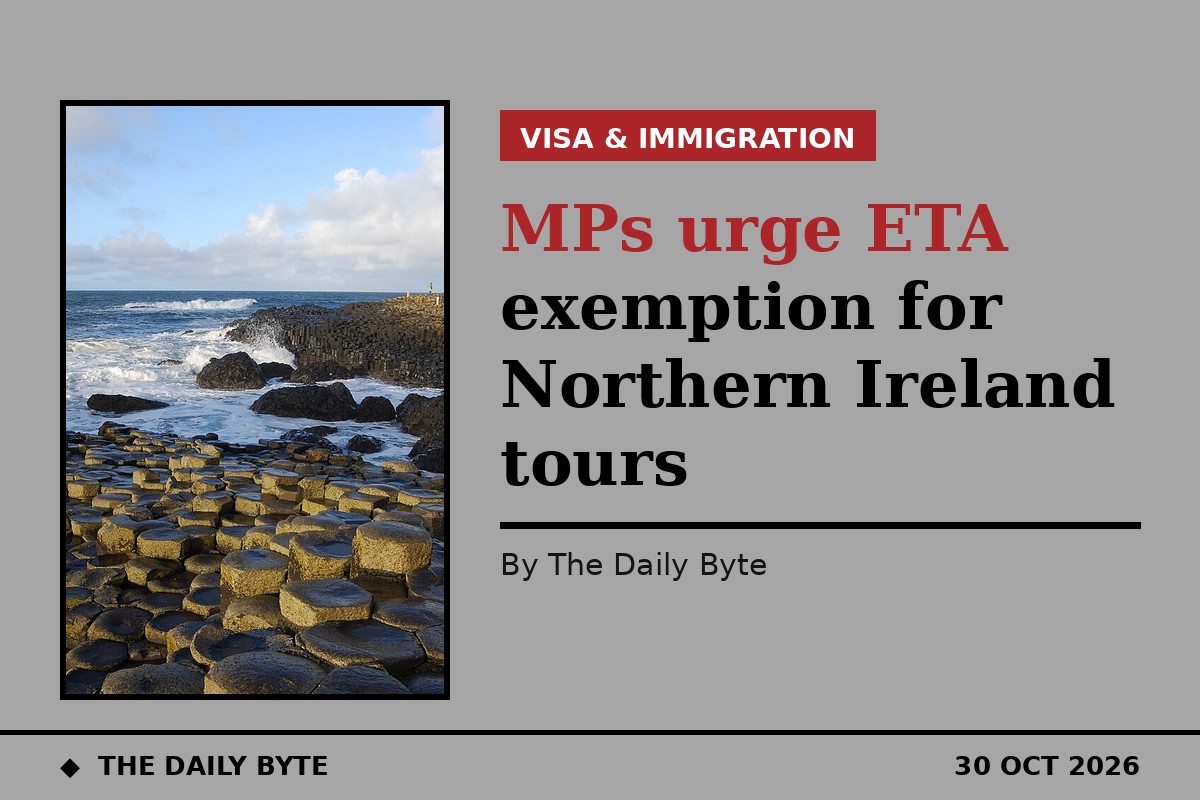
Northern Ireland shares an open land border with the Republic of Ireland, and many international visitors travel from Dublin to Belfast, Derry~Londonderry and the Causeway Coast as part of a single island-of-Ireland trip. Under the current system, a visitor who needs an ETA must hold one before entering Northern Ireland, even for a short day trip across that border.
What operators told the committee
The committee pointed to survey evidence from the Inbound Tourism Operators Association (ITOA) Ireland, in which 65% of respondents said the ETA requirement had affected their business to some extent, and a further 10% said it had affected them significantly. The concern is practical: if a short cross-border excursion means extra fees and paperwork, some operators may simply leave Northern Ireland out of their packages, with knock-on effects for hotels, restaurants and attractions.
What would have to happen next
The committee proposed that the exemption cover customers of approved tour operators, with the Home Office able to withdraw an operator's approval if the arrangement were abused. It asked for a detailed government response within two months. Until such a response brings a change, travellers who need an ETA should still obtain one before travelling, and should check the official GOV.UK guidance for their own nationality and circumstances.
*Note: this article is general news reporting, not personal immigration advice. Immigration rules change, so always check the official GOV.UK page before you travel or apply.*
Sources: GOV.UK; Northern Ireland Affairs Committee.