Nvidia's AI push spans robots, phone networks and data halls at very different stages
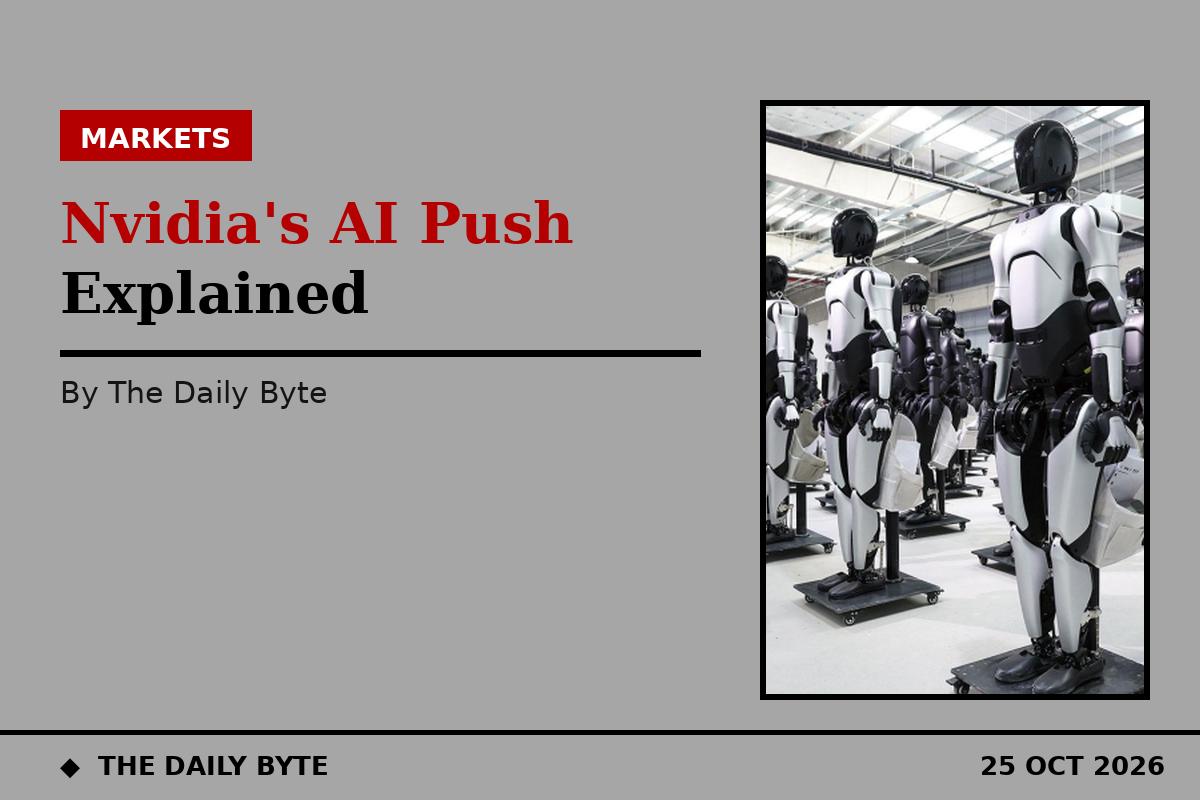
Nvidia has outlined an AI expansion that reaches from robots to phone networks and data centres, in two days of announcements that mix live platforms, pilots and prototypes. Investors trying to judge the news need to separate what is already working from what is still promised.
Faster data halls, with a caveat
The most concrete infrastructure claim is DSX POD, a modular pre-fabricated reference design based on Nvidia's Vera Rubin platform, presented on Wednesday. Nvidia says deployment at a prepared site could shrink from six months to as little as 14 days, with partners expected to ship units worldwide from early 2027. The time saving is tied to a precondition that matters: the site must already be ready. A prepared site and a greenfield site are very different projects.
Different stages of readiness
Across the announcements, the maturity varies sharply. Some elements — such as monitoring of running systems — have live usage, while an optical chip design remains a prototype and DSX POD rests on partner shipments still to come. That spread is the story: Nvidia is not launching one product, but pushing integration into how AI infrastructure gets built, monitored and delivered.
What investors should ask
The questions that matter are about delivery, not ambition: which partners will ship DSX POD, on what timetable, and at what cost; whether the robotics and telecom integrations move from pilots to paying deployments; and whether the faster build-out actually shortens the time to revenue. Until those answers arrive, Nvidia's AI push is best read as a roadmap with some live pieces, not as a single finished product.