Oil posts biggest weekly drop since 2020 as Brent falls 16%
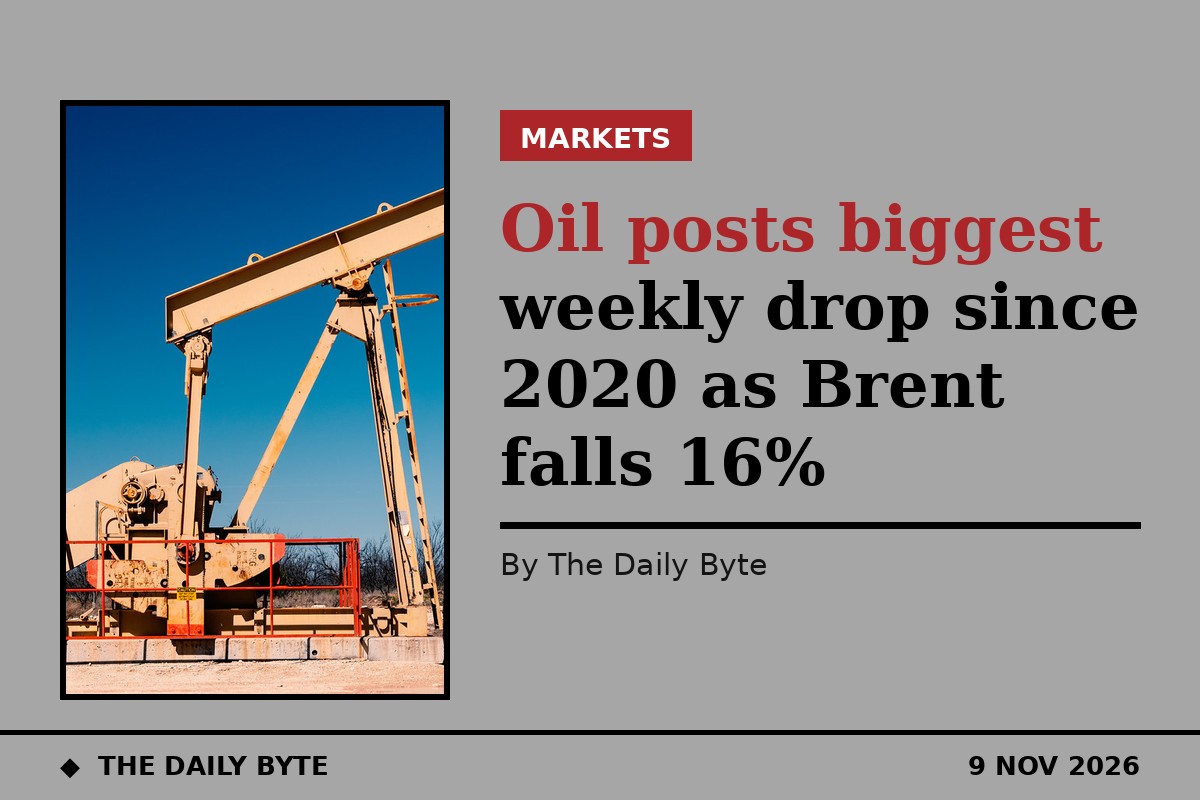
Oil has recorded its steepest weekly fall since the first months of the Covid-19 pandemic, with Brent crude losing more than 16 percent in a single week as traders bet that the war premium built up around the conflict with Iran is about to unwind.
Brent futures settled at $98.32 a barrel on Friday 6 November, up just three cents on the day, while US benchmark West Texas Intermediate closed at $90.83. The modest Friday finish disguised the scale of the weekly slide: January Brent had closed the previous Friday at $117.64, and the drop of more than $19 in five sessions was the largest weekly percentage fall since April 2020. It was also the biggest weekly fall in cash terms in LSEG records going back to 1988, with WTI down nearly 13 percent over the same week.
The sharpest single move came on Wednesday, when Brent plunged 9.73 percent to settle at $93.52 a barrel, its lowest settlement in two months. The contract touched an intraday low of $93.22 on Thursday before recovering ground into the weekend.
The trigger was political. Democrats won control of both chambers of Congress in the US midterm elections on 3 November, and markets read the result as raising the pressure on Washington to bring the conflict with Iran to a negotiated end. Iran has since reported sending a nuclear proposal to Washington through Qatar, with conditions reported to include an end to the US naval blockade, sanctions relief and the release of frozen assets. No formal agreement has been announced.
President Donald Trump said on 8 November that the likelihood of further US airstrikes would be very low if substantial progress were made in the talks. Secretary of State Marco Rubio struck a more cautious note, saying Iran's demands would be difficult to accept. Jorge Leon, head of geopolitical analysis at Rystad Energy, warned that increased US pressure in the negotiations does not mean a deal is close, and that if military tensions in the Middle East flare again, much of last week's drop could quickly be reversed.
The physical market has given traders some reason to discount the risk. Although attacks on shipping have continued, crude exports from the Persian Gulf have nearly returned to pre-war levels, and a Bloomberg survey showed output by members of the Organization of the Petroleum Exporting Countries had recovered to 88 percent of February levels. The United Kingdom Maritime Trade Operations agency said a tanker passing through the Strait of Hormuz over the weekend was reported to have been struck by an unidentified projectile, while Yemen's Houthi rebels attacked an office of Saudi state oil company Aramco in Riyadh and Saudi forces responded by destroying two missile launchers.
Analysts are split on what comes next. Bob McNally, founder and president of Rapidan Energy Group, told CNBC he sees an 80 percent probability that fighting resumes and that both benchmarks could climb back above $100. Others point to the market's own reference points: FinanceFeeds puts the bear case at $93, the level of last week's low, a base range of $95 to $101 while talks continue, and $105, the level of the US Energy Information Administration's October forecast for the fourth-quarter Brent average, if talks break down.
The diary this week gives traders plenty to react to. The US October consumer price index is due on Tuesday 10 November, the same day the EIA publishes its Short-Term Energy Outlook, and OPEC releases its monthly oil market report on Wednesday 11 November. Russia is also scheduled to send a senior delegation to US-mediated talks in Abu Dhabi on 10 November. For now, the market has priced in a deal that does not yet exist, and the gap between that bet and the fighting still going on in the Gulf is what will decide whether Brent stays below $100 or heads back above it.