Oil prices fall as peace-talk hopes ease Middle East fears
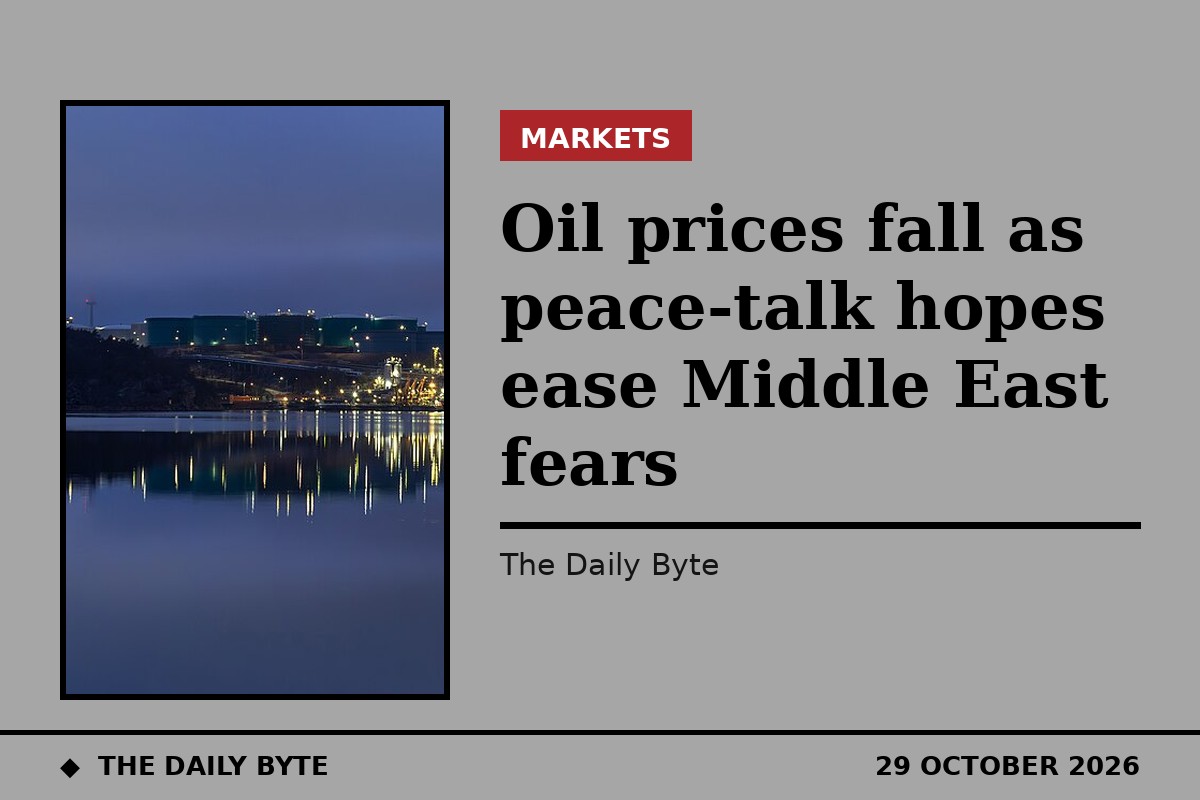
Oil prices fell on Thursday, giving back part of the previous day's gains, as hopes that peace talks could resume took some of the edge off renewed worries about Middle East supply disruption.
Peace-talk hopes calm the market
Brent crude futures fell $1.22, or 1.1%, to $114.10 a barrel in early Asian trade, while US West Texas Intermediate (WTI) crude was down $1.33, or 1.3%, at $101.45. The declines followed a Wednesday session in which Brent had risen 1.3% and WTI had gained 3%.
Houthi attacks keep supply risk in focus
Reports that US Vice President JD Vance had written to Iranian Security Council chief Mohsen Rezaei in an effort to revive negotiations helped ease immediate supply fears. Nomura Securities economist Yuki Takashima said selling pressure was prevailing amid expectations that peace talks may resume, but added that the decline remained limited.
US stockpiles fall again
Traders remain cautious because the diplomatic opening is unconfirmed by either government and sits alongside warnings that the United States could launch a new attack on Iran after its midterm elections on 3 November.
The Saudi-led coalition said it destroyed a ballistic missile fired by the Houthis towards the kingdom's eastern region early on Thursday. The Houthis had attacked Aden airport on Wednesday, according to Yemeni government forces, a day after claiming a missile strike on Saudi Arabia's biggest oil refinery.
Saudi authorities did not confirm the claimed refinery strike; the facility's 550,000-barrel-per-day capacity is why any threat to it moves prices even when damage is unconfirmed.
US Energy Information Administration data also shaped the session: firms pulled 1.9 million barrels from storage in the week ended 23 October, against a forecast 15,000-barrel build in a Reuters poll, while JPMorgan noted Russian refinery runs had rebounded by 350,000 barrels per day.
Sources: Reuters via Maaal and Reuters via WDSM 710.