Oil rebounds from two-month lows on Hormuz attacks
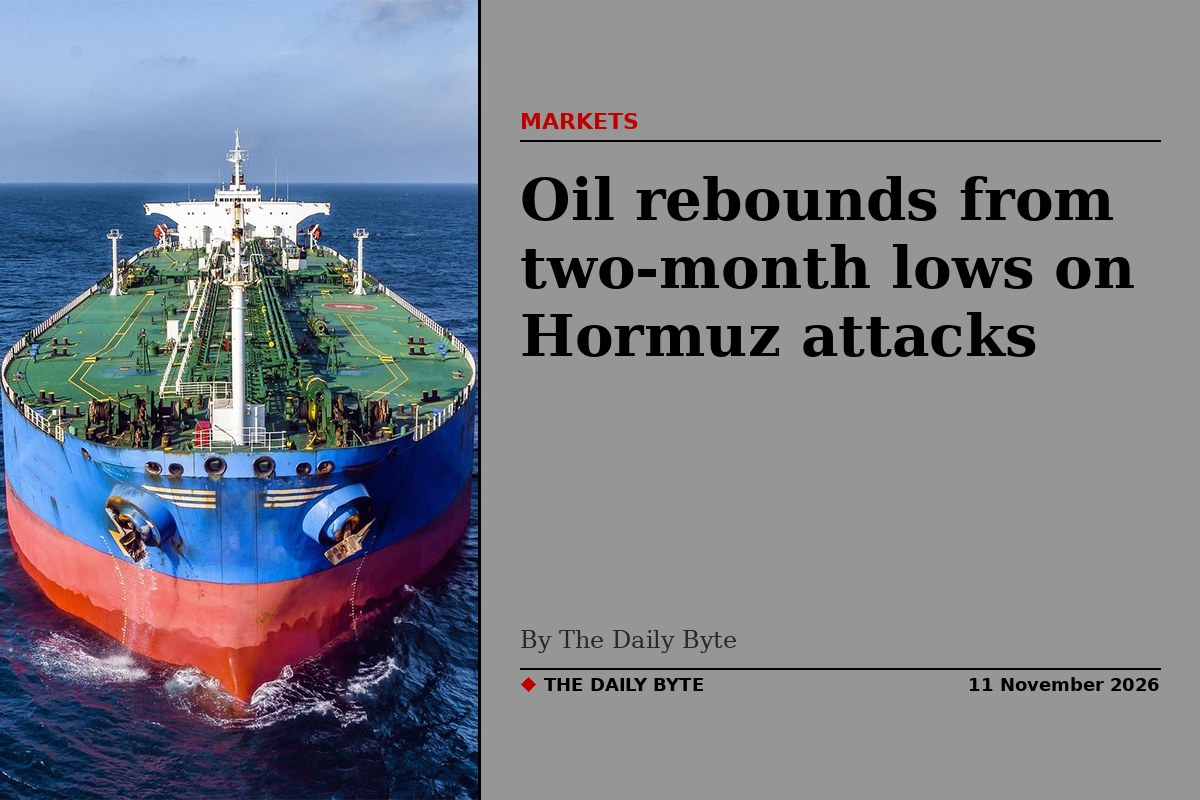
Oil prices rose on Wednesday, rebounding from two-month lows, as attacks on shipping in the Strait of Hormuz offset hopes that the US-Israeli war on Iran is heading for a truce.
Brent futures climbed $1.04, or 1.1%, to $92.53 a barrel at 0420 GMT, Reuters reported. US West Texas Intermediate crude rose 67 cents, or 0.8%, to $86.71.
Rebound follows steep slide below $90
The recovery came after a sharp sell-off. In the previous session, oil prices initially fell by more than $3 a barrel after US officials played down the need for further military strikes against Iran. On Tuesday, Brent fell below $90 a barrel for the first time since 31 August, trading as low as $89.65, while WTI fell to $84.52.
Brent had already settled 5.85% lower on Monday at $92.57. Last week the benchmark fell 16%, its steepest weekly drop since the start of the Covid-19 pandemic. Brent has now retreated by more than 20% from its recent high of $118 a barrel on 30 October.
US President Donald Trump said on Monday that he would hold off on new military action against Iran following appeals from Gulf allies, a signal that took much of the war premium out of crude prices.
Hormuz attacks keep risk premium alive
But the market remains caught between hopes of de-escalation and continuing attacks on shipping in the strait, through which about a fifth of the world's oil passes. The International Maritime Organization tracked 131 confirmed incidents near the narrow waterway from the start of the war on 28 February through 9 November, with 35 in October alone, the highest monthly total of the conflict.
Crude flows out of the Gulf have nevertheless staged a striking rebound. Traffic through the Strait of Hormuz has averaged 10.5 million barrels per day since the start of October, according to data firm Kpler, and total Gulf crude exports have risen to 16.7 million barrels per day, just short of the pre-war level of 17 million. Freight and insurance costs remain about 10 times pre-war levels.
Rising supply caps the recovery
Supply is also rising. A Reuters survey found that OPEC crude production increased by 1.38 million barrels a day in October to 22.87 million barrels a day, about 90% of its February level, led by higher output from Saudi Arabia, Kuwait and Iraq.
Industry data showing a decline in US crude oil inventories also supported prices on Wednesday, with January Brent futures trading around $92.42 and WTI near $86.63 in morning trade.
Traders will now watch for any formal progress in talks over Iran and for this week's official supply reports, which will show whether the rebound can hold or whether the surplus narrative pulls prices back towards $90.
Frequently asked questions
What is the Brent crude price today?
Brent crude rose 1.1% to $92.53 a barrel at 0420 GMT on Wednesday 11 November, rebounding from two-month lows.
Why did oil prices rise on Wednesday?
Prices rose as attacks on shipping in the Strait of Hormuz offset hopes of an end to the US-Israeli war on Iran, after US officials played down the prospect of further strikes.
How far has Brent fallen from its peak?
Brent has retreated by more than 20% from its recent high of $118 a barrel on 30 October, after falling 16% last week alone.
Sources: Reuters and The Hindu BusinessLine.