Oracle Shares Jump 8.8% as AI Cloud Fears Ease
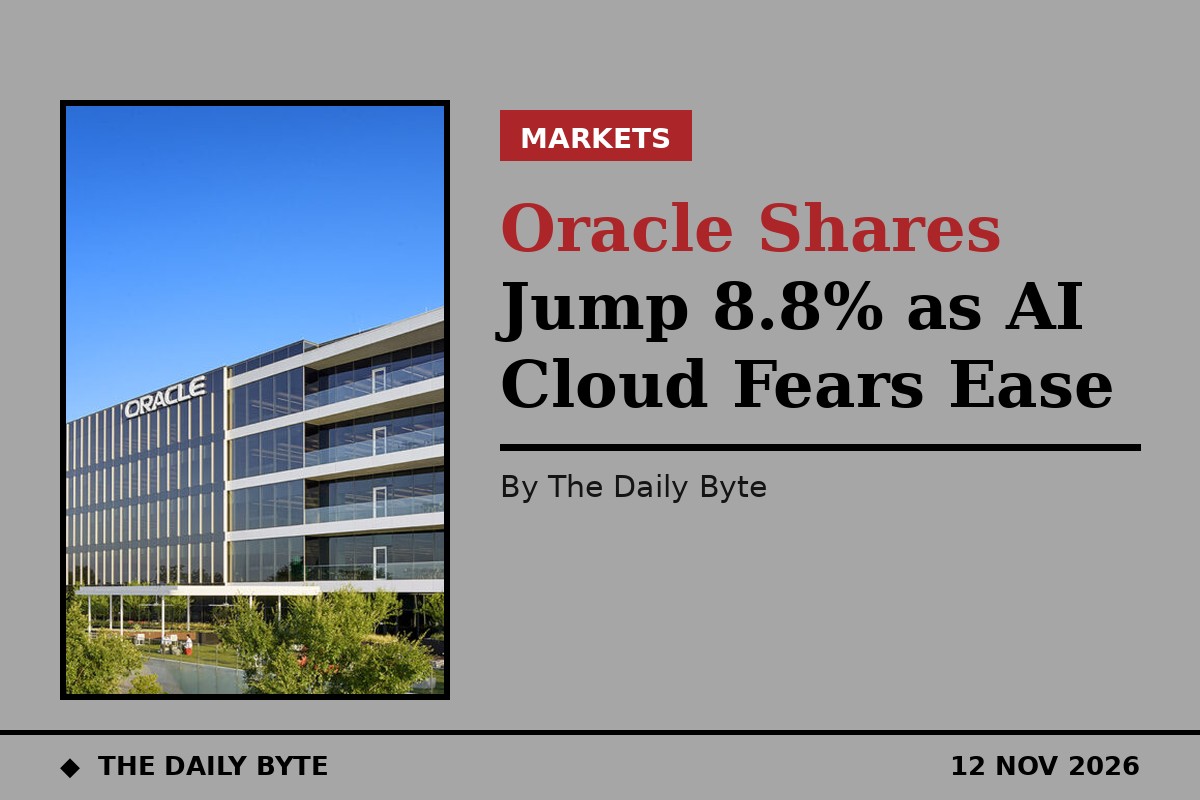
Oracle shares jumped 8.8% on Wednesday 11 November as strong results from AI cloud rival CoreWeave eased investor worries about debt-fuelled spending on artificial intelligence data centres.
The shares closed at $128.38, up $10.40 or 8.81% from the previous close of $117.98, after trading as high as $130.77 during the session. It was one of the strongest single-day gains for the stock this year, and it came on a day when the wider market also rallied, with the S&P 500 up 1.31% and the Nasdaq Composite up 1.60%.
CoreWeave's results lifted the whole AI trade
The main trigger was CoreWeave, which reported third-quarter results after the bell on Tuesday 10 November. Revenue jumped 168% to $3.66 billion, beating Wall Street expectations, and the company raised its revenue outlook and said it would become profitable on an adjusted basis in the first half of 2028. CoreWeave's own shares surged 24.7% on Wednesday.
Crucially for Oracle, CoreWeave said it would rely less on unsecured borrowing and more on funding sources such as customer prepayments. That mattered because Oracle has faced the same questions about its own use of debt. The company has borrowed heavily to build the capital-hungry data centres behind its AI cloud push, and investors have worried about how that spending is financed. CoreWeave's positive quarter was read as a sign of health for the whole industry, and Oracle was one of the biggest beneficiaries.
A record for Oracle's Opower software
Oracle had its own good news on the day. The company said utilities using its Opower software had set a North American record for cutting peak electricity demand, trimming a combined 1 gigawatt across 73 events over the winter and summer seasons. The event count was roughly 50% higher than the 49 events recorded in 2025, and about 4.3 million customers joined the programmes, up 30% from 3.3 million a year earlier.
Opower uses artificial intelligence and behavioural science to encourage households to cut or shift their power use when demand peaks. Each event saved about 16,592 kilowatts on average, close to the peak demand of 4,150 homes, according to Oracle's count based on Texas grid data. Puget Sound Energy in Washington state reported peak load cuts as large as 16.6 megawatts per event across three seasons of its Flex Events programme.
Shares still well below their June peak
Despite the jump, Oracle remains deep in negative territory for the year. The stock had fallen about 34% in 2026 before Wednesday's rally, hitting a 52-week low of $109.21 on 6 November, against a 52-week high of $250.25 in June. Its market value stood at about $362 billion after the close.
There are signs of confidence returning. Chief financial officer Hilary Maxson has pointed to strong cloud demand and plans to add 7 gigawatts of data-centre capacity, and Bernstein has argued that the sell-off has gone too far, setting a $325 price target. Even so, some of Wednesday's gain faded after the close, with the shares down 2.81% to $124.77 in after-hours trading.
What to watch next
Oracle is due to report second-quarter results on 14 December. Investors will look for evidence that cloud demand is holding up, that the data-centre build-out is being funded on sustainable terms, and that the rebound that began with CoreWeave's results can survive the next test, whether that is inflation data or the Federal Reserve's December decision on interest rates.
Frequently asked questions
Why did Oracle shares rise on 11 November? The shares rose 8.8% after CoreWeave's strong quarterly results eased worries about debt-funded AI spending, and after Oracle reported a record for peak-demand reduction by utilities using its Opower software.
How much did Oracle shares gain? Oracle closed at $128.38 on 11 November, up $10.40 or 8.81% from the previous close of $117.98, after reaching an intraday high of $130.77.
Is Oracle still down for the year? Yes. Even after the rally, the stock was down about 34% in 2026 and well below its June 52-week high of $250.25.
Sources: The Motley Fool; Benzinga. Share prices as reported at the close on 11 November 2026.; Investopedia