12 Provinces Likely Only After 2029 Polls, Say Sources
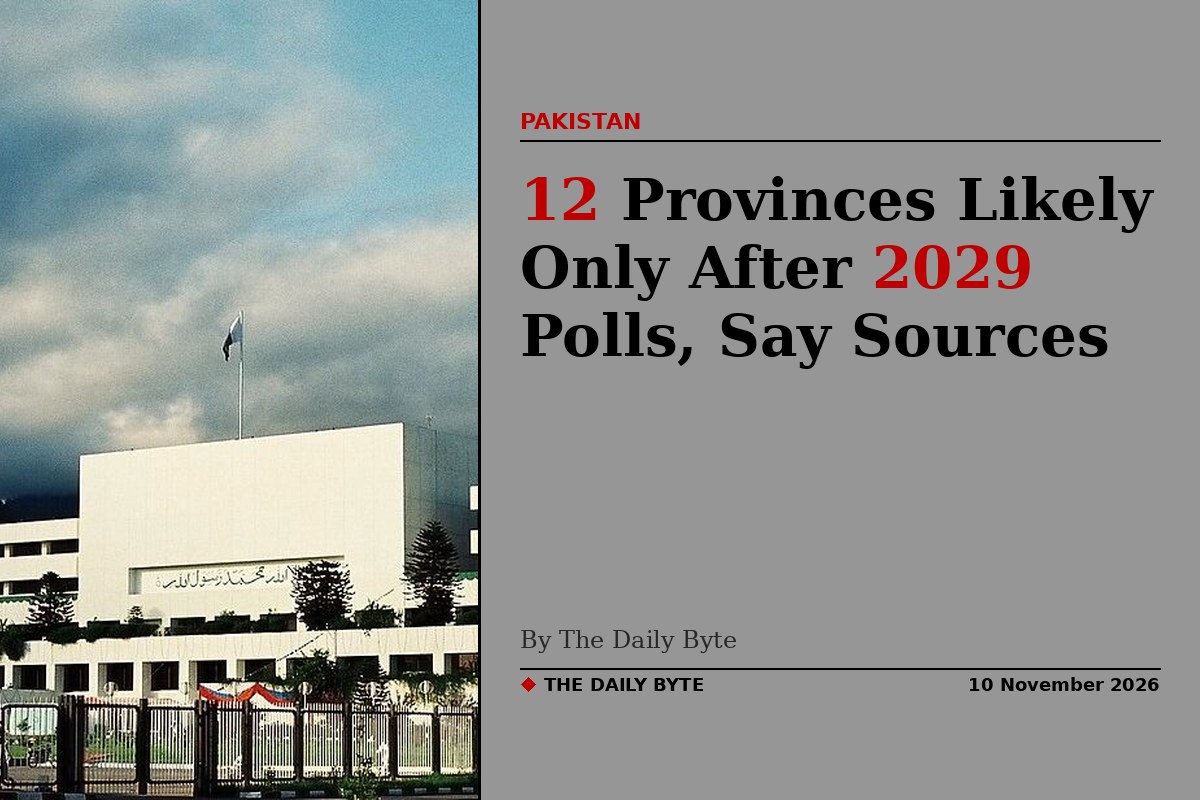
ISLAMABAD: The proposed restructuring of Pakistan into 12 provinces, if achieved through constitutional means, would only be implemented after the 2029 general elections, sources familiar with the discussions have said.
Although constitutional legislation for the proposed restructuring is under consideration for next year, the existing provincial governments and assemblies would continue functioning until the next general elections, the sources said. The new provincial structure would then be implemented following the 2029 electoral exercise.
How the map would change
Under the proposal, Punjab would be divided into four provinces, Khyber Pakhtunkhwa and Balochistan into three each, and Sindh into two, taking the total number of provinces from the existing four to 12.
The plan has been reported as the possible basis of a 28th Constitutional Amendment, with a nationwide referendum envisaged before any amendment is introduced, to gauge public opinion and establish a popular mandate. Preparatory steps could begin in the first quarter of 2027, with the amendment itself possibly taken up in the first half of the year.
Three big hurdles
Sources pointed to three critical challenges that would have to be settled before any restructuring could go ahead: the distribution of resources under the National Finance Commission (NFC) Award, the sharing of water resources, and the settlement of financial liabilities.
On resources, the provincial share of the federal divisible pool is currently distributed among four provinces under a formula that takes account of population, poverty, backwardness and revenue generation. Creating eight additional provinces would raise fundamental questions about how that share would be redistributed among 12 units, and whether the existing formula should continue or be revised.
On water, Pakistan's sharing arrangements are governed by the 1991 Water Apportionment Accord, which determines the shares of the four existing provinces in the Indus River system. New provinces would require a fresh understanding of how existing allocations would be divided among the successor units, a sensitive question in regions where water availability and irrigation are already sources of disagreement.
The third challenge concerns the settlement of financial liabilities between the federation and the existing provinces, including outstanding claims, transfers, loans and other fiscal obligations. Any restructuring would need a clear mechanism for deciding which successor province assumes existing provincial debts and how payments owed by the Centre would be transferred.
Referendum idea and the politics
The proposal remains at the consideration stage. No final decision has been taken on boundaries, administrative structures or the constitutional process, and the government has not formally announced the plan.
Prime Minister's Adviser on Political Affairs Rana Sanaullah has said that any referendum on creating new provinces would require parliamentary approval, and that Parliament alone would decide whether provinces are created. Planning Minister Ahsan Iqbal said on 30 October that the government was not drafting a 28th Amendment to create new provinces, arguing instead for stronger local governments.
What is decided, and what is not
For now, the 12-province plan is a proposal under discussion, not approved policy and not a tabled amendment. Even if the required constitutional amendments were passed next year, the sources said, the transition would still wait until after the 2029 polls.
The issues involved are likely to require extensive consultations among the federal government, provincial governments and other stakeholders before any constitutional restructuring can move towards implementation.