Pakistan diabetes: 34.5 million cases, early action urged
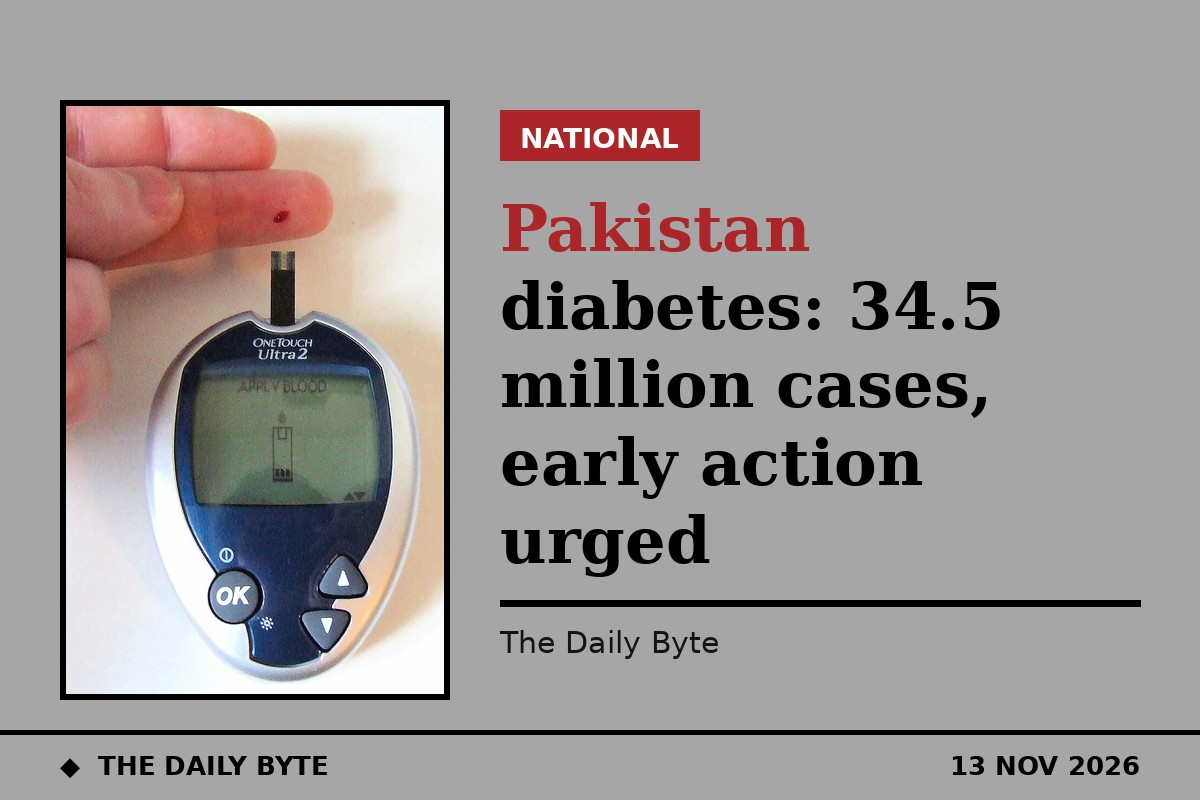
About 34.5 million people in Pakistan are living with diabetes, the health ministry has said, with nearly one-third of adults affected. Minister of State for National Health Services Dr Mukhtar Ahmad Malik gave the figure at an event in Islamabad hosted by the Pakistan National Heart Association (PANAH) to mark World Diabetes Day 2026, under the theme "Early Action on Diabetes".
He said diabetes is not only a medical problem but also a serious economic and development challenge, and called for urgent steps on prevention, early diagnosis and treatment. The figure comes from the IDF Diabetes Atlas 2025.
The scale of the problem
Dr Malik told the gathering that more resources should go into public awareness, healthy living and preventive care. He said the real success of a health system lies in preventing illness, not only treating it, adding: "Early action today means a healthier Pakistan tomorrow."
The programme included a presentation on the diabetes situation in the country and a proposal to set up a National Diabetes and NCDs Conclave. Dr Malik assured the ministry's institutional support for the conclave, including engagement with provincial governments, development partners and other stakeholders, and encouraged PANAH to develop a comprehensive proposal to move the idea forward.
Food labels and prevention
The minister called for evidence-based food policies, including taxes on sugary drinks, front-of-pack warning labels and limits on marketing unhealthy food to children. The health ministry has initiated a proposal for front-of-pack warning labels, which would flag products high in sugar, salt and unhealthy fats so shoppers can make informed choices at a glance.
PANAH general secretary Sana Ullah Ghumman said policymaking must remain free from conflicts of interest and prioritise public health over commercial interests. He said mandatory warning labels would help consumers identify products high in sugar, salt and unhealthy fats, and could encourage manufacturers to improve the nutritional quality of their products.
Screening and next steps
Dr Malik pointed to the Prime Minister's Programme for the Prevention and Control of Diabetes Mellitus, under which the government has committed Rs 6.8 billion for nationwide diabetes screening, starting in Islamabad before extending to the provinces. He stressed that primary healthcare must be strengthened to support screening, early diagnosis and timely referral.
He also called for research into the link between mental health, stress and diabetes, and said mental health should be considered as part of wider efforts to prevent non-communicable diseases. Tackling these diseases, he said, requires coordinated action by government, provinces, civil society, development partners and the private sector, with public awareness campaigns focused on regular blood sugar screening, cutting down on sugary drinks and adopting healthier, more active lifestyles.
Sources: Newsora24 and Pakistan News Gazette.