Pakistan Faced 9.4m Cyberattacks in a Year
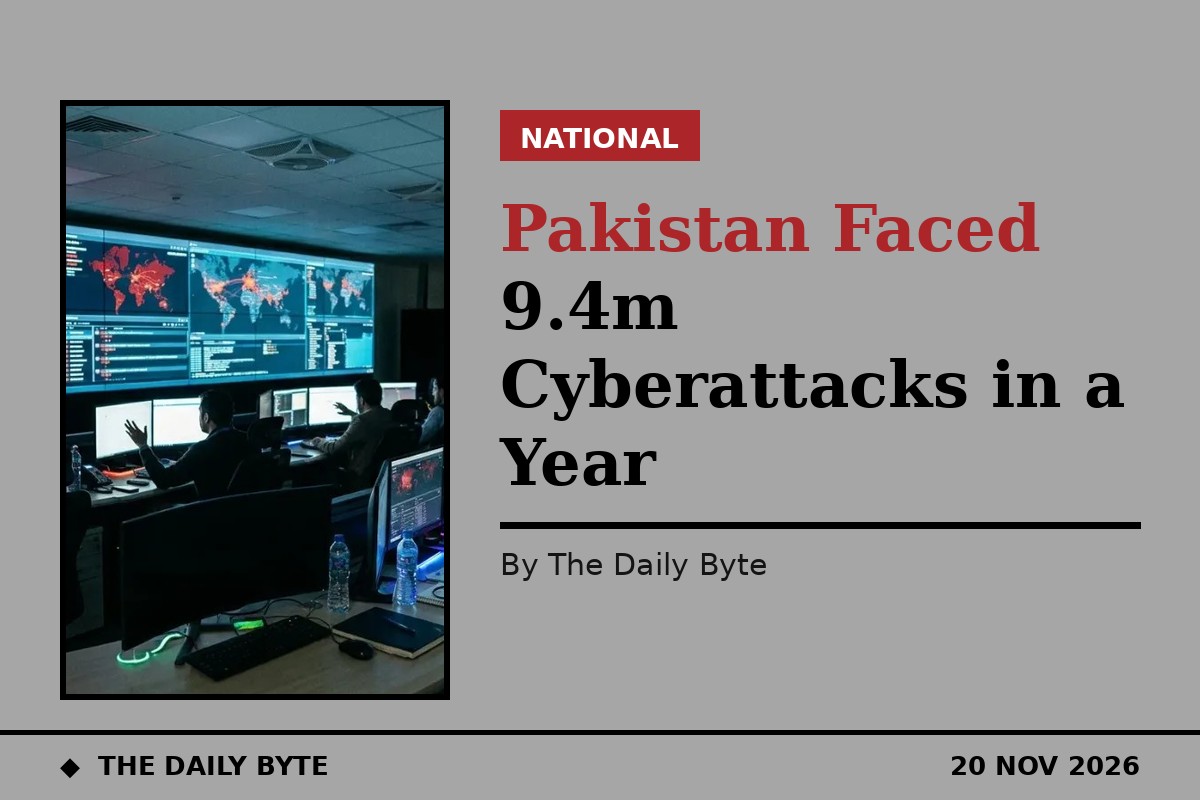
Pakistan faced more than 9.4 million cyberattacks in a single year, according to data released by cybersecurity company Kaspersky at its Cyber Threat Intelligence Summit 2026 in Islamabad.
The figures, drawn from Kaspersky's Security Network data, cover the period from November 2025 to October 2026. They include more than 6.3 million device-based attacks and over 3.1 million web-based attacks detected by the company's security products in the country.
Kaspersky said 24 percent of its users in Pakistan encountered threats on their own devices during the period, all of which were blocked, while 15 percent came across web-based threats such as phishing pages and malicious websites designed to steal data.
Backdoor attacks up by half
Backdoor attacks, which let hackers take remote control of an infected computer, access its files and steal sensitive information, exceeded 233,000 detections during the year, a rise of 50 percent on the previous period.
Exploit-based attacks, among the most common types of malware in Pakistan, totalled more than 448,000, although that figure was 8 percent lower than a year earlier. Kaspersky also said it tracked seven advanced persistent threat groups active in Pakistan over the year, including the globally active Mirage Kitten and SideWinder groups.
Between April and September 2026 alone, Kaspersky's products detected more than two million attempts to use hacking tools in the country.
Ransomware and AI-driven threats
Kaspersky warned that ransomware remains a serious risk for organisations, alongside supply chain attacks and breaches carried out through trusted business partners. Attackers are increasingly using artificial intelligence across their operations, the company said, cutting the time and cost of building malicious tools and adapting them, and letting attackers change tactics quickly and strike at scale.
For Pakistani businesses, Kaspersky's findings point to the need for regular patching, staff training against phishing, and closer checks on vendors and partners with access to their systems.
The figures reflect attacks detected across Kaspersky's own user base and products in Pakistan, rather than a count of every cyberattack in the country, and they cover attempted attacks that the company's products blocked as well as threats users encountered.
What businesses are being told to do
Kaspersky Senior Security Researcher Youssef Abdelmonem said organisations needed to deploy advanced defensive tools, pointing to the company's Kaspersky Next EDR and XDR products, which are designed to detect and respond to threats across an organisation's systems rather than relying on a single layer of protection.
The findings were shared at the Cyber Threat Intelligence Summit 2026 in Islamabad, where Kaspersky presented its Security Network statistics for Pakistan and discussed the risks organisations should guard against, including supply chain attacks and threats linked to artificial intelligence. For ordinary users, the message is simpler: the most common routes into a device remain malicious links and attachments, and the 15 percent of users who encountered web-based threats is a reminder to treat unexpected messages and login pages with caution.