Pakistan Chairs ECO as Ministers Meet in Islamabad
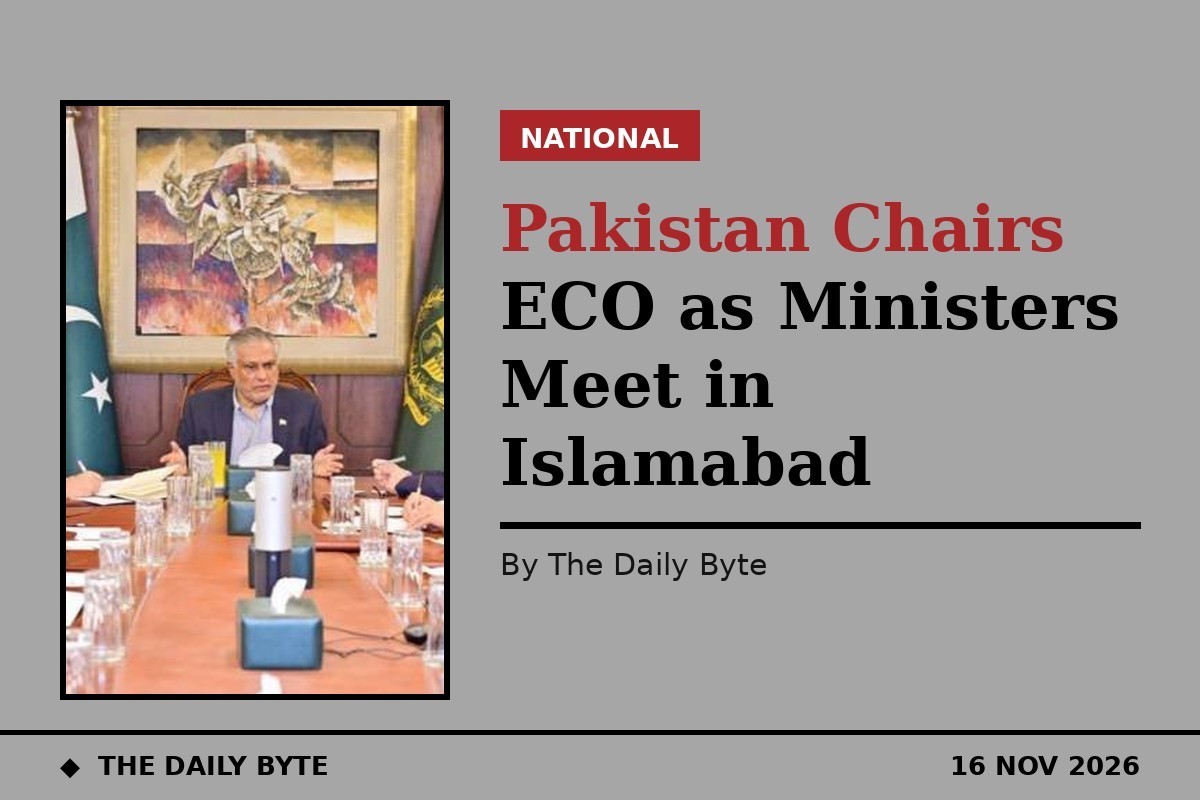
Pakistan has taken the chair of the Economic Cooperation Organisation (ECO) for 2026-27 as Islamabad hosts the 30th meeting of the organisation's Council of Ministers on 15 and 16 November 2026. The two-day ministerial meeting is chaired by Deputy Prime Minister and Foreign Minister Ishaq Dar, with foreign ministers and heads of delegation from the ECO's ten member states in attendance.
The meeting opened in Islamabad on Sunday morning, 15 November, according to Radio Pakistan. It was preceded by a meeting of senior officials from the member states, which reviewed the organisation's activities and programmes, assessed the work of its subsidiary bodies and finalised the agenda and draft outcome documents for the ministers to consider.
Who is attending the Islamabad meeting
Delegations continued to arrive in the capital through Sunday. Turkiye's Deputy Foreign Minister Musa Kulaklikaya arrived leading his country's delegation, and was received at the airport by Foreign Office officials. Azerbaijan's Deputy Foreign Minister Elnur Mammadov and Kazakhstan's Deputy Foreign Minister Arman Issagaliyev also arrived, along with the Secretary General of the Organisation of Islamic Cooperation.
Iran's Foreign Minister Abbas Araghchi arrived in Islamabad on 15 November to attend the meeting, and the Foreign Minister of the Turkish Republic of Northern Cyprus, Tahsin Ertugruloglu, had arrived a day earlier. Representatives of the ECO Secretariat and its subsidiary bodies are also taking part. The ECO's ten members are Pakistan, Iran, Turkiye, Afghanistan, Azerbaijan, Kazakhstan, Kyrgyzstan, Tajikistan, Turkmenistan and Uzbekistan.
On the sidelines of the meeting, Dar held separate meetings with the ECO Secretary General and the OIC Secretary General, reaffirming Pakistan's priorities for its chairmanship and its pledge to host the ECO Summit in 2027.
What Pakistan wants from its chairmanship
Pakistan is pursuing its chairmanship under the theme "Reviving Regionalism for a Resilient ECO". According to the Foreign Office, the focus is on strengthening regional connectivity and deepening regional integration, with trade facilitation and logistics at the centre of the agenda.
The aim, as set out by the Foreign Office, is to position Pakistan as a regional connectivity hub and a facilitator of supply chains, and to use the chairmanship to push for practical steps that lower the cost of moving goods across borders. For businesses in the region, the test of the meeting will be whether the ministers agree on concrete timelines and follow-through at customs posts and border crossings, rather than on statements of intent alone.
The ECO brings together states that face long-standing barriers to trade and transport, and several of its members are landlocked. Better links between Central Asia and Pakistan's ports have been a recurring theme of the organisation's work, and Islamabad has presented the chairmanship as a chance to give that agenda fresh momentum.
What to watch on the second day
The ministers continue their discussions on Monday, 16 November, the second and final day of the meeting. The draft outcome documents prepared by the senior officials were before the ministers, but no final outcome document had been made public at the time of writing, and the precise form of the closing statement remained to be confirmed.
What is already on the record is the chairmanship itself: Pakistan holds the ECO chair for 2026-27, Dar is chairing the ministerial session, and the government has committed to hosting the ECO Summit in 2027. Whether the Islamabad meeting produces new agreements on trade, transport or energy, or a restatement of existing commitments, will be clear once the ministers conclude their work.
Sources: Feature Pakistan reported the meeting dates, chair and arrivals; The News reported the Foreign Office account of the meeting and the chairmanship theme; KhabarWire reported the opening of the meeting and the senior officials' preparations.