Pakistan climbs 17 places in UN e-government index
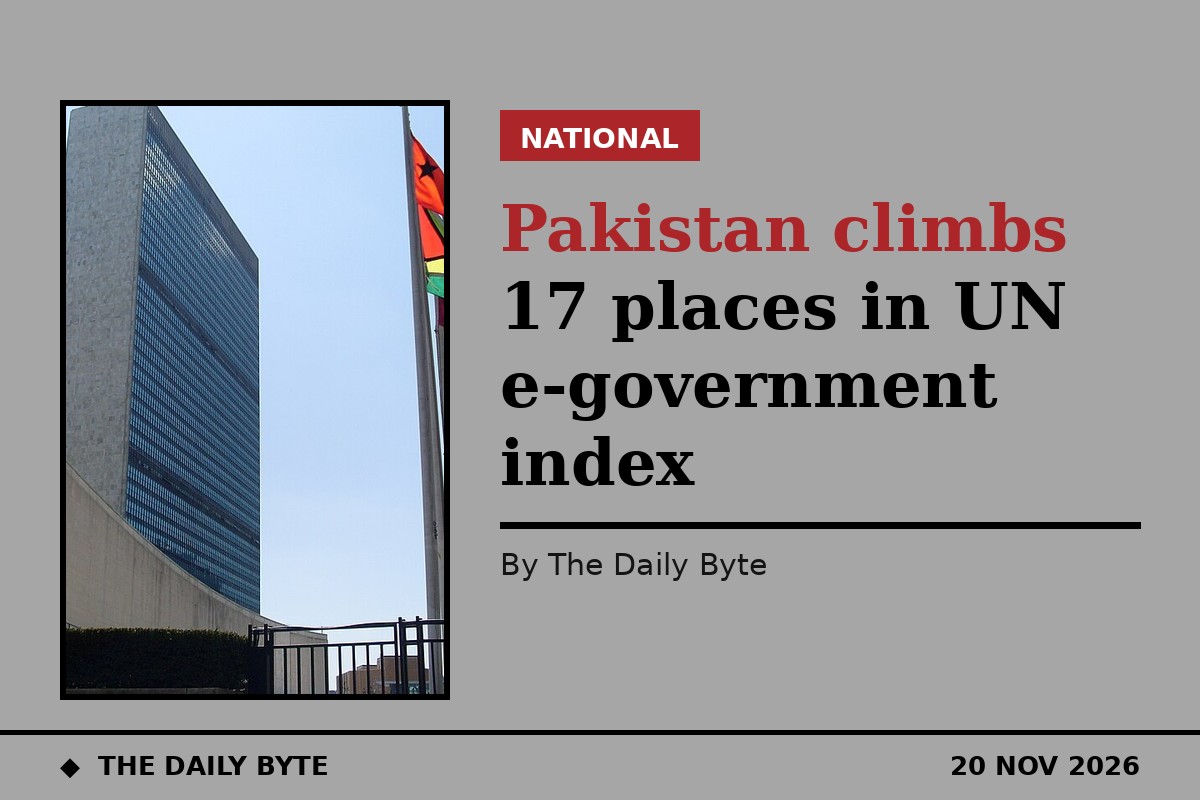
Pakistan has climbed 17 places to rank 119th among 194 countries in the United Nations E-Government Development Index 2026, the UN's global benchmark for how effectively governments deliver services to citizens online.
The results were published in the UN E-Government Survey 2026, launched by the UN Department of Economic and Social Affairs on 19 November. It is Pakistan's second consecutive improvement in the ranking: the country stood 150th in 2022 and 136th in 2024, and has now advanced 31 places over four years.
Pakistan's overall score rose from 0.5096 in 2024 to 0.6264 in 2026, an improvement of 23 per cent. The country has also moved up from the Middle category of the index in 2022 into the High category.
The progress has been broad-based. Pakistan's score for online services increased by 20 per cent to 0.8422, the second-highest in Southern Asia, reflecting the growing availability of government services through digital channels. Its score for telecommunication infrastructure rose by 39 per cent to 0.6590, building on a 52 per cent increase in the previous edition, as connectivity continues to expand.
Pakistan also recorded the highest score in Southern Asia for online participation and engagement, at 0.9655. The indicator measures the extent to which citizens can take part in government processes through online consultations, feedback and access to public information.
The United Nations specifically highlighted Pakistan's progress in its regional analysis, recognising the country among the largest gainers in Southern Asia, a subregion that showed notable progress in this year's survey.
Federal Minister for Information Technology and Telecommunication Shaza Fatima Khawaja said the result reflected sustained work across federal and provincial institutions to put public services online and bring connectivity to more people, and showed that Prime Minister Shehbaz Sharif's Digital Nation vision was being delivered.
The UN survey links Pakistan's progress to the Digital Nation Pakistan Act 2025, which established a more formal institutional framework for national digital transformation and created the Pakistan Digital Authority to coordinate the work across federal and provincial governments.
Dr Sohail Munir, chairperson of the Pakistan Digital Authority, said the UN had recognised the Act as the institutional foundation for coordinated digital transformation, and that the National Digital Masterplan now gave that work a single direction. The government says it will carry the progress into the next phase of the Digital Nation agenda, with a focus on extending digital services, connectivity and digital skills to every part of the country.
Globally, the Republic of Korea leads the 2026 ranking, followed by Denmark and Singapore. The global average score increased by 4.6 per cent, from 0.6382 in 2024 to 0.6675 in 2026, and 151 of the 194 countries assessed now sit in the high or very high groups, compared with 138 in 2024. The survey also notes that some 1.95 billion people still live in countries where e-government services sit below the global average, a reminder that the ranking measures what governments offer online, not whether every citizen can yet reach it.