Pakistan to Keep Mediating in US-Iran Row, Envoy Says
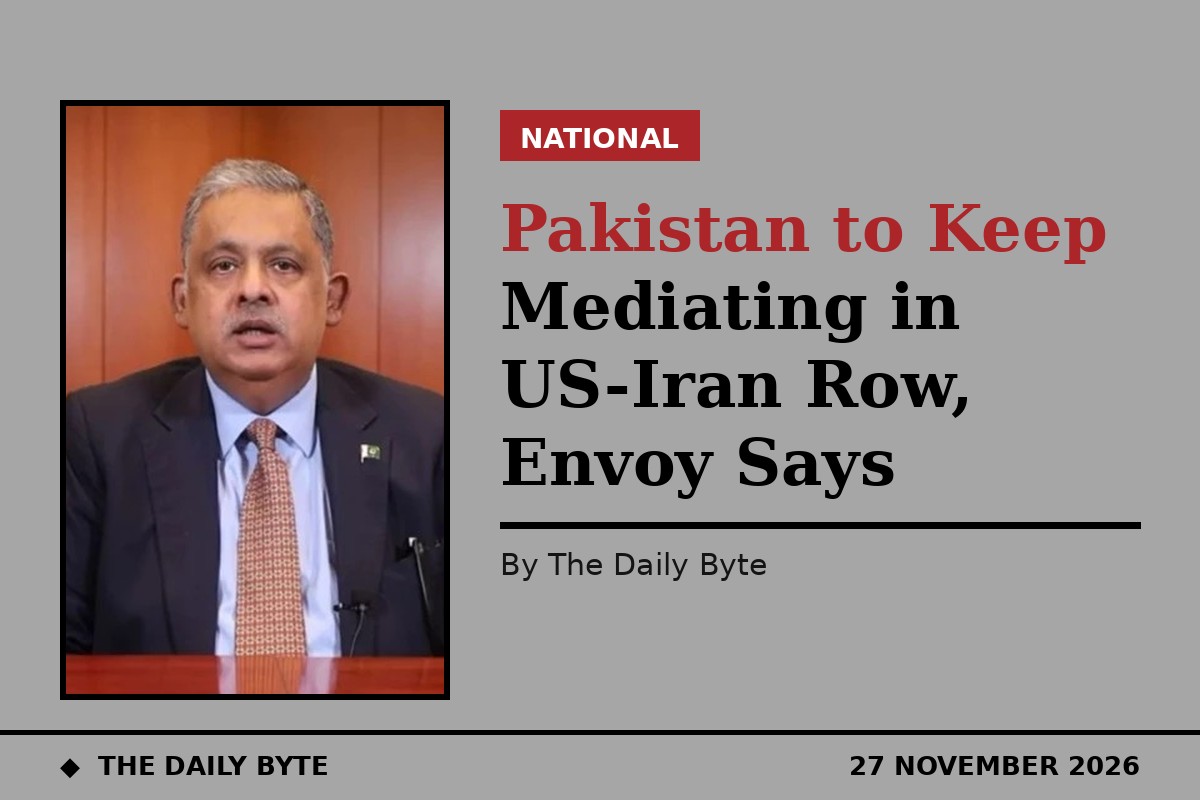
WASHINGTON: Pakistan will continue to offer its services to help resolve conflicts through peace and dialogue, its ambassador to the United States, Rizwan Saeed Sheikh, said on Friday, restating Islamabad's role as a mediator between Washington and Tehran.
In a Thanksgiving message, Sheikh said Pakistan-US relations had strengthened over the past year, largely because Pakistan had served as the mediator of choice between the United States and Iran during the conflict in the Gulf region. He said Pakistan had been chosen for the role and that its leadership had engaged at the highest level with both countries, as well as with other bilateral and multilateral partners.
He said Pakistan's mediation efforts had contributed to the Islamabad Memorandum of Understanding, which he described as continuing to form a baseline for any future agreement on the conflict. He added that Pakistan remained committed to promoting peaceful solutions to disputes from a forward-looking perspective.
How the mediation took shape
The conflict between the United States and Iran began on 28 February, involving Washington, Israel and Tehran, and disrupted shipping around the Strait of Hormuz. As the fighting intensified, Pakistan stepped into a mediation role, with its leadership maintaining high-level contacts with both sides.
In late March, Islamabad hosted foreign ministers from Pakistan, Turkiye, Egypt and Saudi Arabia for discussions on regional tensions, including proposals to address the disruption around the strait. The diplomatic process continued in April, when delegations from the United States and Iran travelled to Islamabad for negotiations, with Pakistan facilitating direct engagement between the two sides.
The process led to the Islamabad Memorandum of Understanding and an interim ceasefire intended to open a 60-day window for negotiations towards a more permanent agreement. Sheikh said the understanding remained an important foundation for any future agreement aimed at resolving the conflict.
No new timetable
The ambassador did not set out new proposals or say when negotiations might resume. He presented the message as a restatement of Pakistan's established position rather than the announcement of a new initiative, and he did not announce any fresh talks or a date for them.
In his message, Sheikh also extended Thanksgiving greetings on behalf of the Embassy of Pakistan to the US government and people, as well as to Pakistani-American communities across the country.
Pakistan has long presented constructive diplomacy as a central part of its foreign policy, and the ambassador's message underlined that tradition at a moment when tensions in the Gulf remain high and the search for a lasting settlement between Washington and Tehran continues.