Pakistan Extends Airspace Ban on Indian Aircraft
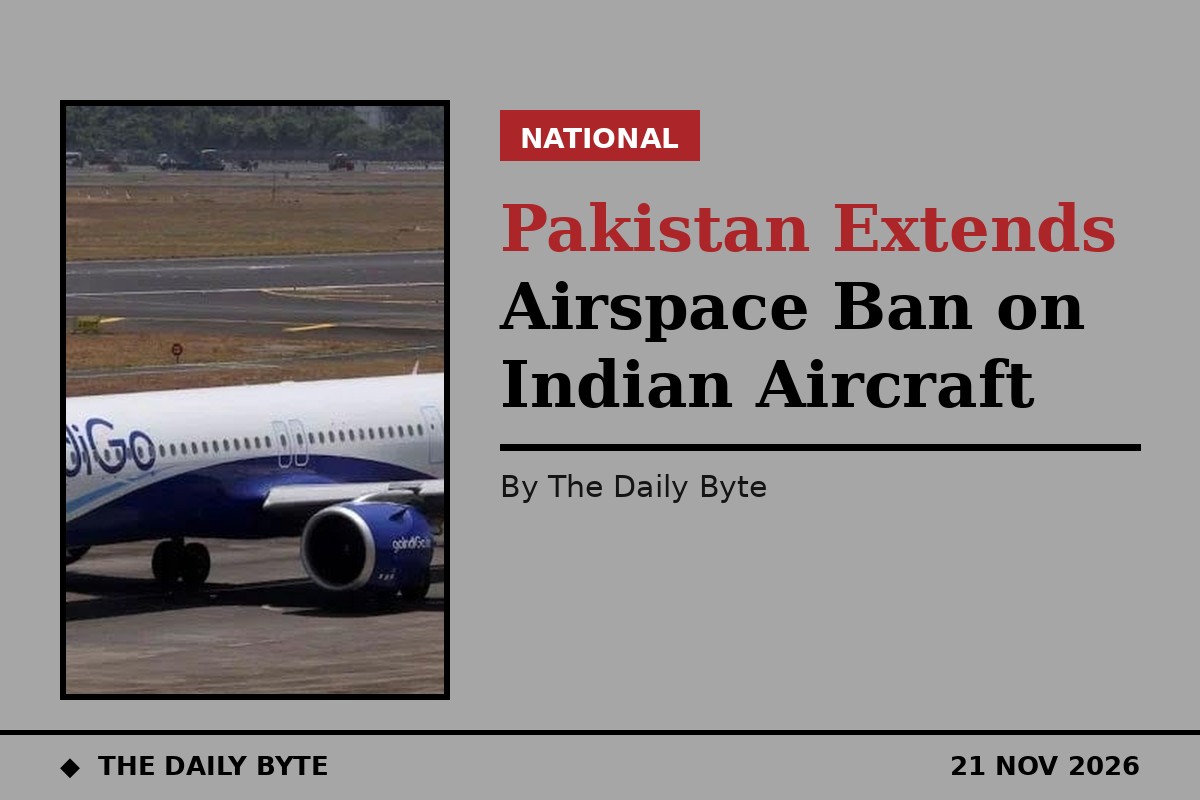
Pakistan has extended its ban on Indian aircraft using its airspace until 24 December, keeping in place a restriction that has now run for eight months. The Pakistan Airports Authority issued a fresh Notice to Airmen, known as a NOTAM, on Thursday, 19 November, and The News reported the extension on Friday.
According to the notice, the ban will remain in place until 04:59 on 24 December. Some outlets give the same deadline as 23:59 UTC on 23 December; the two are the same instant expressed in different time zones, since Pakistan is five hours ahead of UTC. The previous extension had been due to expire on 24 November, so the new notice adds roughly another month to the closure.
What the ban covers
The notice states that Pakistani airspace is not available for Indian-registered aircraft, and for aircraft operated, owned or leased by Indian airlines or operators, including military flights. In other words, the ban reaches beyond planes that simply carry an Indian registration: it covers any aircraft that an Indian airline runs or rents, whatever flag it flies under, and it makes no exception for military flights.
The restriction applies across both of Pakistan's flight information regions, Karachi and Lahore, which together cover the whole of the country's airspace. The wording names only Indian aircraft and Indian operators. Pakistani airlines and other foreign carriers are not covered by it, and international airlines registered outside India remain unaffected.
A ban renewed month by month
Pakistan first closed its airspace to Indian aircraft on 23 April 2025, after the Pahalgam attack in Indian-administered Kashmir, amid sharply rising tensions between the two countries. India accused Pakistan of involvement in the attack, an allegation Islamabad firmly denied while calling for an independent and transparent investigation. India closed its airspace to Pakistani airlines on 30 April 2025, and both countries have kept renewing their restrictions roughly every month since.
Tensions escalated further in May 2025, when India launched strikes on several Pakistani cities on 6 and 7 May. Pakistan responded with Operation Bunyanum Marsoos, targeting Indian military installations. The hostilities lasted nearly 87 hours before the two countries agreed to a United States-brokered ceasefire on 10 May 2025. The airspace bans, imposed in the same crisis, have outlasted the fighting by more than six months.
Pakistan has imposed similar airspace restrictions before, including during the 1999 Kargil conflict and the 2019 Pulwama crisis. The current closure follows that pattern: a month-by-month renewal, managed through aviation notices rather than through a fresh diplomatic statement each time.
The cost to airlines
The continued closure has forced Indian airlines to take longer routes to international destinations, increasing flight durations, fuel consumption and operating costs. Indian airlines have reportedly suffered losses running into billions of rupees because of the restrictions, according to TechJuice. The News, reporting the extension, said the restrictions had a greater financial impact on India's aviation sector, while Pakistan's aviation industry experienced comparatively limited disruption.
For passengers, the practical effect is longer westbound journeys out of India and higher operating costs for the airlines that fly them. Neither side has announced a reopening schedule, and the ban will simply lapse or be renewed again when the current notice expires. Until another notice is issued, no Indian-registered aircraft, and no aircraft operated, owned or leased by an Indian airline or operator, may enter Pakistani airspace, whether commercial, private or military.