Pakistan posts Rs1.27tr first-quarter budget surplus
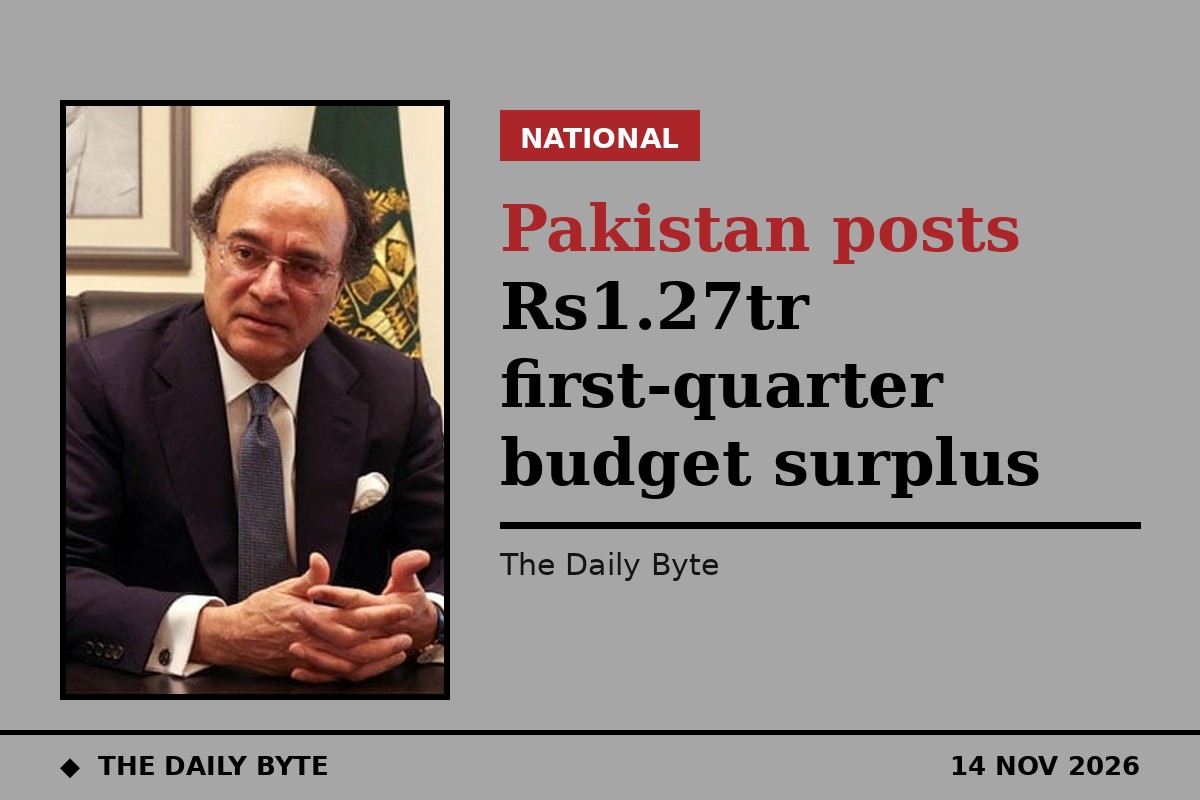
Pakistan has recorded a budget surplus of Rs1.274 trillion in the first quarter of the current fiscal year, the Ministry of Finance said on Friday, extending the country's first-quarter surplus run to three consecutive years after 23 years of first-quarter deficits.
The surplus is equivalent to 0.9 per cent of gross domestic product, or about $4.55 billion, the ministry said in a statement. The primary surplus, which excludes interest payments, stood at Rs2.974 trillion, beating the budget target by Rs239 billion, an improvement of 8.7 per cent.
Three years of first-quarter surpluses
Pakistan recorded first-quarter fiscal surpluses of Rs1.896 trillion in the 2024-25 fiscal year and Rs2.119 trillion in 2025-26, before the Rs1.274 trillion surplus in July-September of the 2026-27 fiscal year. The ministry said the primary surpluses recorded over the past three years rank among the highest in the past 26 years, with each exceeding Rs2.9 trillion.
The ministry also pointed to improvement over the full 2025-26 fiscal year, when the fiscal deficit remained at 2.6 per cent of GDP, its lowest level in 22 years, while the primary surplus reached 2.9 per cent of GDP, its highest level since at least the 2000-01 fiscal year. Interest expenditure fell by 22 per cent during 2025-26, and Pakistan has now recorded primary surpluses for three consecutive fiscal years, from 2023-24 to 2025-26.
Revenue and spending in the quarter
According to the ministry's fiscal operations report for July-September, total government revenue stood at Rs6,003 billion while total expenditure was Rs4,370 billion. Interest payments of Rs1,700 billion were the largest single item of spending, followed by defence at Rs495 billion and pensions at Rs263 billion. Civil administration cost Rs206 billion and subsidies Rs84 billion.
The State Bank of Pakistan generated a profit of Rs1,932 billion during the quarter, contributing to government revenues. The government collected Rs381 billion through the petroleum levy, up from Rs371 billion in the same period last year, along with Rs22 billion through the carbon levy and Rs9 billion through the electric vehicle adoption levy.
The ministry described the improvement as evidence of sustained fiscal discipline rather than a temporary development, linking it to broader economic stability. It said continued fiscal reforms, consistent surpluses and sustainable debt management would strengthen Pakistan's financial credibility, economic resilience and prospects for sustainable development. The 2026-27 budget also includes tax relief measures while keeping expenditure under control in the first quarter, the ministry added.
Sources: Pakistan TV and Treasure Magazine.