Pakistan Joins 14 Nations Backing Settlement Sanctions
Pakistan has joined 14 other countries in welcoming sanctions imposed by the United Kingdom and Australia against Israeli individuals and organisations involved in settlement expansion in the occupied West Bank, describing the measures as consistent with international law.
In a joint statement issued on Thursday, the foreign ministers of Pakistan, Jordan, Egypt, Saudi Arabia, Somalia, Indonesia, Qatar, the United Arab Emirates, Türkiye, Kuwait, Algeria, Niger, Palestine, Libya and the Maldives said they hoped the decisions would encourage other countries to take similar steps, The Diplomatic Insight reported.
What London and Canberra imposed
The United Kingdom announced sanctions on Tuesday against eight Israeli construction companies involved in building settlements in the occupied West Bank. The measures include asset freezes and director disqualifications. Among the targeted companies are Har Hevron Development Company Ltd, Hemdat Shomron Ltd and SAG (Velvel) Construction and Development Ltd. London said the sanctions were part of its efforts to protect the prospects of a two-state solution, and announced the package shortly before the final deadlines for tenders related to the E1 settlement project.
Australia followed on Wednesday by imposing sanctions on three Israeli individuals and four organisations over illegal settlement expansion and settler violence in the West Bank. Australian Foreign Minister Penny Wong said the sanctioned individuals and organisations had participated in planning, coordinating and establishing new settlements, including through fundraising, recruiting volunteers and supporting violent settlers.
Among those sanctioned is Daniella Weiss, leader of the settler organisation Nachala, who has advocated the expulsion of Palestinians from Gaza. Another sanctioned individual, Eliav Libi, has been linked to settlement expansion through his construction company. The Australian measures prohibit citizens and businesses from conducting transactions with, or providing support to, the sanctioned individuals and organisations. Wong said she had discussed Australia's position with Israeli Foreign Minister Gideon Saar.
The E1 project at the centre
The ministers expressed support for accountability measures, including sanctions, against those responsible for settlement activities, including the E1 settlement plan, and those who support, facilitate or implement settlement expansion and annexation policies. The E1 project would bisect the Israeli-occupied West Bank and cut it off from East Jerusalem, fragmenting the land Palestinians hope will form the heart of a state.
In the joint statement, the ministers renewed their strongest condemnation of Israel's settlement policies in the occupied Palestinian territory, particularly the E1 plan and related activities east of occupied East Jerusalem. They said the British and Australian measures were in line with international law and relevant United Nations resolutions, including Security Council Resolution 2334 (2016) and the International Court of Justice advisory opinion of 19 July 2024, and called on Israel to reverse measures linked to settlement expansion and other actions aimed at changing the geographic and demographic character of the occupied territory.
Gaza and the two-state call
The ministers also welcomed Britain's decision to sanction an organisation accused of obstructing the delivery of humanitarian assistance to Gaza. They condemned the Israeli military escalation in Gaza and called for the full and immediate implementation of US President Donald Trump's Comprehensive Plan to End the Gaza Conflict, saying it should ensure security and stability, address the humanitarian crisis, facilitate reconstruction and lay the foundations for lasting peace.
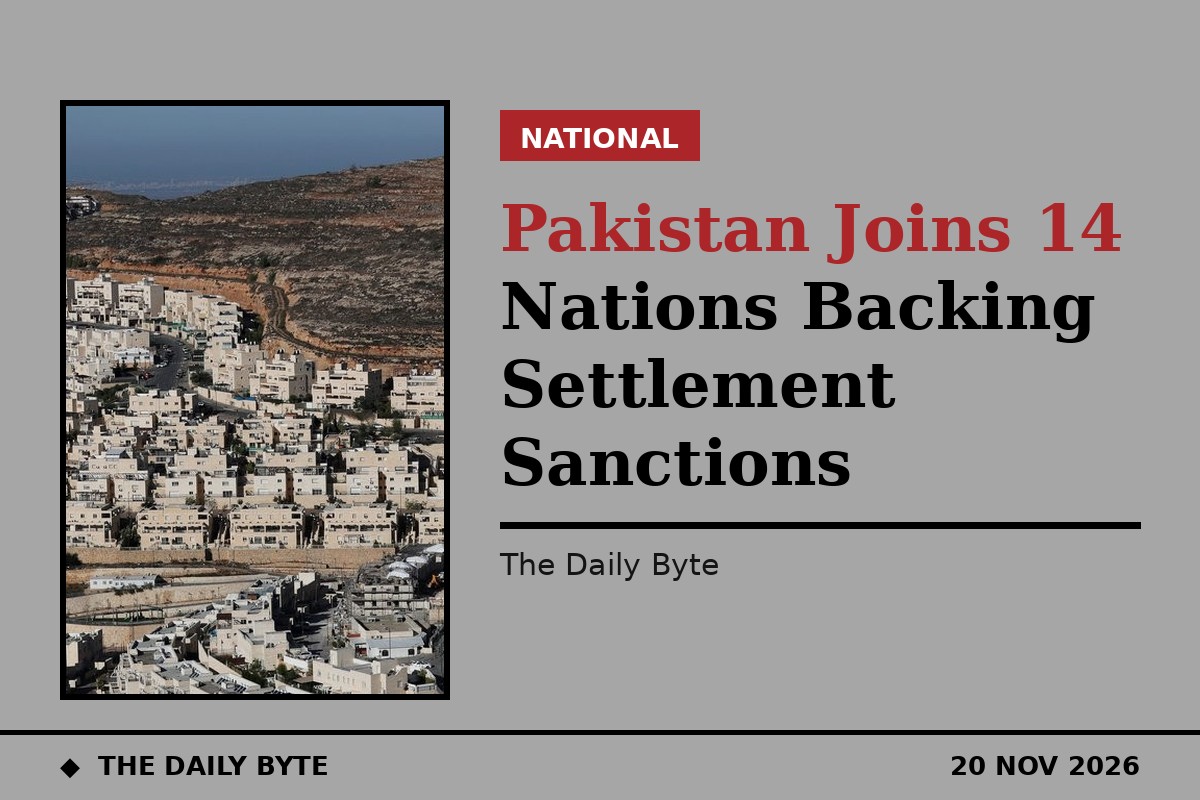
They stressed that Gaza remained an integral part of the occupied Palestinian territory and reaffirmed that a two-state solution was the only viable path to a just, lasting and comprehensive peace, through an independent, sovereign, contiguous and viable Palestinian state based on the 4 June 1967 lines, with East Jerusalem as its capital. The photograph accompanying this report is a file photograph of the Ramat Givat Zeev settlement in the occupied West Bank, taken on 19 November 2019.