Pakistan Set to Be Largest Muslim Population
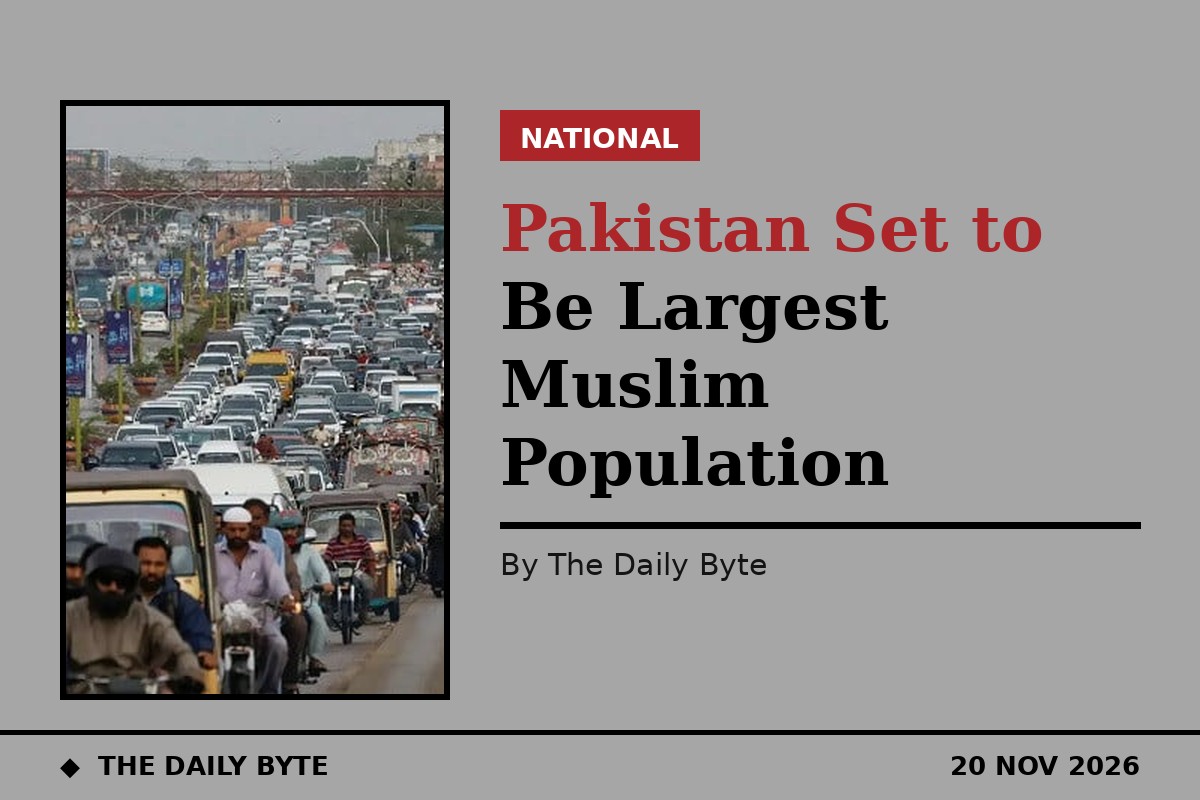
Pakistan is projected to overtake Indonesia as the country with the world’s largest Muslim population by 2070, with its Muslim population nearly doubling to 461 million, according to new projections from the Pew Research Center.
The findings come from Pew’s report, “The Future of World Religions: Population Growth Projections, 2020–2070”, released on 18 November. The study tracks the size and geographical distribution of seven religious groups across 201 countries and territories, covering almost the entire global population.
In 2020, Indonesia had the world’s largest Muslim population, at 239 million, followed by Pakistan with 227 million and India with 213 million. By 2070, Pew projects that Pakistan will have moved into first place, while India will rank second with 334 million Muslims and Bangladesh will rise to 218 million.
Muslims set to become the largest religious group by 2035
The Pakistan finding sits within a much larger global shift. Pew projects that Muslims will overtake Christians as the world’s largest religious group by 2035, with the global Muslim population reaching 2.57 billion against 2.52 billion Christians.
By 2070, the number of Muslims worldwide is expected to rise to 3.64 billion, accounting for about 36 per cent of the world’s population, while Christians are projected to reach nearly 2.96 billion, or about 29 per cent. The global Muslim population would have grown by about 80 per cent from 2.02 billion in 2020.
The report attributes the faster growth of the Muslim population mainly to higher fertility rates and a relatively younger age structure. Pew notes that Indonesia’s Muslim population is projected to grow by only about 15 per cent over the same fifty-year period, which is why Pakistan, starting just 12 million behind in 2020, is expected to pass it.
A shifting map of faith
The projections also point to a major change in where the world’s Muslims and Christians live. By 2070, more than half of the world’s Christians, around 54 per cent, are expected to live in sub-Saharan Africa, reflecting the region’s young population and higher fertility. Sub-Saharan Africa is also projected to be home to about a quarter of the world’s Muslims by then.
Pew cautions that the figures are projections, not certainties. They assume that recently observed patterns of fertility, mortality, migration and religious switching continue, and they do not account for every possible development, including wars, natural disasters, epidemics or changes in economic and social circumstances.
For Pakistan, the headline is demographic rather than immediate: a population that is already among the world’s largest is projected to keep growing faster than its neighbours for decades, reshaping the country’s weight within the Muslim world and the demands on its schools, jobs market, cities and public services.