Pakistan Left Out as US Proposes Tariffs on 14 Economies
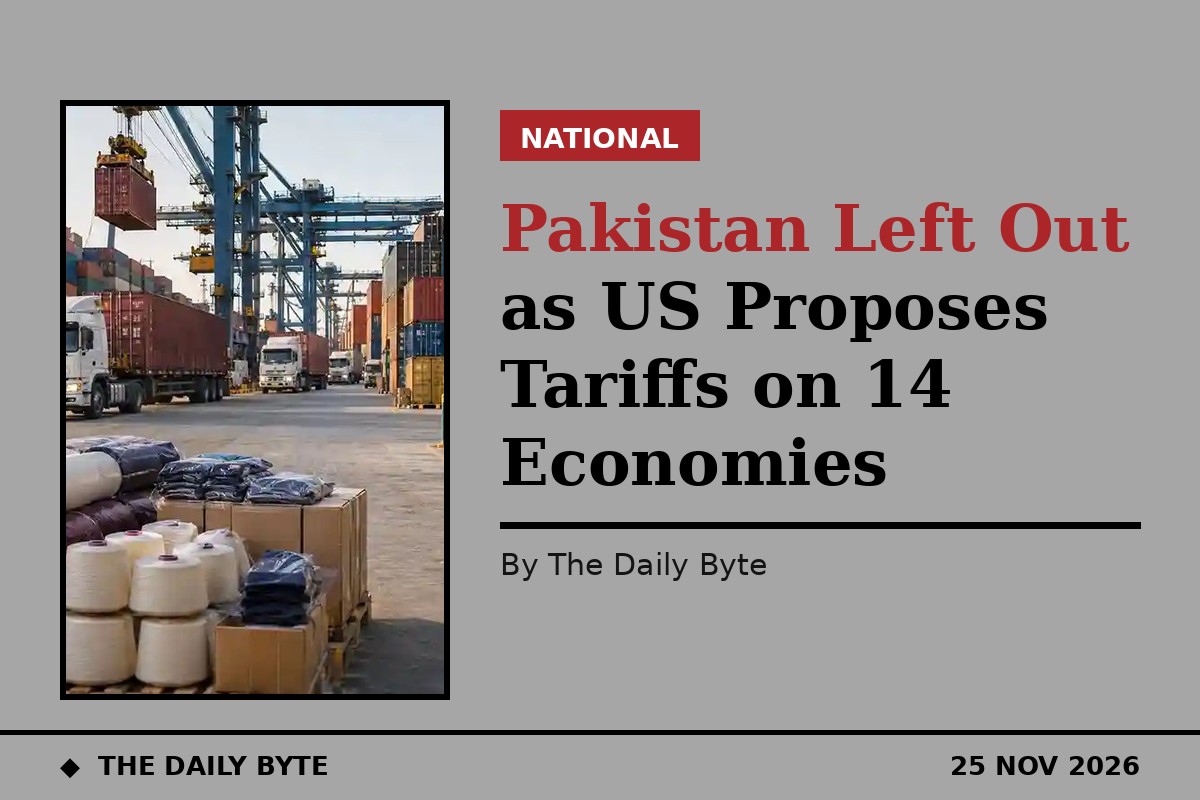
Pakistan is not among the 14 economies named in the Trump administration's proposed new tariffs, announced on Wednesday, 25 November, leaving Pakistani exporters outside a fresh round of United States duties aimed mainly at its rivals in Asia.
The administration proposed the tariffs after the Office of the United States Trade Representative, led by Jamieson Greer, determined that the 14 economies were engaging in unfair trade practices under Section 301 of the Trade Act of 1974. Greer said President Donald Trump was proposing action to eliminate the practices and level the playing field for American workers.
The 14 economies named are China, the European Union, Singapore, Switzerland, Indonesia, Malaysia, Cambodia, Thailand, South Korea, Vietnam, Taiwan, Bangladesh, Japan and India. Mexico and Norway, which were part of the original investigation, were excluded from the immediate proposals. Pakistan does not appear on the list.
India faces up to 25 per cent
The sharpest figures published so far concern India, one of Pakistan's main competitors for United States apparel and textile orders. Indian exports could face tariffs of up to 25 per cent, with a lower rate of 17 per cent if New Delhi and Washington conclude their bilateral trade agreement. The investigation raised concerns about excess capacity in India's steel, petrochemical and solar panel industries, including an assessment that its solar module manufacturing capacity was nearly three times its domestic demand.
Across the 14 economies, the administration is floating top tariff rates of 20 to 40 per cent, although in practice the levies could end up closer to 10 to 20 per cent for countries that have already negotiated trade deals with the United States or do so in future. The final product coverage has not been published, and the duties would particularly affect labour-intensive industries, including textiles and garments, leather goods, footwear, gems and jewellery, engineering goods and marine products, depending on exemptions.
Nothing is in force yet
The tariffs are proposals, not final rates. The Trade Representative's office said it would hold hearings on the proposed action in January, and the measures are unlikely to become operational before January 2027, after public consultations. The investigation itself began on 11 March 2026, covering 16 economies, and the proposals are the culmination of nearly eight months of work.
The move follows the United States Supreme Court's decision in February 2026 striking down duties imposed under emergency economic powers, which forced the administration to rebuild its tariff regime on a different legal foundation. Section 301 gives Washington a specific statutory route to act after finding unfair foreign trade practices.
The proposed duties would not be added on top of the separate 10 per cent levy imposed in July after an investigation into forced labour enforcement. Instead, the higher applicable levy would replace the lower one, although ordinary product-specific customs duties could still apply.
What it means for Pakistan
For Pakistan, the immediate meaning is narrow but real: no new United States tariff has been proposed on Pakistani goods in this round, while several of the countries that compete with Pakistan for American orders, including Bangladesh, Vietnam, Cambodia and India, are on the list. If the duties take effect, American buyers could renegotiate contracts, seek discounts or diversify where they source from, which could open a window for Pakistani suppliers in textiles and garments.
That window is far from guaranteed. Country-specific rates, trade-deal caps and exemptions could narrow any advantage quickly, and the final schedule of which products are covered has not been verified. The proposal could also still face legal challenges over the investigation's findings and its compatibility with World Trade Organisation obligations, and the incoming United States Congress is expected to scrutinise the administration's trade policy more closely.
For now, Pakistani exporters face no new duty from this announcement, but no benefit either until the rates, the product coverage and the outcome of the January hearings are known.