Pakistan poverty rises to 29%, World Bank data shows
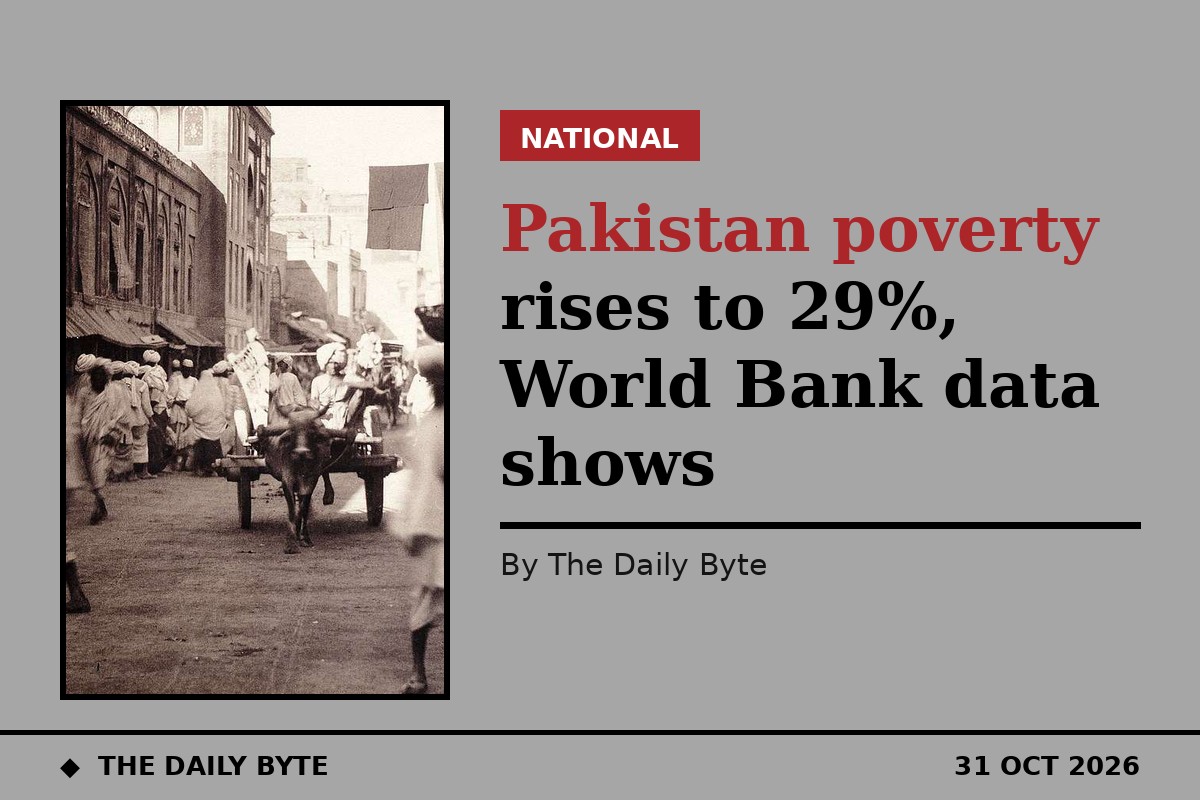
Pakistan's poverty rate climbed to roughly 29 per cent in 2024–25, leaving about 70 million people below the national poverty line, according to World Bank estimates highlighted this week in an analysis by the Karachi-based Business Recorder. The figures sit uneasily alongside official claims of economic recovery, because they describe household living standards rather than headline growth alone.
The central point in the analysis is a distinction that matters for ordinary families. Slower inflation does not mean prices have fallen back. It means they are rising more slowly than before, after a period in which food, fuel, electricity and transport costs jumped sharply. A household that paid far more for flour, ghee and lentils two years ago is still paying that higher level today, even if the monthly increase has eased.
Wages fell while prices stayed high
Real wages declined by an average of 3.4 per cent a year between 2018–19 and 2024–25, the World Bank estimates show. That six-year erosion is the mechanism behind the poverty rise: pay did not keep pace with the cost of living, so purchasing power shrank year after year. Day labourers in cities such as Lahore and Faisalabad, whose nominal wages did not rise by anything like the near-30 per cent consumer inflation seen at the peak, felt the squeeze most directly.
The Bank's October 2026 update adds a regional dimension. Pakistan accounts for roughly 48 per cent of the extreme-poverty population in the Middle East, North Africa, Afghanistan and Pakistan region, measured against the international extreme poverty line of 3 dollars a day in 2021 purchasing-power terms. Poverty is also uneven inside Pakistan, with rates above 50 per cent in parts of southern Balochistan, rural Sindh and some areas of Karachi, Lahore and the newly merged districts of Khyber Pakhtunkhwa, on the old national line.
Two poverty numbers, explained
Readers may see a second, larger figure — about 120 million people — in other coverage of the same World Bank outlook. That is not a contradiction. It comes from a different yardstick: the lower-middle-income poverty line of 4.20 dollars a day, under which poverty rose from 44.7 per cent in 2018–19 to 47.9 per cent in 2024–25. The 29 per cent figure uses Pakistan's national poverty line; the 120 million figure uses the higher international line. Both point in the same direction, but they count different thresholds.
Growth of 3.8 per cent forecast for 2026–27, with per-capita growth of only about 1.6 per cent, is too slow to lift incomes substantially, the Bank warns — without faster real wage growth and stronger protection for the poorest, stabilisation alone will not reverse the poverty rise.
Sources: IANS / Business Recorder analysis; The News.