Pakistan Q1 surplus beats IMF target as tax goal missed
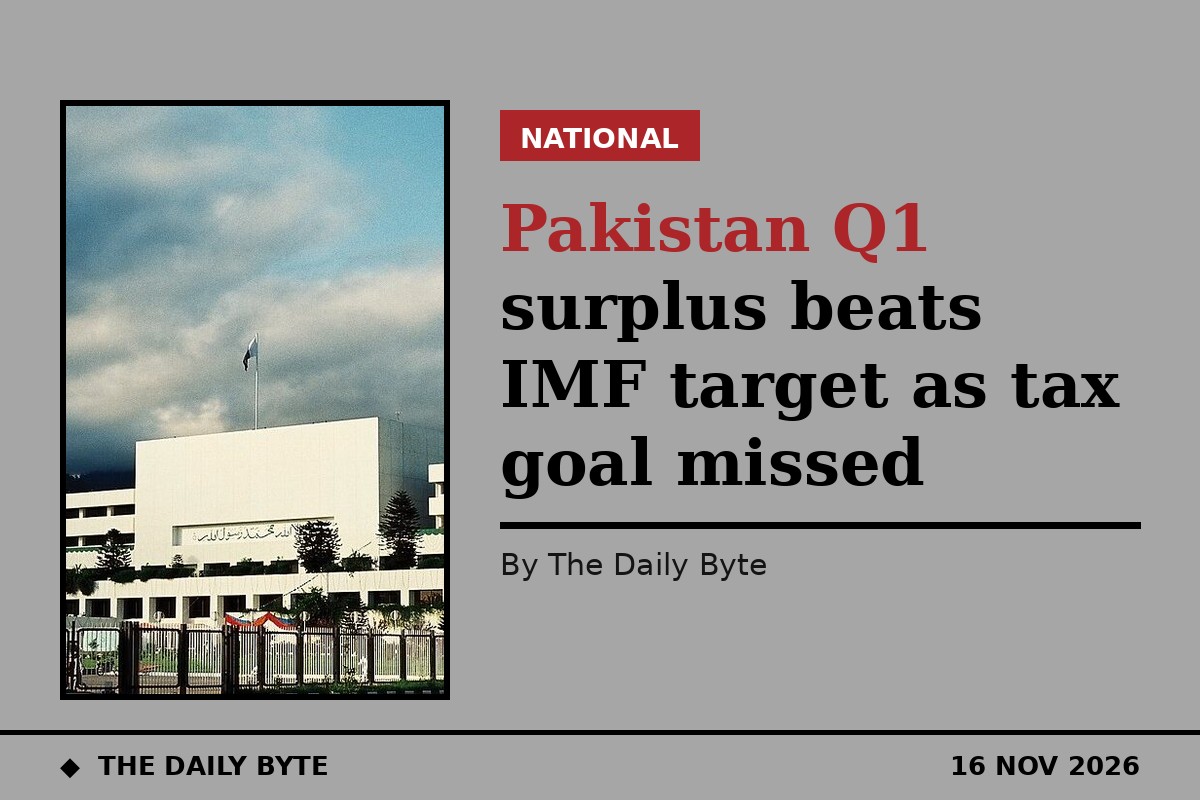
Pakistan recorded a primary surplus of Rs2.97 trillion in the first quarter of the financial year, comfortably beating the International Monetary Fund's target of Rs1.95 trillion, but missed a provincial tax condition by Rs88 billion, according to fiscal data published by the Finance Ministry.
The figures, covering July to September 2026, show an overall budget surplus of about Rs1.27 trillion, equal to 0.9 per cent of gross domestic product. That is down by about 40 per cent from the same quarter a year earlier, when the surplus was Rs2.12 trillion. Even so, it is the third consecutive year in which Pakistan has begun the financial year in surplus.
What the numbers show
The primary surplus, which measures the budget balance before interest payments are counted, stood at 2.1 per cent of GDP for the quarter. The Federal Board of Revenue collected Rs3.089 trillion over the three months, about Rs60 billion above its own target, according to The Express Tribune.
The provinces delivered a collective cash surplus of Rs599 billion, exceeding the target set for them by Rs83 billion. But that headline sits next to the one condition that was missed: provincial tax collection fell Rs88 billion short of the IMF target.
Finance Minister Muhammad Aurangzeb has said Pakistan met three of the four fiscal conditions under its IMF programme, and has presented the quarter as evidence that fiscal consolidation is holding.
Why the headline flatters the position
A primary surplus leaves out the largest single item in the budget: the cost of servicing past debt. Interest costs rose by Rs322 billion over the year, roughly a quarter more than was paid in the same quarter last year.
Other parts of the picture are also weaker than the headline suggests. Profits from the State Bank of Pakistan fell by about a fifth, to just over Rs1.9 trillion, removing a source of revenue the budget has leaned on heavily in recent years. And the centre released only Rs57.5 billion of a committed Rs1.035 trillion in grants to the provinces — about 6 per cent of the annual figure, a quarter of the way into the year. Punjab received Rs32.5 billion, Khyber Pakhtunkhwa Rs12.7 billion, Sindh Rs8.5 billion and Balochistan Rs3.7 billion.
A cash surplus can be produced by not spending quite as easily as by taxing, and the tax target was the one that failed. Money not spent on provincial health and education counts towards the same consolidation as money successfully raised in tax.
What comes next
The IMF's Executive Board is tentatively expected to meet in December to consider loan tranches worth about $1.2 billion — around $1.0 billion under the Extended Fund Facility and about $210 million under the Resilience and Sustainability Facility — following the staff-level agreement reached after an IMF mission visited Karachi and Islamabad from 23 September to 7 October.
On the conditions as written, the quarter was passed. On the question of whether the public finances are becoming more sustainable, the answer is less settled: the test will be whether tax collection holds up in the remaining three quarters, and whether the interest bill can be brought under control. Source: The Pakistan Daily, citing The Express Tribune